What Happens If You Have an Allergic Reaction Abroad?
The scenario most allergy travelers avoid thinking about. Here is what to actually do, how medical care works abroad, what it costs, and how insurance fits in.
The immediate protocol
The protocol is the same whether you are in Bangkok, Paris, or anywhere else:
- Use epinephrine immediately if you have it and symptoms indicate anaphylaxis. The outer thigh is the injection site. Hold for 10 seconds.
- Call local emergency services or shout for help. Have someone call: do not try to drive yourself.
- Lie down with legs elevated unless you are having difficulty breathing, in which case sit upright. Do not stand or walk.
- Use a second auto-injector if symptoms do not improve within 5 to 10 minutes and you have one available.
- Go to hospital regardless of recovery. Epinephrine wears off in 15 to 20 minutes. Biphasic reactions are real.
Emergency numbers by region
- Thailand: 1669 (ambulance) or 191 (police)
- Japan: 119 (ambulance and fire)
- Vietnam: 115 (ambulance)
- Indonesia (Bali): 118 or 119 (ambulance)
- EU (most countries): 112 (universal emergency)
- UK: 999
- Australia: 000
Save the local emergency number for every destination offline, before you arrive. A SIM with no signal and a dead battery are common in exactly the moments when you need to call.
At the hospital
When you arrive at an emergency department abroad, the immediate language barrier is the main logistical challenge. This is where your preparation pays off.
Show your doctor's letter first. A letter from your allergist in English, and ideally translated into the local language, tells the emergency physician your allergy, your reaction history, and your prescribed medications without requiring communication in a language you don't share. It dramatically speeds up treatment decisions.
Show your allergy card as secondary context. Your AllergyPass card lists the specific allergen. In a busy ER, visual confirmation of what you reacted to helps staff.
Standard treatment for anaphylaxis at a hospital includes: IV epinephrine or additional auto-injector, IV antihistamines, corticosteroids to reduce inflammation, IV fluids if blood pressure dropped, and monitoring for biphasic reaction for a minimum of four to eight hours.
Medical care abroad: what to expect by region
Southeast Asia (Thailand, Vietnam, Bali, Malaysia)
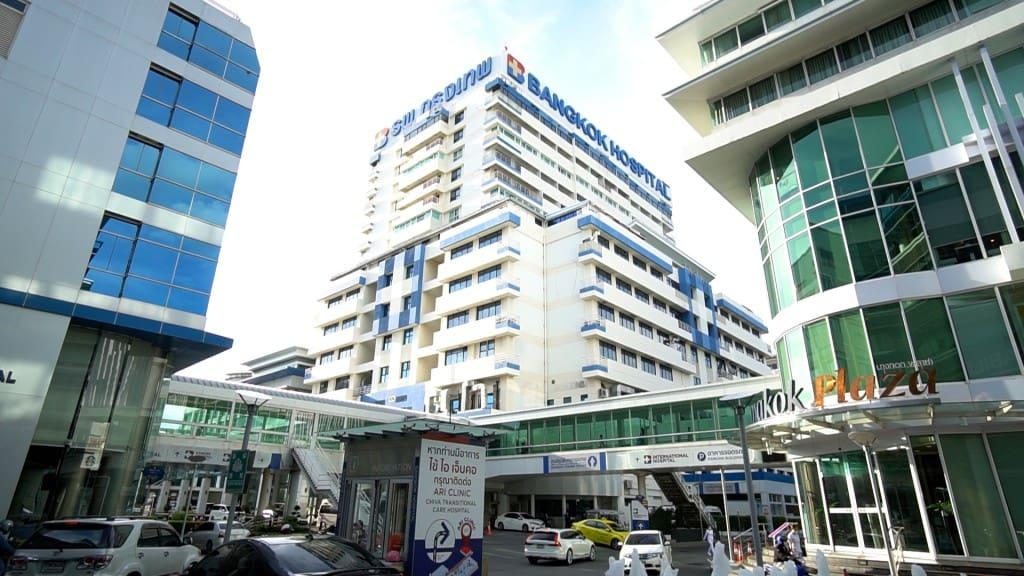
Private international hospitals in major cities are well-equipped for anaphylaxis treatment and have English-speaking staff. Bumrungrad International, Bangkok Hospital, and Samitivej in Bangkok are the most used by international travelers. In Vietnam, Franco-Vietnamese Hospital (Ho Chi Minh City) and Hanoi French Hospital handle international patients regularly. In Bali, BIMC Hospital and Siloam are the primary international options.
Public hospitals outside major cities vary in equipment and English proficiency. For rural or island travel, research the nearest international-standard facility before you go. Speed of transfer matters more than quality of the closest clinic in a severe reaction.
Japan
Japan's hospital system is high quality. The challenge for travelers is that public hospital staff outside major cities often have limited English. Japan Helpline (0570-000-911) provides 24-hour English-language assistance for foreigners and can help communicate medical needs. Major cities have international clinics: AMDA International Medical Information Center operates a multilingual line (03-5285-8088 in Tokyo).
Europe
EU countries with the European Health Insurance Card (EHIC) provide access to state-provided healthcare at reduced or no cost for EU citizens. Non-EU travelers pay full costs at public hospitals, which are typically lower than private clinics. In most Western European cities, hospital emergency departments have English-speaking staff. Medical care quality is uniformly high.
What allergic reaction treatment costs abroad
Costs vary significantly by country and whether you use public or private facilities.
These are estimates for orientation. Actual costs depend on length of stay, specific treatments administered, and whether you are admitted. An observation stay of 6 to 8 hours is standard after anaphylaxis and adds meaningfully to the base ER cost.
Travel insurance: the gap most people discover too late
Most travelers discover their insurance coverage details when they are filling out a claim form, not before they travel. For allergy travelers, the relevant questions to check in advance are specific.
Some policies treat food allergies as a pre-existing condition and exclude related claims. Others cover emergency treatment regardless. The distinction is in the fine print.
SafetyWing Nomad Insurance is a practical option for allergy travelers for a few specific reasons: it covers emergency medical care including anaphylaxis without listing allergies as a pre-existing condition exclusion, it includes medical evacuation coverage, it is available month-to-month (which suits longer trips and multi-country itineraries), and it has a 24-hour emergency assistance line. It is not the only option, but it is one of the more transparent ones for this use case.
If you are traveling alone
Solo travel with a severe allergy is manageable with a few additional steps that group travelers have covered by default.
- Wear a medical ID bracelet with your allergen and emergency contact listed. If you are incapacitated, it communicates your condition without you.
- Save your doctor's letter accessible on your phone lock screen or in a note someone can find without unlocking your device.
- Tell your accommodation about your allergy and where your epinephrine is on arrival. Hotel staff can call emergency services and provide access if you cannot.
- Check in with someone at home at regular intervals on days when you are eating in new places.
- Carry more safe backup food than group travelers do: when you cannot quickly ask another person for help finding a safe option, having food with you removes the pressure of finding something immediately.
Frequently asked questions
What do you do if you have an allergic reaction in another country?
Use your epinephrine auto-injector immediately for a severe reaction. Call local emergency services or have someone take you to the nearest hospital. Get to a hospital regardless of whether you feel better after epinephrine: biphasic reactions can occur hours later. Show your doctor's letter and allergy card to medical staff on arrival.
How much does anaphylaxis treatment cost abroad?
At private international hospitals in Southeast Asia, basic stabilization runs USD 200 to 800. Observation adds more. In Japan and Western Europe, costs are higher. Medical evacuation, if needed, can reach USD 50,000 to USD 200,000. Travel insurance with evacuation coverage is the practical protection against the worst-case scenario.
What is biphasic anaphylaxis?
A second wave of anaphylactic symptoms that occurs after an initial reaction resolves, without further allergen exposure. It can happen 1 to 72 hours after the first reaction, with most cases within 8 hours. This is why hospital observation after any severe reaction matters even if you feel recovered.
Can I use antihistamines instead of epinephrine abroad?
No. Antihistamines manage mild symptoms like hives and itching. They do not stop anaphylaxis. For any reaction involving breathing difficulty, throat tightening, or multiple body systems, epinephrine is the correct first response. Taking antihistamines instead delays necessary treatment.
A translated allergy card is your most important communication tool in a foreign ER. Build yours free in Thai, Japanese, Vietnamese, French, Spanish, Arabic, and 15 more languages.
Build my card →