Food Allergies in South Korea:
What Every Traveler Needs to Know
South Korea has the most expansive mandatory allergen disclosure list in Asia. But labeling law and restaurant reality are two different things: and the hidden allergens in Korean food will catch you off guard if you're not prepared.
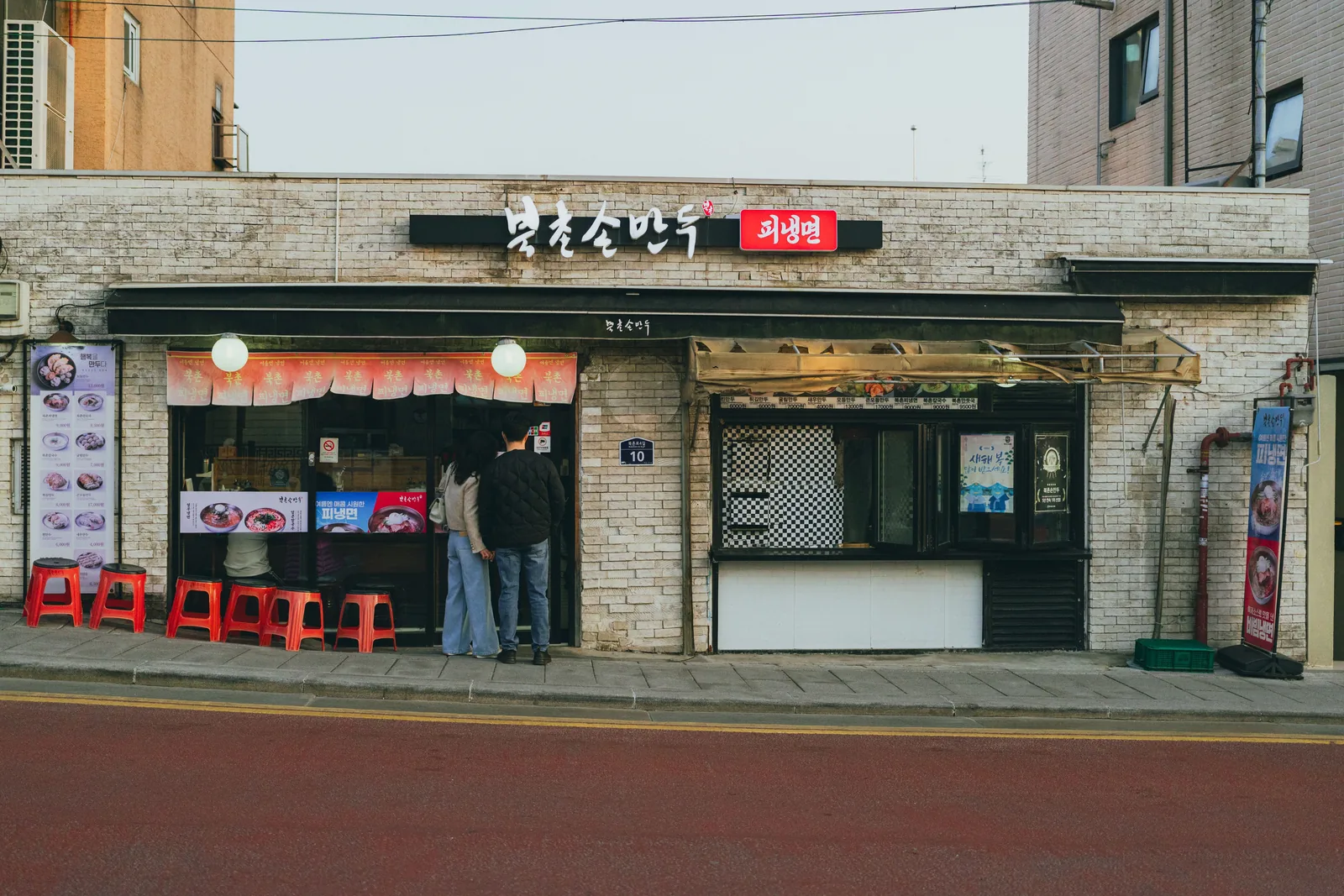
South Korea's allergen labeling law: the most expansive in Asia
South Korea's Ministry of Food and Drug Safety requires mandatory allergen disclosure on packaged food labels for a broader list of allergens than any other country in Asia. While Japan mandates 8 allergens and recommends 20 more, Korea requires disclosure for 19 allergens, including several (like beef, chicken, and pine nuts) that most countries don't mandate at the same regulatory level.
This applies to packaged food sold in Korean supermarkets, convenience stores (GS25, CU, 7-Eleven Korea, Emart24), and online retail. Korean convenience store food is very well labeled: one of the easiest environments for allergy travelers in the country.
Note on sesame: sesame is not on Korea's mandatory labeling list, despite being one of the most pervasive allergens in actual Korean cooking (see below). Legal disclosure and real-world risk are two different things here, treat sesame as high-risk regardless of what a package label does or doesn't say.
Restaurants are a different matter. Korean food service establishments are not legally required to display allergen information, and most traditional restaurants do not. This is where preparation and communication matter.
The hidden allergens in Korean food
Korean cuisine has several ingredients that function like invisible structural allergens : present across most dishes, rarely mentioned on menus, and often misunderstood by staff who don't think of them as allergens at all.
Soy: ganjang, doenjang, and gochujang
Soy is the most pervasive allergen in Korean cooking, appearing in three distinct fermented forms:
- Ganjang (간장): Korean soy sauce: used in marinades, dipping sauces, braises, stews, and most banchan (side dishes). Also contains wheat, making it a double allergen for wheat/gluten-sensitive travelers.
- Doenjang (된장): Fermented soybean paste: foundational to doenjang jjigae (the most common everyday Korean stew), used as a seasoning base and in dipping sauces for Korean BBQ.
- Gochujang (고추장): Fermented red pepper paste: contains soy and wheat. Used in bibimbap, tteokbokki, many stews, and as a table condiment. Often assumed to be "just chili" by travelers.
For soy allergy, Korean cuisine is genuinely difficult to navigate at traditional restaurants. There is no soy-free Korean equivalent of tamari. Your best options are plain grilled meats and simply prepared rice dishes: with explicit instruction to the kitchen.
Sesame oil: the finishing allergen you won't see coming
Sesame oil (chamgireum, 참기름) is used as a finishing condiment across Korean cooking in the same way olive oil is used in Mediterranean food: it goes on at the end, right before serving. Bibimbap, namul (vegetable side dishes), japchae (glass noodles), and most banchan are finished with sesame oil. It's rarely listed as a primary ingredient and is often added after cooking, making it easy for kitchen staff to overlook when given allergy instructions.
Sesame seeds (chamggae, 참깨) are used as a garnish on almost all Korean dishes : they're the small white seeds you see on nearly everything.
Seafood in kimchi and broths
Traditional kimchi: the fermented cabbage served as a side dish at every Korean meal : is made with saeu-jeot (salted fermented shrimp) and/or aekjeot (fish sauce) as standard fermentation ingredients. These are not optional additions. They are part of the recipe and have been for centuries. Standard kimchi is not safe for shellfish or fish allergies.
Vegan kimchi (made without seafood) is available at some health-focused restaurants and vegetarian establishments in Seoul, but it's the exception rather than the rule and requires asking specifically.
Korean broths present a similar challenge. Many everyday soups: including miyeok-guk (seaweed soup), kongnamul-guk (bean sprout soup), and haemul stews: use dried anchovies (myeolchi) or dashima (kelp) as a broth base. Seafood stews are clearly identifiable, but the anchovy broth base in non-seafood soups is not.
Get a free Korean-English allergy card: covering soy, sesame, shellfish, and your specific allergens in Korean script
Build My Korea CardKey Korean phrases for allergy communication
Show these in writing rather than attempting to pronounce them. Romanized pronunciation is included for reference, but written Korean communicates more accurately to kitchen staff.
- 저는 [allergen] 알레르기가 있어요: I have a [allergen] allergy (jeo-neun [allergen] allergy-ga it-seo-yo)
- 이 음식에 [allergen]이/가 들어있나요?: Does this food contain [allergen]? (i eum-sik-e [allergen]-i/ga deu-reo-it-na-yo)
- 새우젓이나 젓갈이 들어있나요?: Does this contain salted shrimp or fish sauce? (saeu-jeot-i-na jeot-gal-i deu-reo-it-na-yo)
- 참기름을 빼주세요: Please leave out sesame oil (cham-gi-reum-eul ppae-ju-se-yo)
- 간장을 빼주세요: Please leave out soy sauce (gan-jang-eul ppae-ju-se-yo)
- 된장을 빼주세요: Please leave out doenjang (doen-jang-eul ppae-ju-se-yo)
- 먹으면 죽을 수도 있어요: Eating this could kill me (meo-geu-myeon ju-geul su-do it-seo-yo): use for anaphylactic severity
- 알레르기 반응이 매우 심각해요: My allergic reaction is very severe (allergy ban-eung-i mae-u sim-gak-hae-yo)
High-risk Korean dishes by allergen
Korean BBQ with a food allergy
Korean BBQ (samgyeopsal, bulgogi, galbi) is manageable for some allergies precisely because the meat is cooked in front of you. But it's not without risk:
- Marinades: Bulgogi and galbi marinades are soy sauce and sesame-based. Plain, unmarinated pork belly (plain samgyeopsal) is the lowest-risk option: it's just pork.
- Shared grills: If the restaurant serves seafood on the same grill, cross-contamination is a real risk. Ask for a clean grill plate (새 불판 주세요: sae bul-pan ju-se-yo: please give me a new grill pan).
- Banchan (side dishes): The small side dishes served alongside your meal almost universally contain sesame oil, and many contain kimchi (shellfish) or soy. Confirm each one individually if you have severe allergies.
- Dipping sauces: Ssamjang (wrapping sauce) is doenjang + gochujang: pure soy. Skip all dipping sauces except for plain sea salt.
Where allergy communication works best in Korea
International hotels and upscale restaurants in Seoul (Gangnam, Itaewon, Myeongdong): Highest English proficiency and allergy awareness. Many have English menus with allergen information. A written card plus verbal confirmation works well.
Korean convenience stores (CU, GS25, 7-Eleven Korea): Packaged food is clearly labeled under Korean allergen law. Grab-and-go triangle gimbap, packaged rice dishes, and snacks all display allergen information. One of the most transparent eating environments in Korea for allergy travelers.
Franchise restaurants and chains (Lotteria, McDonald's Korea, Paris Baguette, chains in department store food courts): Increasingly allergy-aware with standardized recipes. Ask for an allergen chart (알레르기 표 있어요?: allergy pyo it-seo-yo: do you have an allergen chart?).
Traditional pojangmacha (street food tents) and local eateries: Highest risk. Limited English, no allergen charts, high cross-contamination likelihood. Reserve these for low-risk options like plain roasted corn or plain rice dishes.
Vegetarian and vegan restaurants: Growing presence in Seoul (especially Hongdae, Insadong, and Itaewon). Vegan establishments are likely to use vegan kimchi (no seafood) and soy-free alternatives: but confirm explicitly, as "vegan" doesn't mean allergen-free.
Emergency information for Korea
South Korea has an excellent healthcare system with world-class hospitals. Seoul in particular has several major hospitals with English-speaking staff.
- Emergency number: 119 (ambulance and fire)
- Seoul medical centers with English support: Severance Hospital (Yonsei), Samsung Medical Center, Asan Medical Center
- Epinephrine availability: Epinephrine auto-injectors are available in Korea but not at all pharmacies. Bring your own supply and carry it at all times.
- Key phrase: 알레르기 반응이에요, 병원에 데려가 주세요: I'm having an allergic reaction, please take me to a hospital (allergy ban-eung-i-e-yo, byeong-won-e de-ryeo-ga ju-se-yo)
Frequently asked questions
Is South Korea safe for travelers with food allergies?
South Korea has strong allergen labeling for packaged food: the most expansive mandatory list in Asia. Restaurant communication is more variable. Seoul's international restaurants and major chains are increasingly allergy-aware. Traditional restaurants and street food carry higher risk. A written Korean-language allergy card is the most reliable tool.
What are the most common hidden allergens in Korean food?
The structural hidden allergens in Korean cuisine are: soy (ganjang, doenjang, and gochujang appear across nearly all savory Korean cooking), sesame oil (used as a finishing condiment on almost everything), seafood in kimchi (salted shrimp and fish sauce in traditional recipes), and anchovy broth as a soup base. Wheat appears in soy sauce and gochujang.
Does kimchi contain shellfish?
Traditional kimchi almost always contains saeu-jeot (salted fermented shrimp) and/or fish sauce as fermentation ingredients: they're standard, not optional. Standard kimchi is not safe for shellfish or fish allergies. Vegan kimchi exists but is not the default. Always ask explicitly.
Can you eat Korean BBQ with a food allergy?
Plain, unmarinated samgyeopsal (pork belly) on a clean grill is the lowest-risk Korean BBQ option. Marinaded meats (bulgogi, galbi) contain soy and sesame. Banchan side dishes almost universally contain sesame oil and often contain kimchi or soy. Dipping sauces are soy-based. Stick to plain pork, plain rice, and plain salt, and request a clean grill plate.
How do you say food allergy in Korean?
The key phrase is 저는 [allergen] 알레르기가 있어요 (jeo-neun [allergen] allergy-ga it-seo-yo: I have a [allergen] allergy). For severity: 먹으면 죽을 수도 있어요 (meo-geu-myeon ju-geul su-do it-seo-yo: eating this could kill me). Show a written Korean card rather than attempting to speak these phrases.
Generate a bilingual Korean-English allergy card that specifies your allergens in Korean script: including soy sauce (간장), sesame oil (참기름), and shellfish (갑각류). Show it at any restaurant in South Korea. No sign-up required.
Build my card →