Digital vs. Physical
Allergy Card
A laminated card can't run out of battery. A digital card can't be left in a hotel room and updates the moment your trip changes. Here's an honest look at both, so you can pick the one that actually fits how you travel.
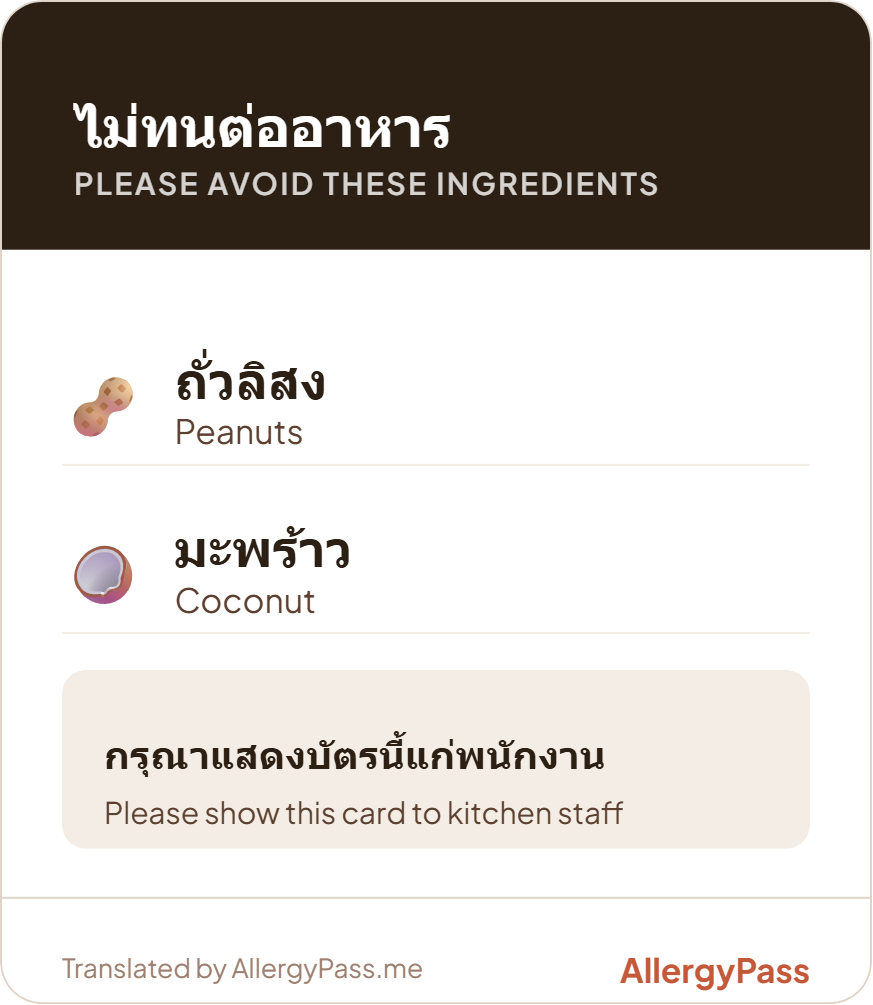
What a physical allergy card gets right
A laminated card has no battery to run out and no signal to lose. Hand it across the table and it works, full stop, which matters at a street stall or a rural restaurant where a phone might draw the wrong kind of attention or simply not have a charge left by dinner. Some kitchen staff also read a printed card faster than a phone screen held out mid-service. The tradeoff is that it's a single point of failure: lose the card, leave it in a hotel drawer, or spill something on it, and you're without it for the rest of the trip with no way to reprint on the spot. It's also fixed at print time — one language, one set of allergens, one severity level — so adding a country or a new restriction mid-trip means starting over.
Where a digital card differs
AllergyPass builds the card as data, not a printed object, so the same card can carry every language you need across a multi-country trip without buying or packing a second card. Change your allergens or your destination and the card updates immediately, no reprint. Saved as an image or added to Apple or Google Wallet, it works with no signal at the table, the same practical offline reliability a laminated card offers, without the risk of leaving a physical object behind. The real cost is the dependency a laminated card doesn't have: showing the card needs a phone with some charge left, and building or re-downloading a new one needs internet first.
Side-by-side comparison
Which one should you choose
Quick verdict
Most travelers don't actually have to pick one forever. AllergyPass's card is built digital-first, but the same card exports as a PDF you can print and laminate the way a traditional physical card works, so you get the offline guarantee of paper without paying for two separate products. Start with the free tier and see whether the digital version alone covers your trip before deciding you need a backup.
Build a free allergy card, digital or ready to print and laminate
Build My CardSee also our Equal Eats comparison and SelectWisely comparison if you're weighing named competitors, or printing a free allergy card if a laminated-style physical card matters most to you.
Frequently asked questions
Is a digital or physical allergy card safer?
Neither is safer on its own; they fail differently. A physical card can't run out of battery but is a single point of failure if it's lost, damaged, or left behind, and its wording is fixed at print time. A digital card can be saved as an image or a wallet pass so it works with no signal, updates instantly if your allergens or destination change, but does need a phone with enough charge to show it.
Can a digital allergy card work without internet at the restaurant?
Yes, once it's been downloaded as an image or added to Apple or Google Wallet. Both are saved to the phone itself, so showing the card at the table doesn't need a live connection. Building or re-downloading a new card does need internet, so save or add-to-wallet your card before you lose signal, not after.
What if my phone dies mid-trip?
That's the real tradeoff a digital card carries and a laminated one doesn't. A portable charger or a printed backup closes the gap; AllergyPass's PDF export can be printed and laminated before you travel, so you can carry a physical backup of the same card without paying for two separate products.
Build a bilingual allergy card for your destination in native script. Select your allergens, set severity, and export as an image, PDF, or wallet pass. No sign-up required for the free tier.
Build my card →This article is for informational and travel preparation purposes only. It does not constitute medical advice, and it is not an endorsement or disparagement of any other company's product. Always consult a qualified healthcare professional before traveling with a food allergy, and carry any prescribed emergency medication at all times. See our full medical disclaimer.