 AllergyPass
Food allergies don't stop at borders.
Communication shouldn't either.
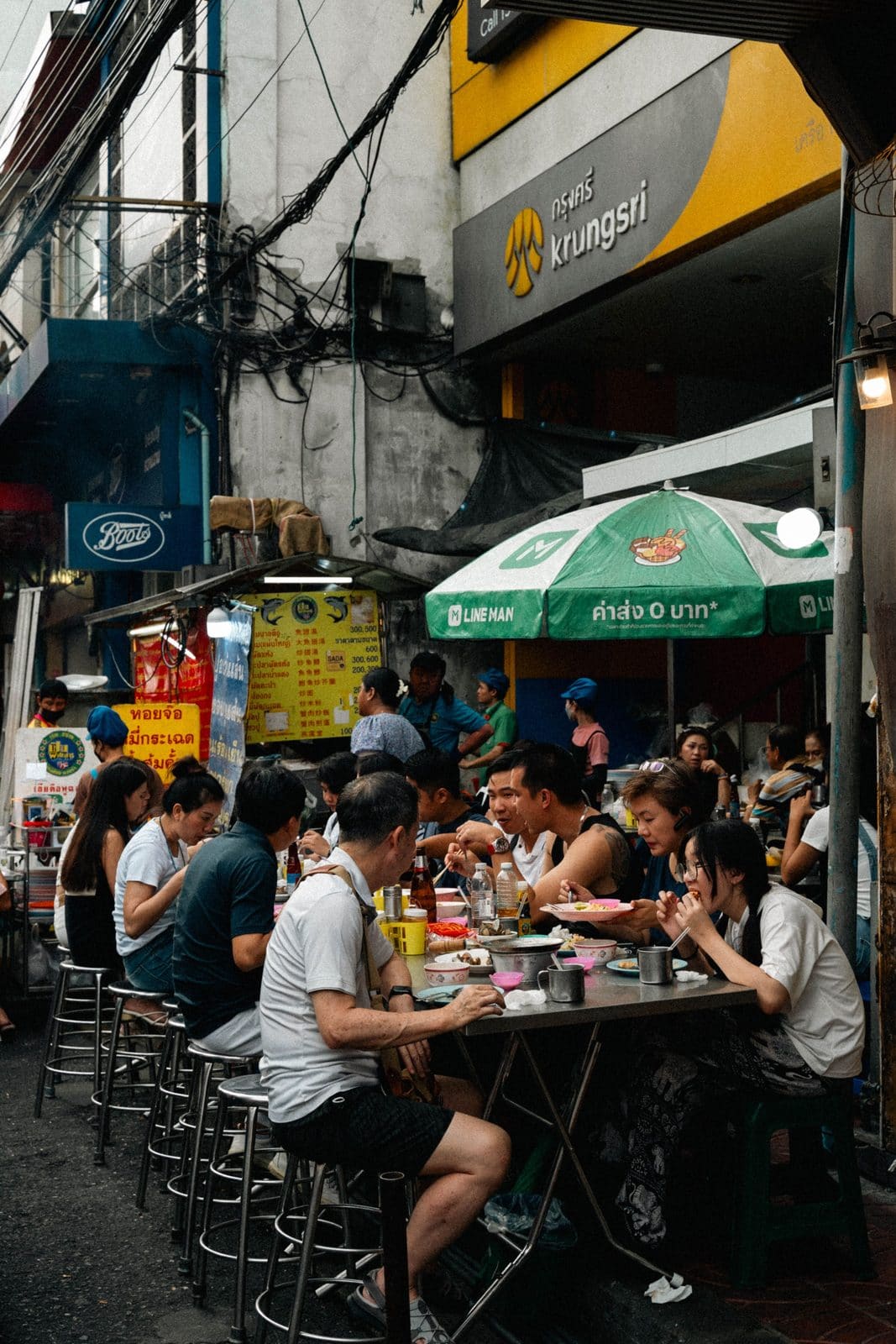
AllergyPass is a food allergy travel platform built by a healthcare professional. The starting point was watching a friend have an allergic reaction at a Bangkok street stall because neither side could communicate clearly enough to prevent it.
Language is where things go wrong.
Managing food allergies at home is hard enough. Abroad, the risks multiply: different ingredients, different languages, and vendors who want to help but don't understand what you're asking.
- 🗣️ Language barriers: even a fluent "I'm allergic to peanuts" can be misheard, mistranslated, or misunderstood.
- 🥘 Hidden ingredients: sauces, marinades, and cooking oils contain allergens that don't appear on a menu or a dish name.
- 🌍 Regional cooking differences: the same dish in two countries may share a name but not an ingredient list.
- 🤝 Willingness isn't enough: vendors often want to help but simply don't understand what's being asked.

It started with one reaction that didn't have to happen.
Shortly after I moved to Bangkok, a friend of mine had an allergic reaction at a street food stall. She was careful. She tried to explain her allergy. The vendor was attentive and genuinely wanted to help.
It still went wrong, not because anyone was careless, but because neither side could understand the other clearly enough to get it right.
I kept thinking about how a single card, something she could hand over, written in the local language, with exactly what to avoid, would have changed the outcome. So I built one.
That card became the Allergy Card Builder. The guides, tools, and resources that grew around it became AllergyPass.

I'm Abe Alatieh. I'm a dentist by training, and I've spent most of my adult life living outside my home country. That experience navigating healthcare, food, language, and culture in places where you don't always speak the language, shapes everything I build.
Dentistry isn't allergy medicine, so I don't lean on my own authority for the medical specifics. Regulatory allergen facts are checked against cited primary sources. Nine language sets have completed native-speaker review, and I'm arranging reviews for the remaining languages. What my training adds is comfort reading clinical literature and thinking carefully about risk communication and the real consequences of getting things wrong. AllergyPass isn't a travel blog or a content side project. It's a practical safety tool, designed the way I would want a safety tool designed.
I live in Bangkok. It's one of the world's great food cities, and eating adventurously here with a food allergy requires real preparation. That keeps the tools practical rather than theoretical.
How guides on this site get reviewed.
Who reviews. I review every guide myself — Abe Alatieh, dentist and founder. Arabic is my native language, and I'm fluent in English and Swedish. For other languages, I work with native speakers of the language being reviewed. Some reviewers have asked not to be publicly identified, and AllergyPass respects that choice. I'm not an allergist and don't present myself as one; see above for how I think about that boundary.
What a translation review checks. Reviewers provide natural, locally used phrasing in their chosen language rather than a literal word-for-word translation. That wording is used in the cards and guides, and guides use the same stored translations as the card builder to keep them consistent. Regulatory allergen facts (which allergens a country requires on labels, how a labeling law actually applies) are checked against primary sources, things like Japan's Consumer Affairs Agency allergen list or EU Regulation 1169/2011, not secondhand summaries. A review does not mean clinical sign-off on allergy management advice.
How translations are delivered. AllergyPass does not ask an AI tool or machine-translation service to translate your card when you build it. The card uses fixed wording stored in a versioned translation database. That same stored wording is reused across the builder, downloadable cards, and language guides, so a correction can be checked once and applied consistently.
Translation review status. In July 2026, native speakers completed reviews for Arabic, French, German, Hindi, Punjabi, Russian, Spanish, Thai, and Vietnamese. Reviewer names are withheld where requested. Native-speaker reviewers are still being sought for the remaining languages, so the completed status does not apply to every language currently available. Each review covered the card wording in use at the time. Two card strings, and the food names added to the catalog since then, were added separately and have not yet had native-speaker review in any language: the kitchen cross-contact note and the dietary-requirement heading. The card builder says so on every reviewed-language card. These are language reviews, not clinical allergy advice. A guide's "last reviewed" date records its most recent editorial check. If wording appears unclear or incorrect, please report the language and phrase so it can be checked and corrected wherever it is used.
Native-speaker review register
Completed July 2026 · card wording in use at the time; not the kitchen cross-contact note, dietary heading or food names added since
- Arabic
- French
- German
- Hindi
- Punjabi
- Russian
- Spanish
- Thai
- Vietnamese
Cadence. Guides are re-checked whenever a relevant regulation or translation changes, and every guide gets re-checked at least once a year regardless. The "last reviewed" date on each guide reflects the most recent check, not the original publish date.

Practical tools for safer eating abroad.
Each tool solves a specific problem: knowing what's in a dish before you order, and communicating your restrictions clearly once you're at the table.
Build a bilingual allergy card in under two minutes. Select your allergens, choose a destination language, and get a card you can show to any server or vendor. No account needed.
→ Communicate clearly at any mealLook up common dishes by country and see which allergens they typically contain, how likely they are to be hidden, and what to ask before you order.
→ Know the risk before you orderDestination-specific guides covering common local allergens, phrases to use, cuisines to approach with caution, and how to research restaurants before you arrive.
→ Arrive prepared, not anxiousA language barrier is a solvable problem. AllergyPass exists to solve it.
Clear communication reduces risk. Every card built on AllergyPass removes a specific point of failure: the moment a traveler tries to explain a restriction and the kitchen staff can't understand them.
AllergyPass covers food allergies, intolerances, and religious dietary requirements across 60+ languages. The goal is the same regardless of where you're going: eat safely, communicate clearly.

Healthcare-informed. Practically focused.
Built by a dentist
Every tool and guide reflects a clinical mindset: accuracy, risk awareness, and clear communication over vague reassurance.
Global scope
AllergyPass supports 60+ languages. Cards are designed to be understood, not just translated.
No account required
The core tools work without signup. Your allergy data stays on your device.
Designed to reduce risk
AllergyPass helps you communicate more clearly. It is not a guarantee of safety. It is a tool that meaningfully reduces the risk of misunderstanding.
Build your allergy card before you go.
Takes two minutes. No account needed.