Food Allergies in Turkey:
What to Watch for Beyond Baklava
Everyone knows Turkey for kebabs, baklava, and Turkish tea. Fewer people realize the country sits outside the EU entirely, which changes how allergen disclosure legally works, and that sesame, pistachios, and yogurt-based sauces run through dishes that don't read as risky at all. Here's what that actually means for a trip from Istanbul's street stalls to a coastal seafood dinner.
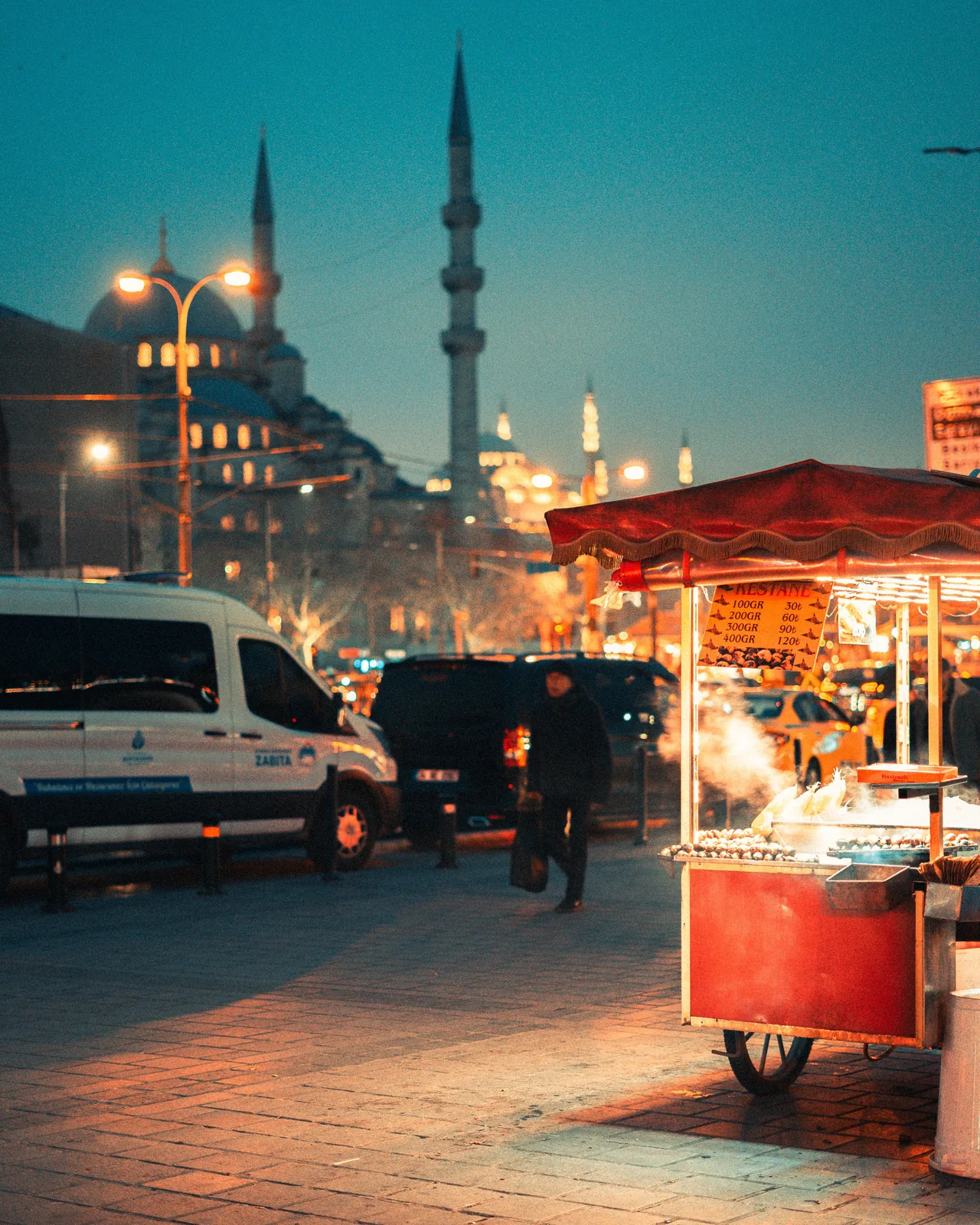
Why Turkey is different for allergies
Turkey has been a candidate for EU membership since 1999, and as part of that process, its food safety authority modeled the national food code, the Türk Gıda Kodeksi, directly on EU Regulation 1169/2011, the same regulation referenced throughout this site's other European guides. That means the legal expectation for allergen disclosure on packaged food in Turkey sits closer to the EU standard than many travelers assume. What changes outside the legal text is consistency in practice: enforcement, staff training, and English-language menu support are strongest in Istanbul, Antalya, and other major tourist destinations, and drop off meaningfully in smaller towns and rural areas. Turkey also has no national certification body for gluten-free or allergen-aware restaurants.
Hidden allergens in Turkish cuisine
Sesame in simit, tahini, and helva
Simit, the sesame-crusted bread ring sold on nearly every street corner, is a daily staple rather than an occasional treat. Tahini, sesame paste, shows up well beyond the dessert aisle, in sauces, dips, and savory pastries like tahinli pide, not just in helva, the tahini-based sweet it's most associated with. A dish that reads as plain bread or a simple sauce can still carry meaningful sesame exposure.
Pistachios and walnuts in baklava, künefe, and lokum
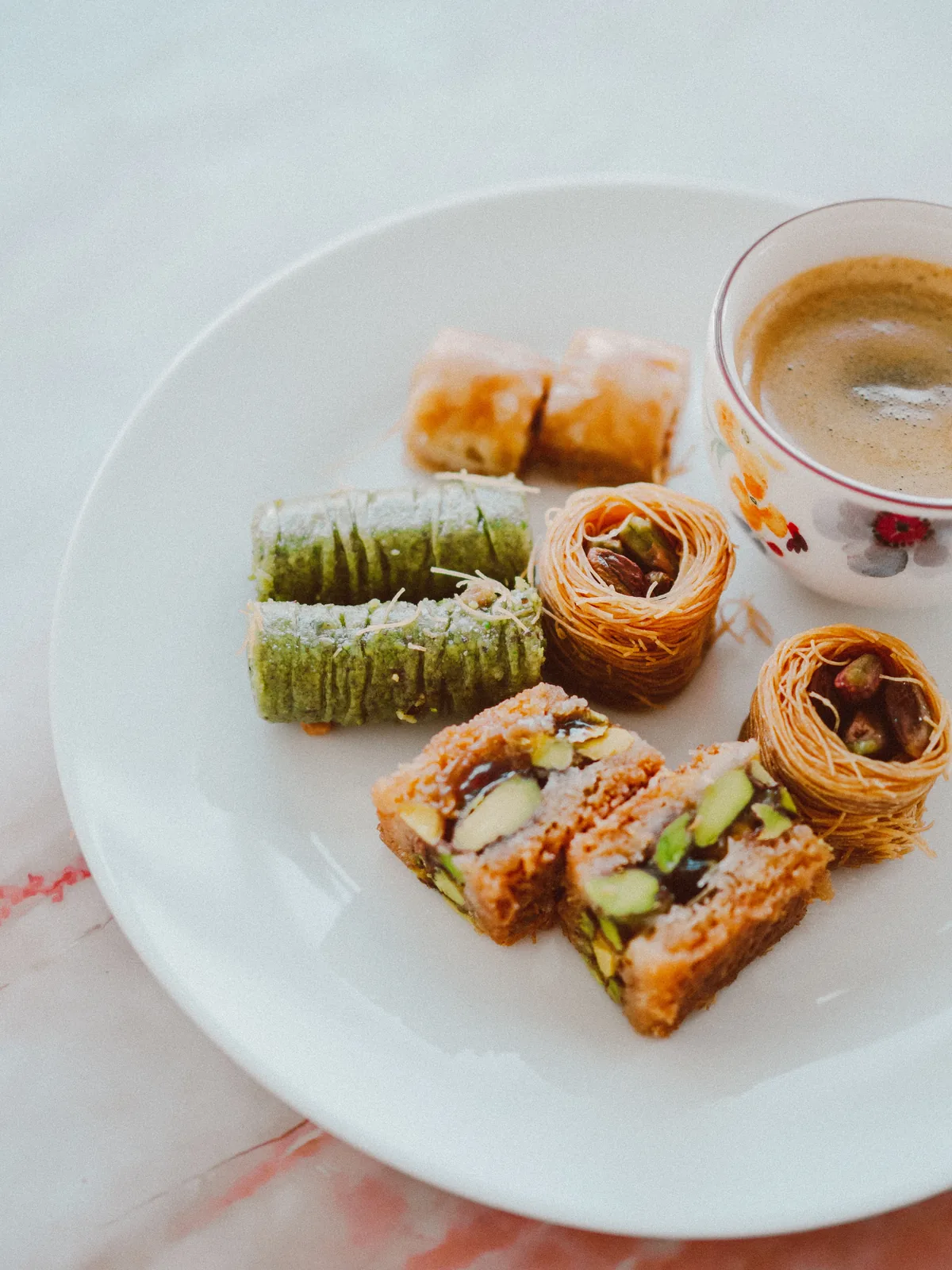
Baklava is built from layers of phyllo with ground pistachios or walnuts forming the structure, not a garnish on top. Künefe, a shredded phyllo and cheese dessert, is traditionally topped with crushed pistachios. Turkish delight (lokum) varies by recipe, some versions are nut-free, others use chopped nuts as a core ingredient, so the same dessert name doesn't guarantee the same allergen profile from one shop to the next.
Yogurt-based sauces under mantı and İskender kebab
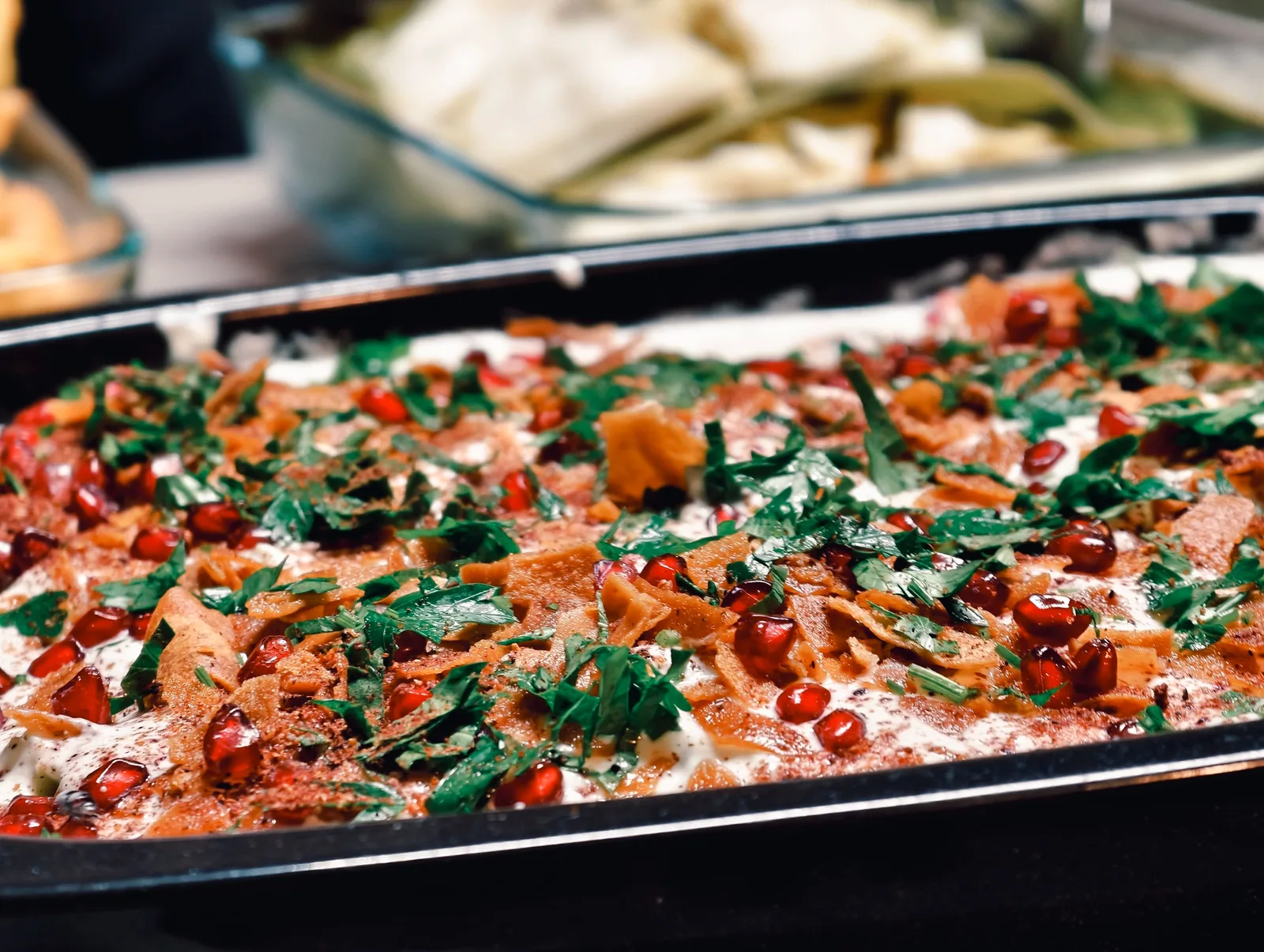
Mantı, Turkish dumplings, are traditionally served under a yogurt and garlic sauce that's part of the dish, not a side option. İskender kebab reads as a meat dish on the menu, but it's built on a base of yogurt and a butter-tomato sauce poured over bread and sliced meat, dairy exposure that's easy to miss if you're only thinking about the kebab itself.
Dairy and wheat together in künefe and börek
Künefe combines shredded phyllo, butter, and a layer of unsalted cheese, baked and soaked in syrup, dairy and gluten in the same bite. Börek, a savory phyllo pastry, defaults to cheese filling as often as meat, with su böreği (a layered, boiled-then-baked version) being one of the more cheese-heavy variations found across the country.
Mussels along the coast: midye dolma and beyond
Midye dolma, mussels stuffed with seasoned rice, is one of Istanbul's most recognizable street foods, sold from trays along the Bosphorus and in coastal neighborhoods, with no shellfish-free version. Coastal cities along the Aegean and Mediterranean carry the same exposure through fried mussels, seafood stews, and fish sandwiches built around the day's catch.
Get a free Turkish-English allergy card covering sesame, tree nuts, dairy, shellfish, and your specific allergens for Turkey
Build My Turkey CardKey Turkish phrases for allergy communication
- [allergen]'e karşı bir gıda alerjim var (I have a food allergy to [allergen])
- Glutene alerjim var (I am allergic to gluten)
- Süt ürünlerine alerjim var (I am allergic to dairy)
- Kuruyemişe alerjim var (I am allergic to tree nuts)
- Kabuklu deniz ürünlerine alerjim var (I am allergic to shellfish)
- Susama alerjim var (I am allergic to sesame)
- Bu yemekte [allergen] var mı? (Does this dish contain [allergen]?)
- Bu alerji hayatı tehdit edebilir (this allergy can be life-threatening)
- Bir doktora ihtiyacım var (I need a doctor; emergency)
High-risk Turkish dishes by allergen
| Dish | Key allergens | Notes |
|---|---|---|
| Baklava | Tree nuts (pistachios, walnuts), wheat (phyllo), dairy (butter) | The nuts form structural layers, not a garnish you can ask to skip |
| Künefe | Dairy (cheese, kaymak), wheat (phyllo), tree nuts (pistachio topping) | Three allergens stacked in one dessert sold as a single, non-modifiable dish |
| Simit | Sesame, wheat | Often sold topped with white cheese, adding dairy to a sesame-and-wheat base |
| Midye dolma | Shellfish, sometimes tree nuts (pine nuts in the rice filling) | A beloved street food with no shellfish-free version |
| Mantı | Wheat (dumpling dough), dairy (yogurt sauce), egg | The yogurt-garlic sauce is part of the dish, not an optional topping |
| İskender kebab | Dairy (yogurt, butter sauce), wheat (pita base) | Reads as a meat dish; the sauce underneath is yogurt and butter |
| Helva and tahini-based desserts | Sesame (tahini), sometimes tree nuts | Tahini is sesame paste; easy to miss if you don't recognize the word |
| Grilled meats without sauce (kebap, köfte) | Low risk if served plain | A safer default order; confirm any yogurt or sauce side separately |
Where allergy communication works best in Turkey
Tourist-area restaurants in Istanbul and Antalya: The most English-language menu support and the most allergen awareness, particularly at hotel-adjacent and internationally-oriented venues.
Local lokantas and esnaf restaurants: Home-style, made-to-order cooking that can be flexible once you communicate clearly, but English proficiency drops meaningfully outside major cities.
Street food vendors (simit, midye dolma, balık ekmek): The least flexible category, since most items are pre-made before you order, leaving little room to modify a dish on the spot.
Supermarkets (Migros, CarrefourSA): Increasingly strong gluten-free labeling and dedicated aisles in larger stores, making self-catering a reasonably predictable option in major cities.
Best Turkish supermarkets for allergy-friendly foods
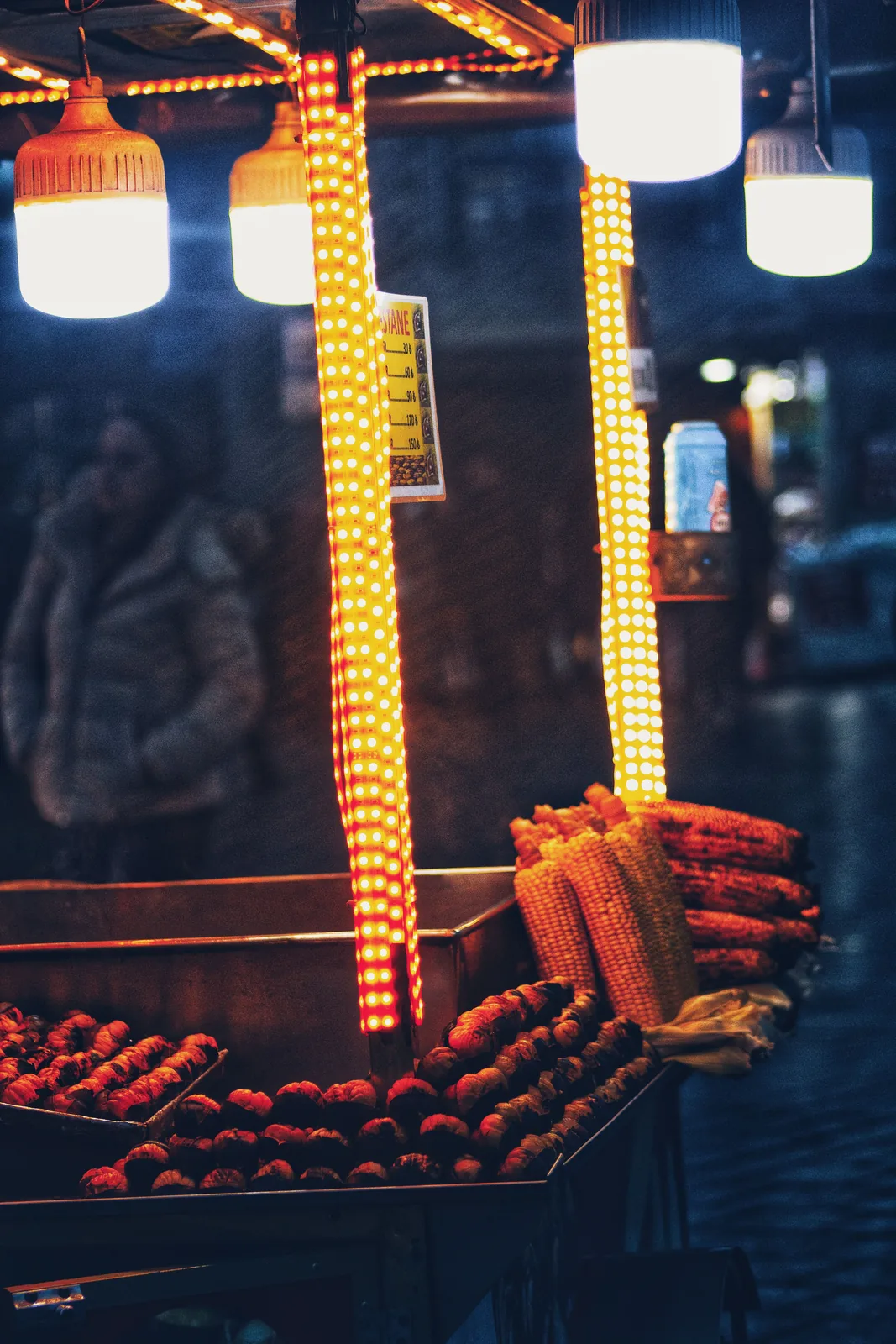
Turkey's gluten-free and free-from retail market has expanded significantly in recent years, even without an EU mandate driving it. The chains below cover most of the country, with the strongest selection concentrated in larger stores.
Migros: Turkey's largest supermarket chain with over 3,000 locations nationwide. Larger format stores carry dedicated gluten-free aisles, while smaller Migros Jet express locations have more limited free-from selection, so a full-size Migros is worth seeking out over a corner branch if you're stocking up. Macrocenter, an upscale chain owned by Migros, stocks gluten-free bread, lavaş flatbread, and flour in major cities.
CarrefourSA: Turkey's joint venture with Carrefour, operating more than 1,200 stores across 79 provinces. Its upscale Gurme-format stores carry dedicated sections for gluten-free, vegan, and other dietary-specific products alongside a wide private-label range, with online stock listings that make it easier to confirm availability before a trip across town.
A101 and other discount chains: Some gluten-free products are available, but selection is more limited given the smaller convenience-store format most locations use.
Dedicated gluten-free shops: Cities like Istanbul and Ankara have fully gluten-free bakeries and grocers, including Glutensiz.com Market and Guru Glutensiz in Istanbul, useful for a confidently safe meal or stocking up on packaged staples before traveling onward.
Understanding Turkish allergen labeling
Turkey's food code isn't an EU regulation, but it was written to mirror one, which makes the practical labeling rules more familiar than the country's non-EU status might suggest.
An EU-style allergen framework: The Turkish Food Codex regulation on labeling closely follows the same core allergen disclosure principles as EU Regulation 1169/2011, covering the same major categories: cereals containing gluten, crustaceans, eggs, fish, peanuts, soybeans, milk, tree nuts, sesame, and several others. Many gluten-free products carry the internationally recognized crossed grain symbol on packaging, the same symbol you'd see in an EU supermarket.
Gluten-free labeling terms to know: Glutensiz or Gluten içermez (does not contain gluten) require the same under-20ppm threshold used across the EU. Watch for Çok düşük gluten or düşük glutenli (very low gluten), a separate 21-100ppm category that sounds reassuring but isn't safe for celiac disease.
Restaurant allergen disclosure: There's no national certification or symbol for allergen-aware restaurants, so disclosure depends entirely on staff knowledge and willingness to explain a dish. International hotel restaurants and tourist-area venues in Istanbul and Antalya are far more consistent about this than a family-run lokanta in a smaller town, where the kitchen may simply not have the vocabulary for a specific allergen in English.
Why written allergy cards still matter: The legal framework on paper is closer to the EU standard than you'd expect, but enforcement consistency and English support drop outside major cities. A written Turkish-language allergy card removes the dependency on local enforcement quality and staff English ability entirely.
Emergency information for Turkey
- Emergency number: 112 (unified emergency number for police, fire, and ambulance; the Ankara call center can connect English, German, Arabic, and Russian-speaking staff into local calls when needed)
- Hospitals: Hastane (hospital), Acil servis (emergency department). Acıbadem and Memorial are well-known private hospital networks with English-speaking staff in major cities.
- Epinephrine: Available at Turkish eczane (pharmacy) with prescription. Carry your own supply.
- Key emergency phrase: Ciddi bir alerjik reaksiyon geçiriyorum, 112'yi arayın (I'm having a severe allergic reaction, call 112)
Sources
This guide draws on EU food labeling law, Turkey's national food code, and official Turkish government resources. It is intended as practical travel information, not medical advice.
- Regulation (EU) No 1169/2011 on the provision of food information to consumers (EUR-Lex): the EU regulation that Turkey's own food labeling code was modeled on.
- Allergen Declaration in Mass Catering Establishments, Ministry of Agriculture and Forestry: the official source for Turkey's national food labeling and allergen disclosure rules.
- Turkish Ministry of Health (Sağlık Bakanlığı): the national authority overseeing health policy and emergency healthcare services in Turkey.
- 112 Emergency Call Center, Turkish Ministry of Interior: the official government source confirming 112 as Turkey's unified emergency number.
Frequently asked questions
Is Turkey safe for travelers with food allergies?
Turkey isn't an EU member, but its national food code was deliberately modeled on the same EU regulation used across Europe, so the legal expectation for allergen disclosure is closer to the EU standard than many travelers assume. Enforcement and English-language support are strongest in Istanbul, Antalya, and other major tourist destinations, and drop off in smaller towns. Sesame, tree nuts, and yogurt-based sauces hide in dishes that look simple, so a written Turkish-English allergy card covering your specific allergens remains the most reliable way to communicate.
What are the most common hidden allergens in Turkish food?
Sesame in simit, tahini, and helva; tree nuts (pistachios and walnuts) in baklava, künefe, and Turkish delight; dairy in yogurt-based sauces over dishes like mantı and İskender kebab; dairy and wheat together in künefe and börek; and shellfish in midye dolma, stuffed mussels sold as a popular street food, especially along the coast.
Does Turkey have the same gluten-free labeling as the EU?
Largely yes. Products labeled Glutensiz or Gluten içermez (gluten-free) must meet the same under-20ppm threshold used across the EU, and many carry the recognized crossed grain symbol. Watch for Çok düşük gluten or düşük glutenli (very low gluten), which refers to a higher 21 to 100ppm threshold that isn't safe for celiac disease, despite sounding reassuring in English translation.
How do you say food allergy in Turkish?
The core phrase is [allergen]'e karşı bir gıda alerjim var (I have a food allergy to [allergen]), or more simply, [allergen]'e alerjim var (I am allergic to [allergen]), for example glutene alerjim var for gluten. Bu alerji hayatı tehdit edebilir (this allergy can be life-threatening) is worth memorizing for anything severe.
Traveling to Turkey with food allergies?
Create a free Turkish-English allergy card before your trip. Show it at restaurants, street food stalls, and cafes across Turkey.
Build My Turkey Allergy Card- ✓ Free
- ✓ Works Offline
- ✓ Turkish + English
- ✓ No Signup Required
Generate a bilingual Turkish-English allergy card covering Gluten, Susam (sesame), Kuruyemiş (tree nuts), and your specific allergens for Turkey. Show it at any restaurant from Istanbul to the coast. No sign-up required.
Build my card →