Food Allergies in Bali:
Peanuts, Coconut, and the Language Problem
In Indonesian, "kacang" means both peanuts and beans. Shrimp paste is in almost every spice base. Coconut milk is in most sauces. Bali is beautiful and the food is excellent — but if you have food allergies, it requires specific preparation that most travel guides don't give you.
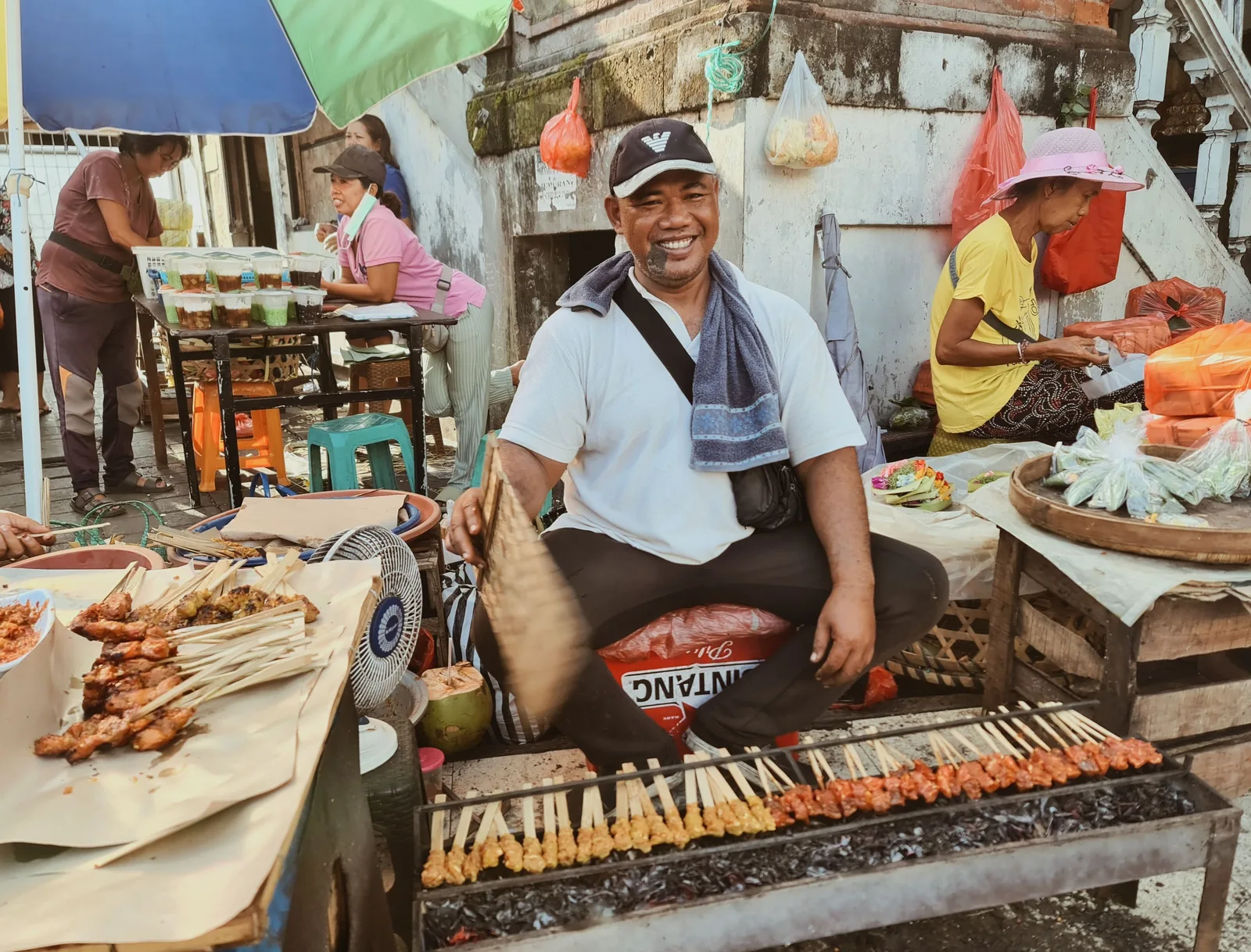
The kacang problem: why peanut allergy is especially risky in Bali
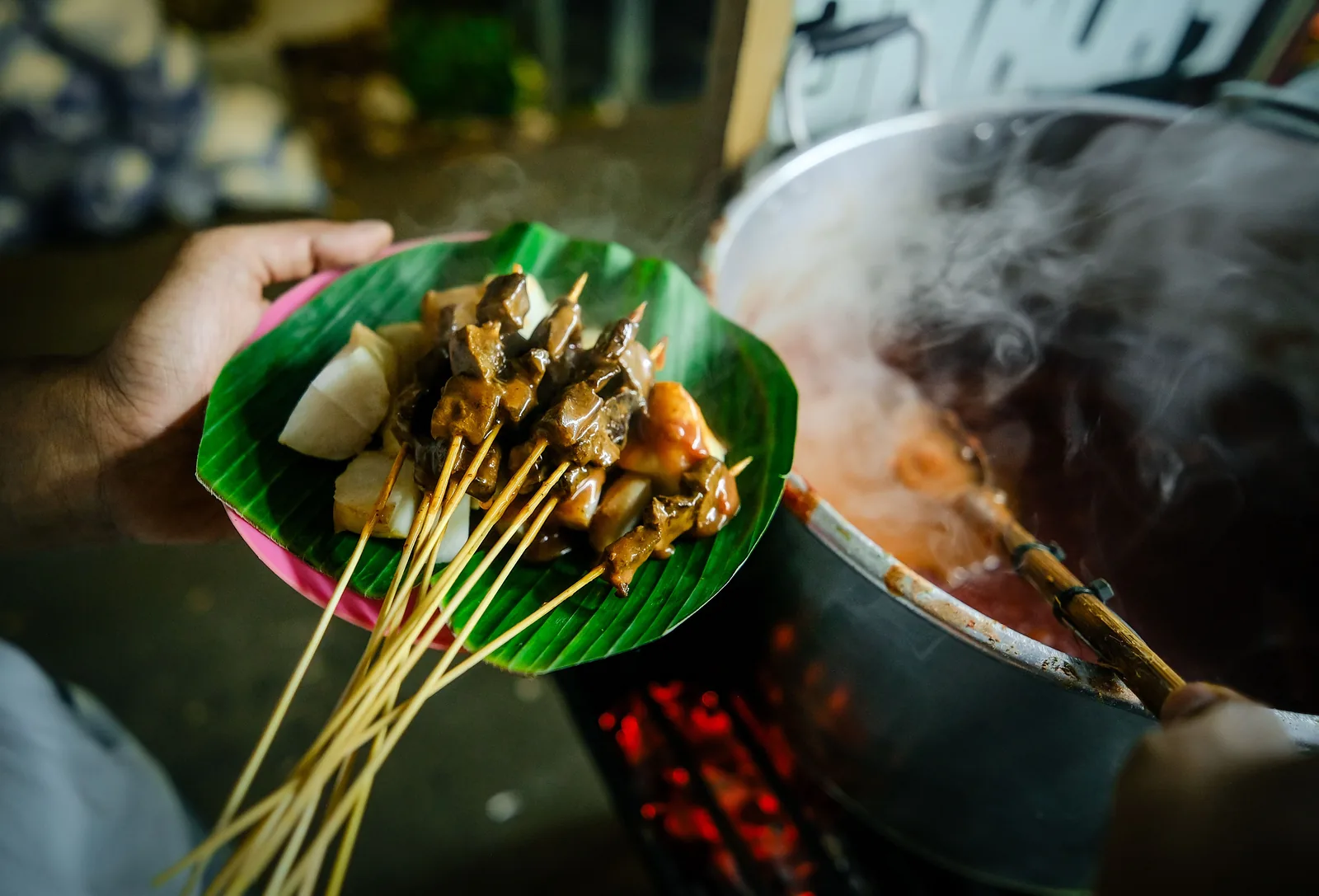
The word "kacang" in Bahasa Indonesia covers a wide family of legumes. Kacang tanah means peanuts (literally: ground nuts). Kacang hijau means mung beans. Kacang panjang means long beans. If you tell a Balinese restaurant server "no kacang," they may remove beans from your dish while leaving peanut sauce entirely intact — because the communication was technically correct, but pointed at the wrong thing.
This is not a case of carelessness. It's a genuine structural ambiguity in the language that creates real risk for travelers who don't know it. The solution is specific: always use "kacang tanah" when communicating peanut allergy in Indonesia, not just "kacang."
Generate a free Indonesian allergy card that specifically translates peanut allergy as "kacang tanah" and helps explain severe food allergies to restaurant staff
Create My Indonesian Allergy CardHidden allergens in Balinese and Indonesian food
Terasi (shrimp paste): the invisible shellfish allergen
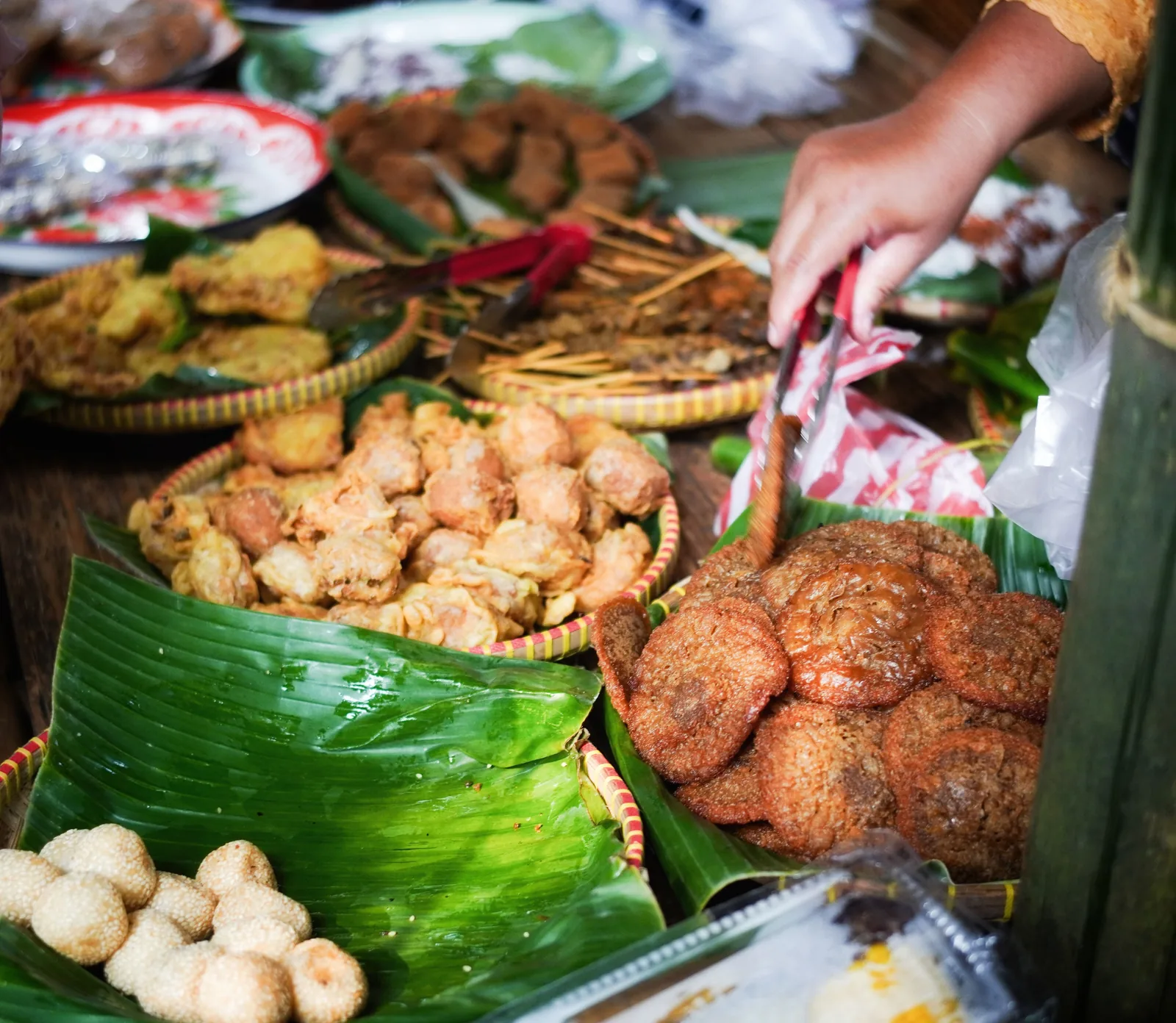
Terasi is fermented shrimp paste — a concentrated, dried block used as a foundational flavoring ingredient in Indonesian and Balinese cooking. It's added to the bumbu (spice paste base) of most curries, stir-fries, and sambal condiments at the beginning of cooking. By the time the dish is finished, it's completely incorporated and invisible.
For travelers with shellfish allergy, this means that most traditionally prepared Indonesian and Balinese savory dishes contain shellfish at the base ingredient level. It's not a garnish or optional addition — it's a core flavor building block used in the way that fish sauce is used in Thai cooking.
Western-facing restaurants and tourist restaurants in Seminyak, Canggu, and Ubud are more likely to use terasi-free preparations on request. Traditional warungs (small local restaurants) and local cooking are the highest-risk environments.
Coconut and candlenut (kemiri): sauce thickeners you won't see
Coconut milk (santan) is foundational to Balinese curries, soups, and most braised dishes. Dishes like opor ayam (coconut chicken), sayur lodeh (vegetable curry), and most Balinese lawar preparations contain coconut milk. This is visible enough on menus that coconut allergy is easier to avoid — though cross-contamination from shared cooking equipment is still a concern.
Candlenut (kemiri) is less visible. It's a waxy, oily nut used as a sauce thickener in Balinese spice pastes — it adds body to curries and sambals in the way that flour thickens sauces in European cooking. It doesn't appear as a named ingredient on menus but is present in most traditionally prepared Balinese spice pastes. For tree nut allergy, kemiri is worth flagging specifically — it's not always recognized as a nut by staff.
Kecap manis: sweet soy sauce in most savory Indonesian dishes
Kecap manis is a thick, sweet soy sauce — darker and sweeter than Chinese or Japanese soy sauce — and it's the most used condiment in Indonesian cooking. It appears in nasi goreng (fried rice), mie goreng (fried noodles), marinades, and most stir-fries. For soy allergy, it's the primary concern alongside tofu and tempeh (both of which are Indonesian staple proteins). Notably, kecap manis also contains wheat in some formulations — relevant for celiac travelers.
Get a free Indonesian-English allergy card covering kacang tanah, terasi, and your specific allergens
Generate My Indonesian Translation CardKey Indonesian phrases for allergy communication
- Saya alergi kacang tanah — I am allergic to peanuts (use "kacang tanah," not "kacang")
- Saya alergi terasi dan udang — I am allergic to shrimp paste and shrimp
- Saya alergi kelapa — I am allergic to coconut
- Saya alergi kedelai — I am allergic to soy
- Saya alergi gluten — I am allergic to gluten
- Apakah ada kacang tanah di makanan ini? — Does this food contain peanuts?
- Apakah ada terasi di makanan ini? — Does this food contain shrimp paste?
- Tolong jangan tambahkan bumbu kacang — Please don't add peanut sauce
- Alergi ini bisa membahayakan nyawa saya — This allergy can endanger my life
- Saya butuh dokter — I need a doctor (emergency)
High-risk Balinese and Indonesian dishes
Is satay safe for peanut allergy?
Satay (sate) itself is grilled meat on skewers — chicken, pork, or beef — and the meat alone is often a reasonably lower-risk option for peanut allergy, since the marinade is typically built on soy sauce, garlic, and spices rather than peanuts. The risk comes almost entirely from the accompanying sauce. Bumbu kacang, the classic satay dipping sauce, is a thick peanut-based sauce that's standard at warungs across Bali, from Denpasar's markets to beachfront grills in Seminyak. It's served alongside the skewers as a near-universal pairing rather than an optional extra, so satay is rarely offered peanut-sauce-free unless specifically requested in advance.
Cross-contamination is the second concern. Satay is frequently grilled on shared equipment that has also cooked meat brushed with peanut sauce, and the same tongs, brushes, or serving plates may move between sauced and unsauced skewers. For peanut allergy, the safest approach is to request satay without sauce, ask specifically whether the marinade itself contains peanut or peanut oil, and confirm the grill and utensils haven't touched bumbu kacang. Western-facing restaurants in tourist areas like Ubud and Canggu are generally more accustomed to this request than traditional warungs, where peanut sauce is prepared in the same kitchen space as the meat.
What is terasi and why is it a problem for shellfish allergy?
Terasi is fermented shrimp paste, made from tiny shrimp that are salted, dried, and aged into a dense, pungent block. It's one of the foundational ingredients in Indonesian cooking, used the way fish sauce is used in Thai food or anchovies in Italian sauces — as a background flavor builder rather than a standalone dish. For shellfish allergy, this makes terasi a genuinely hidden allergen: it's stirred into the bumbu (spice paste) at the start of cooking, then fried, blended, or simmered until it disappears visually and aromatically into the finished dish.
The challenge is how common it is. Terasi appears in the base of most sambal varieties, in many nasi goreng and mie goreng preparations, in numerous vegetable dishes, and in countless regional curries across Bali and Indonesia more broadly. A dish that looks entirely plant-based or meat-based, with no visible seafood, can still contain terasi as a core flavoring agent. Menus almost never list it as an ingredient, and kitchen staff may not think to mention it unless asked directly, because to them it isn't a "seafood dish" — it's a seasoning. For shellfish allergy, the only reliable approach is to ask explicitly about terasi by name, since "no shellfish" alone may not register that a shrimp-based paste is already in the sauce.
Can people with tree nut allergy eat kemiri?
Kemiri (candlenut) is a hard, oily nut used throughout Balinese and Indonesian cooking as a thickener — it's ground into spice pastes to give curries, sambals, and braised dishes a richer, creamier body, similar to the role cornstarch or cream plays in Western sauces. It's structurally important to many bumbu (spice base) recipes, including rendang, sayur lodeh, and various Balinese lawar preparations, but it's used in small, blended amounts rather than served whole or as a visible garnish.
This makes kemiri easy to miss. It doesn't look or behave like a typical tree nut on the plate — there's no whole nut to spot, no nutty garnish, and no obvious texture, since it's fully incorporated into the sauce. Restaurant staff may not automatically associate it with a "tree nut" allergy warning, since they think of it as a cooking ingredient rather than a snack nut. For travelers with tree nut allergy, the safest approach is to ask specifically about kemiri or candlenut by name when ordering sauced or curried dishes, rather than relying on a general "no nuts" request. Traditional warungs are the highest-risk setting, since kemiri is a near-default ingredient in many spice pastes; some Western-facing kitchens in tourist areas such as Ubud can prepare modified versions on request, but this should always be confirmed directly with the kitchen rather than assumed.
Lower-risk foods in Bali
Alongside dishes to approach carefully, several Indonesian and Balinese staples are lower-risk by default. These are useful fallback options when communication is difficult, or when trying a hotel restaurant or Western-facing kitchen for the first time — though cross-contamination from shared cooking equipment is still worth confirming.
Cross-contamination risks in Bali
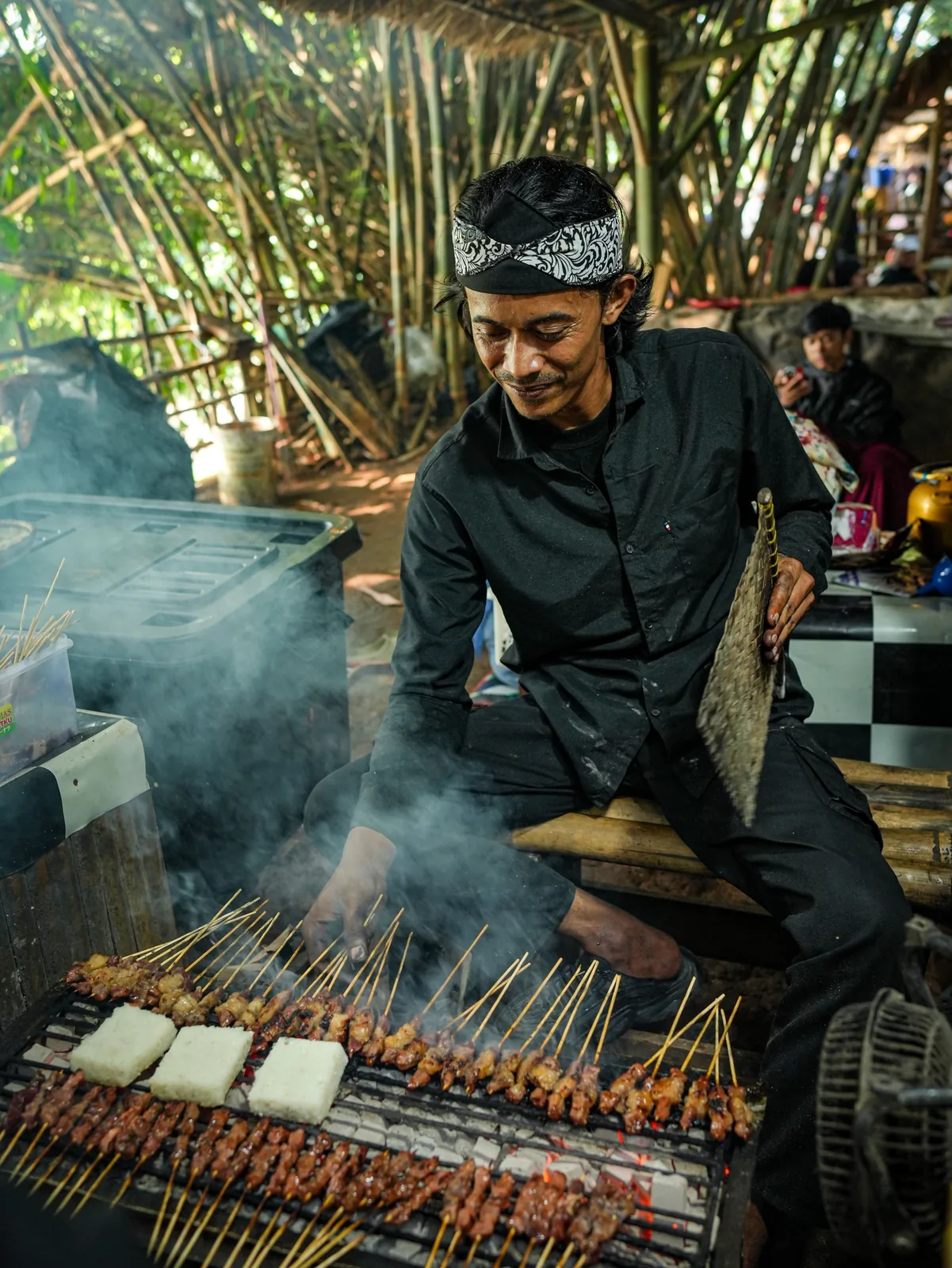
Even when a dish itself doesn't contain your allergen, the equipment and surfaces used to prepare it often do — and in Bali's fast-paced kitchens, cross-contamination is frequently a bigger practical risk than the recipe on paper.
Shared woks and pans are the most common source. Warung kitchens typically cook dozens of different dishes in rotation on the same one or two woks, wiped but rarely washed between orders during a busy service. A wok that just cooked nasi goreng with shrimp paste and peanut-based sambal carries that residue into the next dish, even if the next order has no allergens in its own recipe.
Shared grills carry a similar risk, especially for satay and other skewered meats. Beachfront seafood grills in areas like Jimbaran routinely cook shellfish, peanut-marinated meats, and plain proteins side by side on the same surface, with the same tongs and basting brushes moving between them. For shellfish or peanut allergy, a plain grilled item cooked on a grill that has also handled shrimp or satay sauce carries real contact risk, even if nothing peanut- or shellfish-based is added to your specific order.
Sambal preparation is a particular concern because sambal is rarely made to order — most warungs and many restaurants prepare a large batch each morning using one shared mortar, blender, or grinding stone, and that batch typically contains terasi (shrimp paste) by default. Asking for a dish "without sambal" removes the sambal from your plate but doesn't undo any contact the rest of the kitchen equipment has had with it. Peanut sauce (bumbu kacang) preparation follows the same pattern: it's usually batch-made and stored in a shared container, with the same spoon or ladle sometimes used to serve both the peanut sauce and adjacent condiments.
Street food stalls and night markets — common around Denpasar, Canggu, and Ubud's main streets — are generally the highest-risk setting for cross-contamination. These setups typically run from a single small workspace with minimal separation between ingredients and high turnover, leaving little room for allergen-specific accommodation even when staff are willing to help.
Practical guidance: when an allergy is severe, prioritize hotel restaurants and Western-facing kitchens in Nusa Dua, Seminyak, and Ubud, where kitchens are more likely to have separate equipment and English-speaking staff who understand the request. Always show a written allergy card rather than relying on a verbal "no peanuts," and where possible, ask the kitchen directly whether your dish will be cooked on equipment that has touched sambal, peanut sauce, or shrimp paste that day.
Where allergy communication works best in Bali
Western-facing restaurants in Seminyak, Canggu, and Ubud: The tourist-oriented restaurant scenes in these areas have significant allergy awareness — many menus flag common allergens, and English-speaking staff are standard. These are the highest-control environments in Bali for severe allergies.
Vegan and raw food restaurants: Bali has a genuinely large vegan and health-conscious restaurant scene (particularly in Ubud and Canggu). These establishments typically avoid shrimp paste and often peanuts, and are more familiar with allergy requests. Confirm peanut and tree nut status specifically.
Traditional warungs (local small restaurants): Highest risk. English is limited, terasi is in the base of most dishes, and peanut sauce is a standard condiment. A written Indonesian card is essential here.
Hotel restaurants: Generally the highest allergy awareness — international hotel restaurants in Nusa Dua, Jimbaran, and Seminyak are used to accommodating dietary requests from international guests.
Emergency information for Bali
Severe allergic reactions can escalate quickly, and being prepared before a reaction happens — not during one — is what makes the difference. The following is general safety information, not a substitute for the emergency action plan your own allergist has given you.
- Carry epinephrine at all times: Epinephrine auto-injectors have limited availability at Indonesian pharmacies, and replacing a lost or expired device locally isn't reliable. Bring a sufficient supply from home (at least two doses), keep it on your person rather than in checked luggage or a hotel safe, and carry a copy of your prescription.
- Get travel insurance that covers medical evacuation: Anaphylaxis abroad can mean hospital admission, ambulance transport, or in serious cases evacuation to a higher-level facility — costs that add up quickly without coverage. Confirm your policy covers pre-existing allergy conditions and emergency medical transport before you travel.
- Calling emergency services: 112 is Indonesia's general emergency number, and 119 connects to ambulance and medical emergency services nationally. Language can be a barrier on the call — the phrase below is written specifically for this situation. If you're traveling with others, brief them on your allergy and where you keep your epinephrine, since they may need to make the call on your behalf.
- Hospitals with international standards in Bali: BIMC Hospital Kuta, BIMC Nusa Dua, Siloam Hospital Bali, and Prima Medika Hospital in Denpasar are commonly used by international visitors and are generally better equipped for severe allergic reactions than smaller local clinics. After using epinephrine, go to the nearest hospital even if symptoms improve — a second wave of symptoms (a biphasic reaction) can occur hours later.
- Key emergency phrase: Saya mengalami reaksi alergi parah, tolong hubungi 119 — I'm having a severe allergic reaction, please call 119
Sources and references
- Indonesian language terminology Kamus Besar Bahasa Indonesia (KBBI) Daring — the official online dictionary published by Indonesia's Agency for Language Development and Cultivation, used to confirm "kacang" and "kacang tanah" definitions referenced in this guide.
- Indonesian food ingredients Terasi, exploring the Indonesian ethnic fermented shrimp paste — Journal of Ethnic Foods and Aleurites moluccanus (candlenut / kemiri) — Wikipedia, used for background on terasi and kemiri as cooking ingredients.
- Indonesian emergency services Staying Safe in Indonesia — Ministry of Tourism, Republic of Indonesia and Layanan Panggilan Darurat 112 — Ministry of Communication and Digital Affairs, the official sources for Indonesia's national emergency numbers.
- WHO food allergy resources Risk assessment of food allergens — World Health Organization / FAO, the joint WHO–FAO expert consultation on global food allergen risk.
- FARE food allergy resources Tips for International Travel — Food Allergy Research & Education (FARE), guidance on managing food allergies while traveling abroad.
- ACAAI food allergy resources Food Allergies — American College of Allergy, Asthma and Immunology (ACAAI), a patient-facing overview of food allergy causes, symptoms, and management.
- Indonesian culinary references Sambal — Wikipedia and Kecap manis (sweet soy sauce) — Wikipedia, general background on the condiments discussed throughout this guide.
Medical disclaimer
Frequently asked questions
Is Bali safe for travelers with peanut allergy?
Bali is a high-risk environment for peanut allergy. Peanuts appear in satay sauce, gado-gado, and many sambal varieties. The language risk is significant — "kacang" means both peanuts and beans in Indonesian. Always specify "kacang tanah" (ground nut) when communicating peanut allergy. A written Indonesian allergy card with "kacang tanah" is the most reliable tool.
What are the most common hidden allergens in Balinese food?
Peanuts (in satay sauce and many sambals), terasi (shrimp paste) in almost all traditional spice bases, coconut milk in most curries and braised dishes, kemiri (candlenut) as a sauce thickener, and kecap manis (sweet soy sauce) across most stir-fries and rice dishes.
Does Indonesian food contain shrimp paste?
Terasi (shrimp paste) is foundational to Indonesian and Balinese cooking. It's added to the bumbu spice base of most curries, stir-fries, and sambal condiments during preparation. By the time the dish is served, it's invisible but present. For shellfish allergy, most traditionally prepared Indonesian dishes are not safe without explicit kitchen modification.
Is it safe to eat gado-gado with a peanut allergy?
No. Gado-gado is defined by its peanut sauce — peanuts are the primary ingredient, not a garnish. The dish cannot be safely made without peanuts, and cross-contamination from peanut sauce makes the whole preparation unsafe for peanut allergy.
How do you say peanut allergy in Indonesian?
Saya alergi kacang tanah — I am allergic to peanuts. Use "kacang tanah" (ground nut), not "kacang" alone (which means beans broadly). For severity: Alergi ini bisa membahayakan nyawa saya — this allergy can endanger my life.
Generate a bilingual Indonesian-English allergy card specifying kacang tanah (peanuts), terasi (shrimp paste), santan (coconut milk), and your specific allergens in Indonesian. Show it at any restaurant or warung in Bali. No sign-up required.
Generate My Indonesian Translation Card →