Food Allergies in Germany:
How to Communicate Your Allergy auf Deutsch
Germany generally implements EU allergen law consistently and packaged food labeling is among the clearest in Europe. The gap for allergy travelers is the language barrier at traditional German restaurants: and a food culture built on wheat, mustard, and dairy in places you won't expect them.
Germany's allergen labeling: EU law implemented rigorously
Germany applies the EU FIC Regulation strictly. All 14 EU mandatory allergens must be declared in bold on packaged food ingredient lists, and restaurants must provide allergen information on request. Germany's food regulatory culture is known for precision: large chain restaurants typically maintain detailed allergen charts (Allergenkarten), and supermarket labeling is very clear.
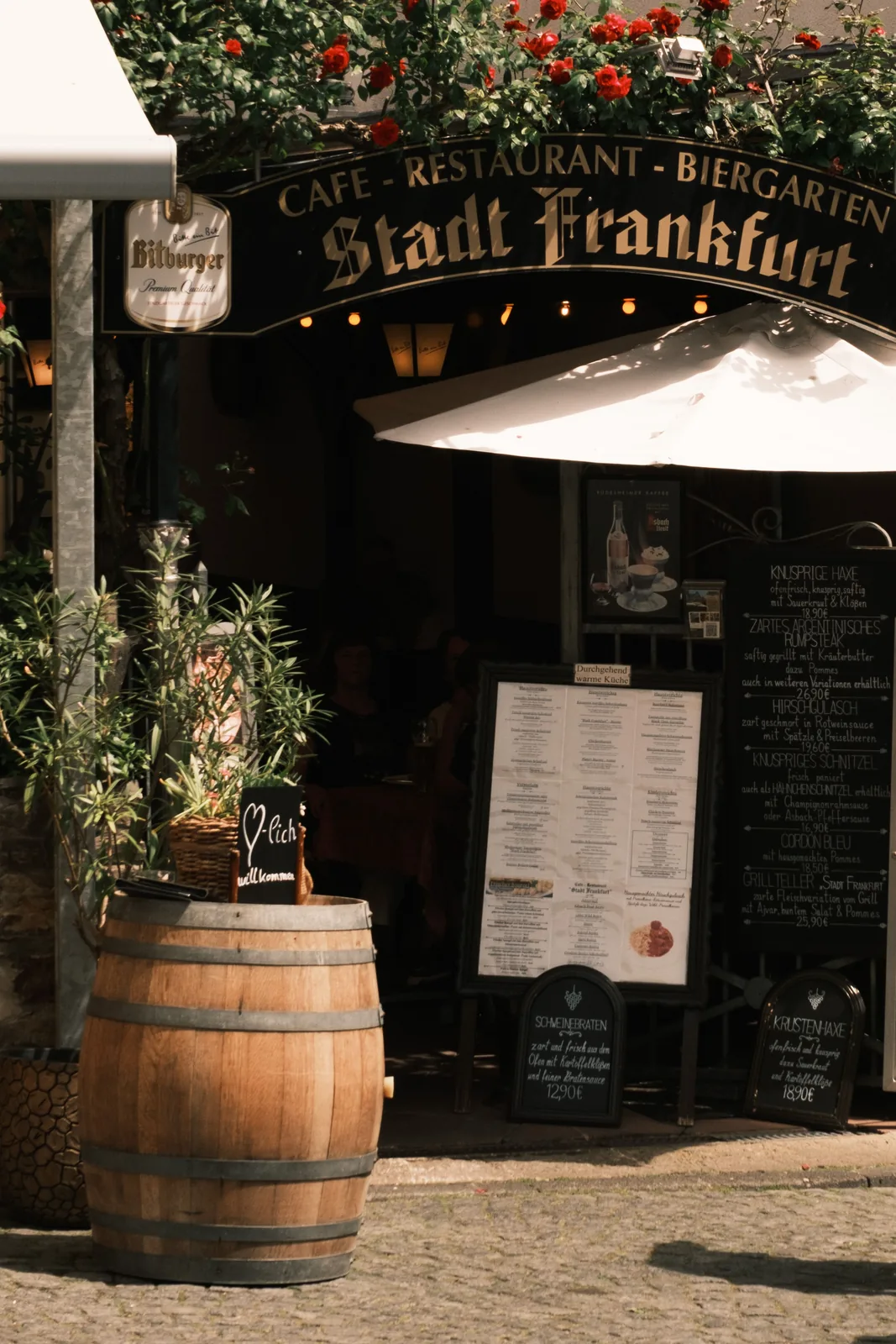
The practical challenge is traditional German restaurants, Gaststätten (taverns), Bierhallen (beer halls), and small regional establishments. Staff may have limited English proficiency, and allergen information may be in a folder that requires someone to locate it rather than immediately available. A written German allergy card resolves both problems simultaneously.
Hidden allergens in German cuisine
Wheat: in the bread, the Schnitzel, and the gravy
Germany has an extraordinary bread culture: hundreds of varieties of Brot and Brötchen (rolls), almost all made with wheat or rye (both contain gluten). Bread arrives at most German meals automatically. Beyond bread, wheat appears as a structural element in several German staples:
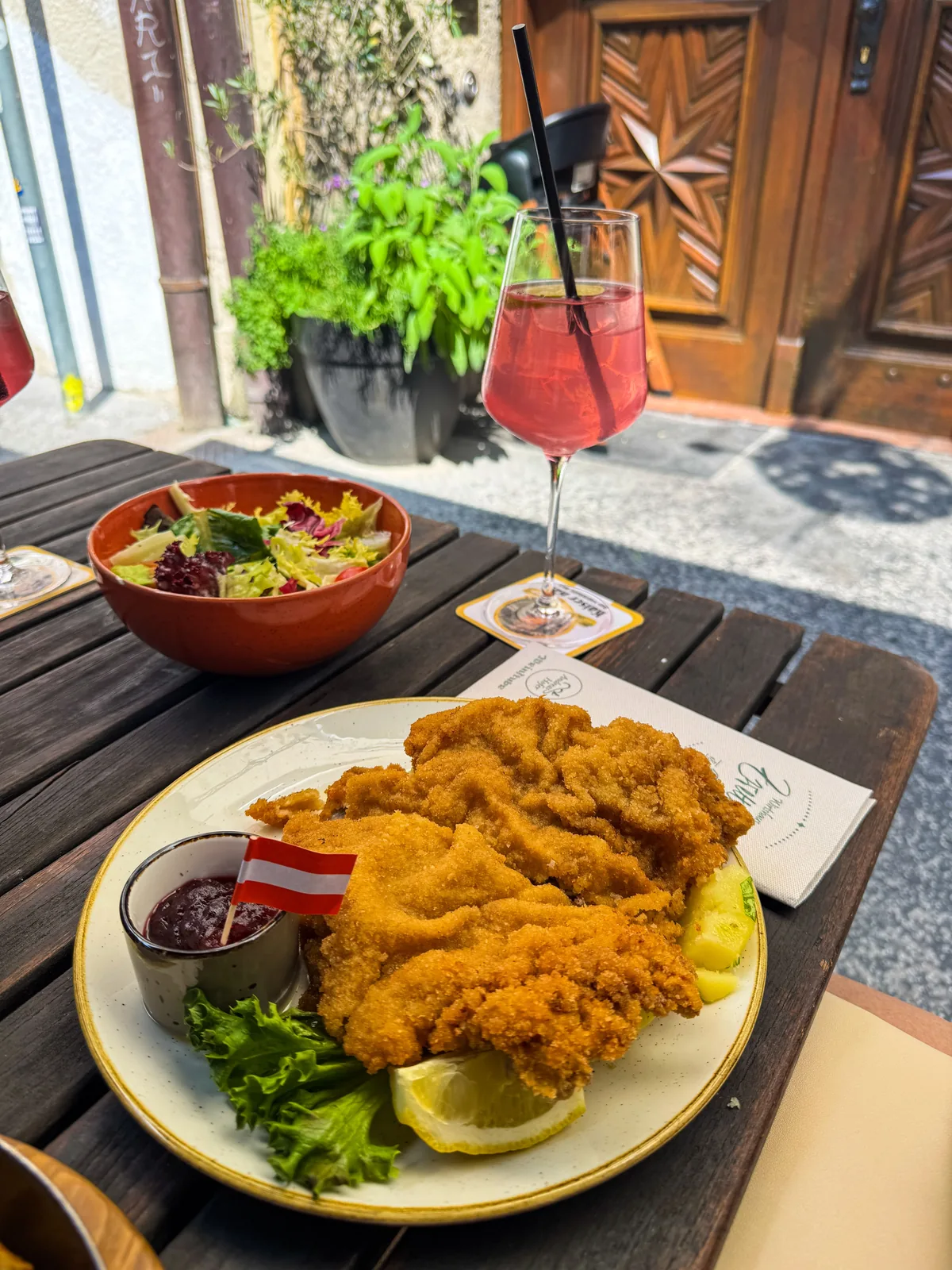
- Schnitzel: The breadcrumb coating (Panade) is wheat flour plus egg. The standard preparation for Wiener Schnitzel, Jägerschnitzel, and most other Schnitzel varieties involves wheat at every step.
- Gravies and sauces (Soßen): Traditional German brown gravies and many cream sauces are thickened with wheat flour (Mehl). Jus, Bratensauce, and Rahmsoße all typically contain a flour base.
- Brezel (pretzel): The Bavarian Brezel is wheat-based and ubiquitous at beer halls, Volksfeste (festivals), and as a table snack at many restaurants.
- Spätzle: The egg noodles of southern Germany are made from wheat flour and egg: and they appear as a side dish with most meat dishes in Bavaria and Baden-Württemberg.
Mustard (Senf): the EU allergen in German sauces
Mustard (Senf) is an EU-declared allergen and Germany produces and uses it extensively. It appears in:
- As a condiment alongside Würste (sausages): almost universal in German sausage culture
- In salad dressings and vinaigrettes
- In some traditional meat marinades and Sauerbraten (marinated pot roast) preparations
- In some Senf-Soße (mustard sauce) varieties served with meats and fish
Many travelers from outside Europe are not aware that mustard is a declared allergen at all. It's worth flagging specifically on a German allergy card.
Celery (Sellerie): in soups, stocks, and spice mixes
Celery is an EU-mandated allergen and appears in German cooking in ways that aren't always obvious. Suppengemüse (soup vegetables): the standard flavoring base for German stocks and soups: typically includes celery root (Knollensellerie) and celery stalks. This makes most German soups and broths celery-containing at the stock level. Celery salt (Selleriesalz) is also used in some seasoning mixes and spice blends.
Dairy in German sauces and pastries
German cuisine uses butter and cream extensively in traditional cooking. Rahmsauce (cream sauce) is a standard accompaniment to many meat dishes. Käsespätzle (cheese noodles) and many Bavarian dishes contain significant dairy. German pastries (Kuchen, Strudel) are dairy-heavy. And the cheese (Käse) culture in Germany is significant: it appears in sandwiches, on bread, and in many cooked dishes.
Get a free German-English allergy card covering all EU 14 allergens in German
Build My Germany CardKey German phrases for allergy communication
- Ich habe eine Lebensmittelallergie gegen [allergen]: I have a food allergy to [allergen]
- Ich bin allergisch gegen Gluten: I am allergic to gluten
- Ich bin allergisch gegen Milch und Butter: I am allergic to milk and butter
- Ich bin allergisch gegen Senf: I am allergic to mustard
- Ich bin allergisch gegen Sellerie: I am allergic to celery
- Enthält dieses Gericht [allergen]?: Does this dish contain [allergen]?
- Haben Sie eine Allergenkarte?: Do you have an allergen chart?
- Ohne Mehl, bitte: Without flour, please
- Ohne Milchprodukte, bitte: Without dairy products, please
- Diese Allergie kann lebensbedrohlich sein: This allergy can be life-threatening
- Ich brauche einen Arzt: I need a doctor (emergency)
High-risk German dishes by allergen
Tree nuts in German desserts and bakeries
Tree nuts are a significant and often underestimated allergen risk in Germany, particularly for travelers navigating the country's celebrated bakery and dessert culture. Hazelnuts (Haselnüsse) and almonds (Mandeln) are the two most prevalent, appearing in everything from chocolate spreads to pastry fillings to decorative toppings on cakes.
Marzipan (Marzipan) is a particular concern. It is made primarily from ground almonds and appears throughout German confectionery: in Stollen (Christmas bread), as a filling in chocolates, inside layered cakes (Torten), and as a standalone sweet. Lübeck marzipan is one of Germany's most famous regional products and is found in gift shops and supermarkets across the country.
Nut pastries are a staple of German Konditorei (cake shop) culture. Nusszopf (nut braid), Nusskuchen (nut cake), and hazelnut-filled Schnecken (scrolls) are common offerings. Pralines, truffles, and filled chocolates frequently contain ground or whole hazelnuts or almonds, sometimes without obvious labeling at the counter level.
Cross-contact risk at traditional German bakeries is high. Most Bäckereien handle nuts alongside other products routinely: nut fillings, hazelnut-cream pastries, and almond toppings are produced in the same environment as nut-free items. For travelers with a tree nut allergy, pre-packaged supermarket products with full ingredient labeling are considerably safer than loose bakery items.
A German allergy card that explicitly names your specific tree nuts in German : Haselnüsse (hazelnuts), Mandeln (almonds), Cashewnüsse (cashews), and so on : is valuable at both restaurants and bakeries. Staff at chain coffee shops and larger establishments can typically consult ingredient lists, but small independent Konditoreien may have limited documentation available for individual items.
Beer and sulphites in Germany
Germany is famous for its beer culture: and beer is relevant for two allergy groups. German beer (Bier) brewed to the Reinheitsgebot (German Beer Purity Law) contains only water, malt, hops, and yeast. However, some modern German beers add sulphites as preservatives, and barley malt contains gluten. For celiacs, standard German beer is not safe. Glutenfreies Bier (gluten-free beer) is increasingly available at German supermarkets and some bars.
Wine (Wein) served in Germany contains sulphites as a standard preservative : an EU-mandated allergen for people with sulphite sensitivity.
Fish and seafood allergens in northern Germany
Fish and seafood are less central to German cuisine than in many other European countries: but in the northern coastal regions, they are a defining part of local food culture and carry real allergen considerations. The North Sea and Baltic coast cities (Hamburg, Bremen, Kiel, Rostock, Flensburg) have a strong tradition of fresh and preserved fish that travelers should be aware of.
Hering (herring) is one of the most common fish in northern German cooking, appearing in preparations like Bismarckhering (marinated herring fillets), Rollmops (pickled herring rolls), and Matjes (young salted herring). These are served at market stalls, in traditional restaurants, and as supermarket staples. Smoked fish (Räucherfisch): particularly smoked eel (Räucheraal), smoked salmon (Räucherlachs), and smoked mackerel (Räuchermakrele): is also widely available at fish markets and delicatessens across northern Germany.
Fischbrötchen: open fish sandwiches sold at harbour-side market stalls: are one of Hamburg's most iconic street foods. They typically contain herring, shrimp, or smoked fish on a bread roll, sometimes with remoulade or onions. For fish or shellfish allergies, Fischbrötchen stands carry obvious risk and the shared preparation environment at busy market stalls makes cross-contact highly likely.
Cross-contact is a relevant concern at dedicated fish restaurants and market stalls where multiple species are handled on the same surfaces. A German allergy card that lists fish (Fisch) and crustacean shellfish (Krebstiere) specifically is the clearest way to communicate this at coastal food establishments.
Where allergy communication works best in Germany
Major cities (Berlin, Munich, Hamburg, Frankfurt, Cologne): Highest English proficiency and allergy awareness. Berlin in particular has a very developed vegetarian and vegan restaurant scene, which overlaps significantly with dairy-free and allergen-conscious options.
Chain restaurants (McDonald's Germany, Burger King Germany, IKEA restaurant): All maintain detailed Allergenkarten (allergen charts) available on request or displayed. Standardized recipes make allergen information more reliable.
German supermarkets: REWE, Edeka, Kaufland, Aldi, and Lidl have strong allergen labeling. Dedicated "frei von" (free from) sections carry gluten-free, dairy-free, and other allergen-free products. Among Europe's better supermarket environments for allergy travelers.
Traditional Gaststätten, Bierhallen, and Volksfeste: Highest risk. These environments are wheat-heavy by default (bread, Brezel, Schnitzel, wheat beer), often busy, and may have staff with limited English. A written German Allergiekarte is essential here.
Emergency information for Germany
- Emergency number: 112 (European emergency number, pan-Germany)
- Hospitals: Krankenhaus (hospital) or Notaufnahme (emergency department). Major German cities have large university hospitals with English-capable staff.
- Epinephrine: Adrenalin-Autoinjektor available at German Apotheken (pharmacies) with prescription. Carry your own supply.
- Key emergency phrase: Ich habe eine schwere allergische Reaktion, rufen Sie 112: I'm having a severe allergic reaction, call 112
Austria: food allergies in a neighboring German-speaking country
Austria applies the same EU FIC allergen regulation as Germany. Restaurants must provide allergen information on request, packaged food follows the EU 14 allergen framework, and German is the shared language, meaning the phrases above apply in Austria without modification.
What makes Austria distinct is the cuisine. A disproportionate number of nationally iconic Austrian dishes are built from the same three allergens layered together: wheat, egg, and dairy. Substitution often is not possible because you are avoiding the dish, not an ingredient in it.
High-risk Austrian dishes
Additional Austria-specific considerations
Poppy seeds (Mohn): Austrian baking uses poppy seeds more prominently than most European cuisines, in dishes like Mohnnudeln (poppy seed noodles) and various Mohn-filled pastries. Poppy seed allergy is uncommon but worth flagging specifically if relevant.
Sulphites in Austrian wine: Austria has a serious wine culture, particularly in Wachau and Burgenland. Sulphites are an EU-mandated allergen relevant to travelers with sulphite sensitivity.
Best supermarkets for allergy-friendly foods: Billa (largest chain, dedicated free-from shelf, Schär-brand gluten-free range), Spar (own Spar Free From line, widest range at Interspar hypermarket format), Hofer (Aldi equivalent, smaller gluten-free range), and dm (drugstore with a food section carrying gluten-free and lactose-free packaged goods).
Emergency info for Austria: Emergency number 112 (pan-EU) or 144 (Austria ambulance). Vienna General Hospital (AKH Wien) is the largest with international patient capacity. Key phrase: Ich habe eine schwere allergische Reaktion, rufen Sie 112.
Build a free German-English allergy card that works in Austria. The same card and phrases apply in both countries.
Build My Austria CardFrequently asked questions
Is Germany safe for travelers with food allergies?
Germany generally implements EU allergen law consistently and is among Europe's better countries for packaged food labeling. Restaurant communication is generally good at larger establishments. The language barrier at traditional German restaurants and the structural presence of wheat, mustard, and celery in German cooking are the main challenges. A written German Allergiekarte is the most reliable communication tool.
What are the most common hidden allergens in German food?
Wheat in bread, Schnitzel coatings, and flour-thickened gravies; mustard (Senf) in condiments and sauces; celery in stocks and soups via Suppengemüse; dairy in cream sauces and many Bavarian dishes; and sulphites in wine and some beers.
Is German bread safe for celiacs?
Almost no traditional German bread is gluten-free: the bread culture is built on wheat and rye, both of which contain gluten. Dedicated glutenfreies Brot (gluten-free bread) is available at supermarkets and some specialty bakeries. Cross-contamination at standard German bakeries is high. Major German supermarkets have well-labeled free-from sections.
How do you say food allergy in German?
Ich habe eine Lebensmittelallergie gegen [allergen]: I have a food allergy to [allergen]. Diese Allergie kann lebensbedrohlich sein: this allergy can be life-threatening. Haben Sie eine Allergenkarte?: Do you have an allergen chart? Show a written German-language card rather than relying solely on verbal communication at busy restaurants.
Does German mustard contain allergens?
Mustard itself is an EU-declared allergen. German mustard (Senf) is widely used as a condiment with sausages, in sauces, and in marinades. For mustard allergy, flag this specifically on your allergy card: many travelers from outside Europe are unaware that mustard has its own allergen declaration under EU law.
Ready to travel Germany safely?
Generate a German-English allergy card in under 60 seconds. Show restaurants exactly what you cannot eat: including mustard, celery, gluten, dairy, nuts, seafood, and all EU 14 allergens.
Build My Free German Allergy CardGenerate a bilingual German-English Allergiekarte covering all EU 14 allergens in German: including Gluten, Senf (mustard), Sellerie (celery), and Milch (dairy). Show it at any restaurant in Germany. No sign-up required.
Build my card →