 AllergyPass
India Food Allergy
Travel Guide
India has many regional cooking traditions, and the ingredients that matter for an allergy can be built into the fat, flour, sauce, stock, or garnish. FSSAI packaged-food labels are useful for the specific product, while restaurant and street-stall meals still require direct questions. This hub collects the AllergyPass guides for India.
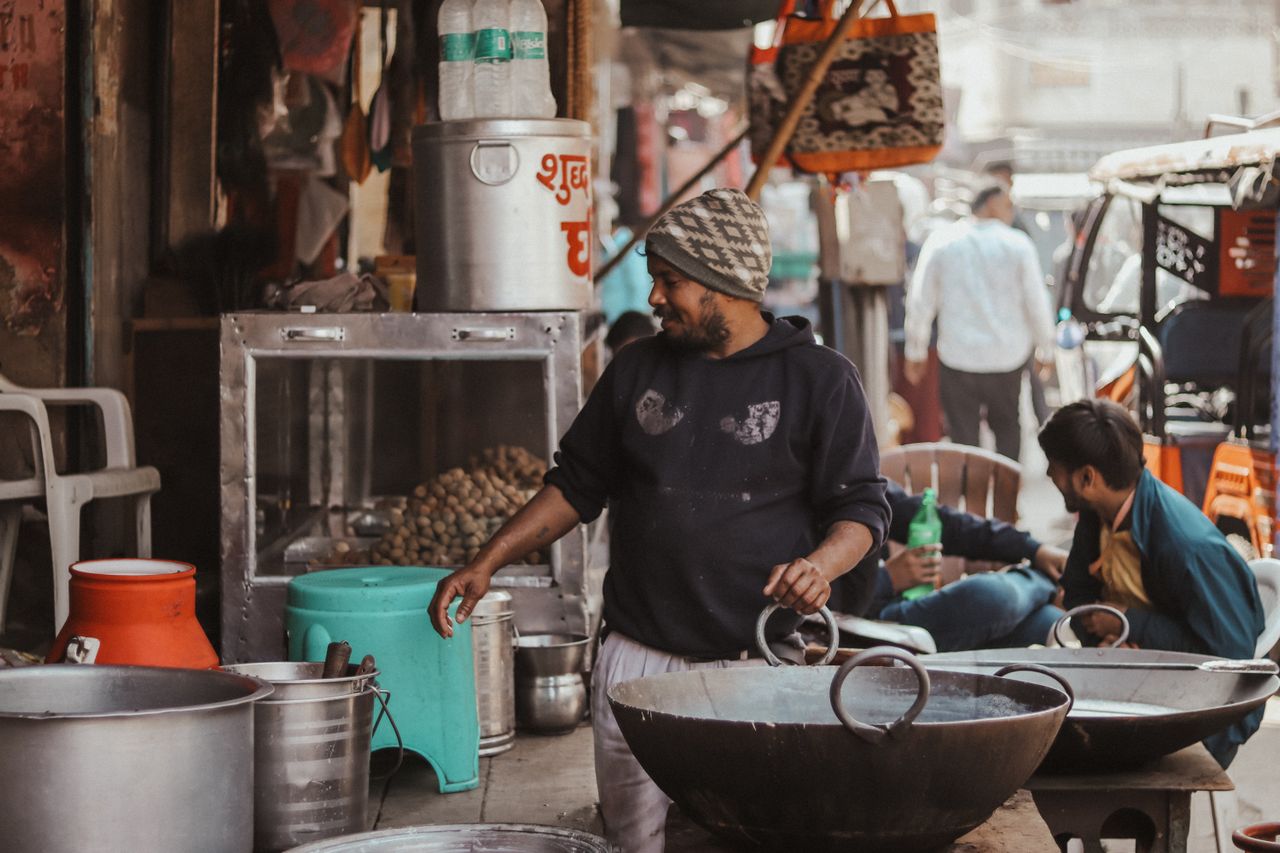 India
India
In this hub
Why India takes more than avoiding spice
India is a large group of regional cuisines rather than one menu. The useful questions are often about the foundation of a dish: the fat it was cooked in, the flour or batter used to bind or coat it, the dairy or nut paste used to finish it, and the equipment shared with other orders. FSSAI packaged-food labels do not answer those questions for restaurants, dhabas, or street stalls. Ask about the tawa, fryer, pan, and utensils as well as the named ingredients.
Hidden allergens in Indian cuisine
Ghee and dairy in food that reads as plain vegetarian
Ghee is clarified butter, so it remains a dairy question even though the milk solids have been separated out. Dal tadka and dal makhani may be finished with ghee, butter, or cream. Paneer, yogurt (dahi), buttermilk (chaas or lassi), and raita also need checking. A dish described as a vegetable curry does not answer whether dairy is present.
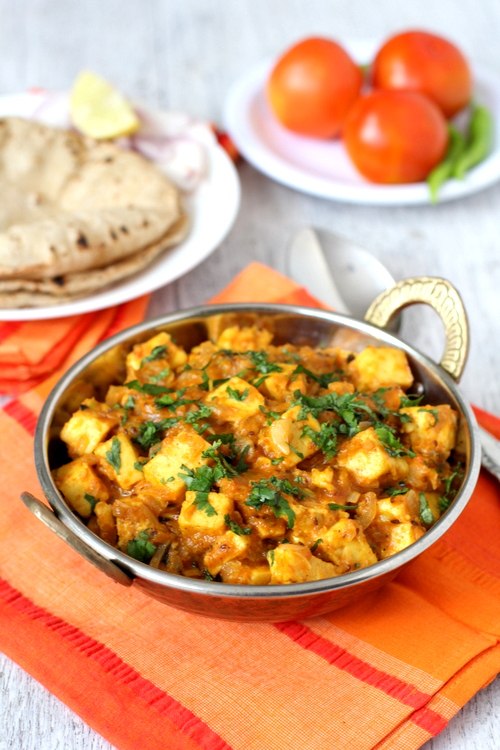
Mustard oil across Bengal, Odisha, and the east
Mustard oil (sarson ka tel) may be used as a cooking fat or flavoring in Bengali, Odia, and other eastern or northeastern recipes. Ask whether the dish uses mustard oil, mustard seed, or a spice paste containing mustard. Do not assume a packaged-food allergen list covers mustard unless the specific product says so.
Besan (chickpea flour): batter, thickener, and binder
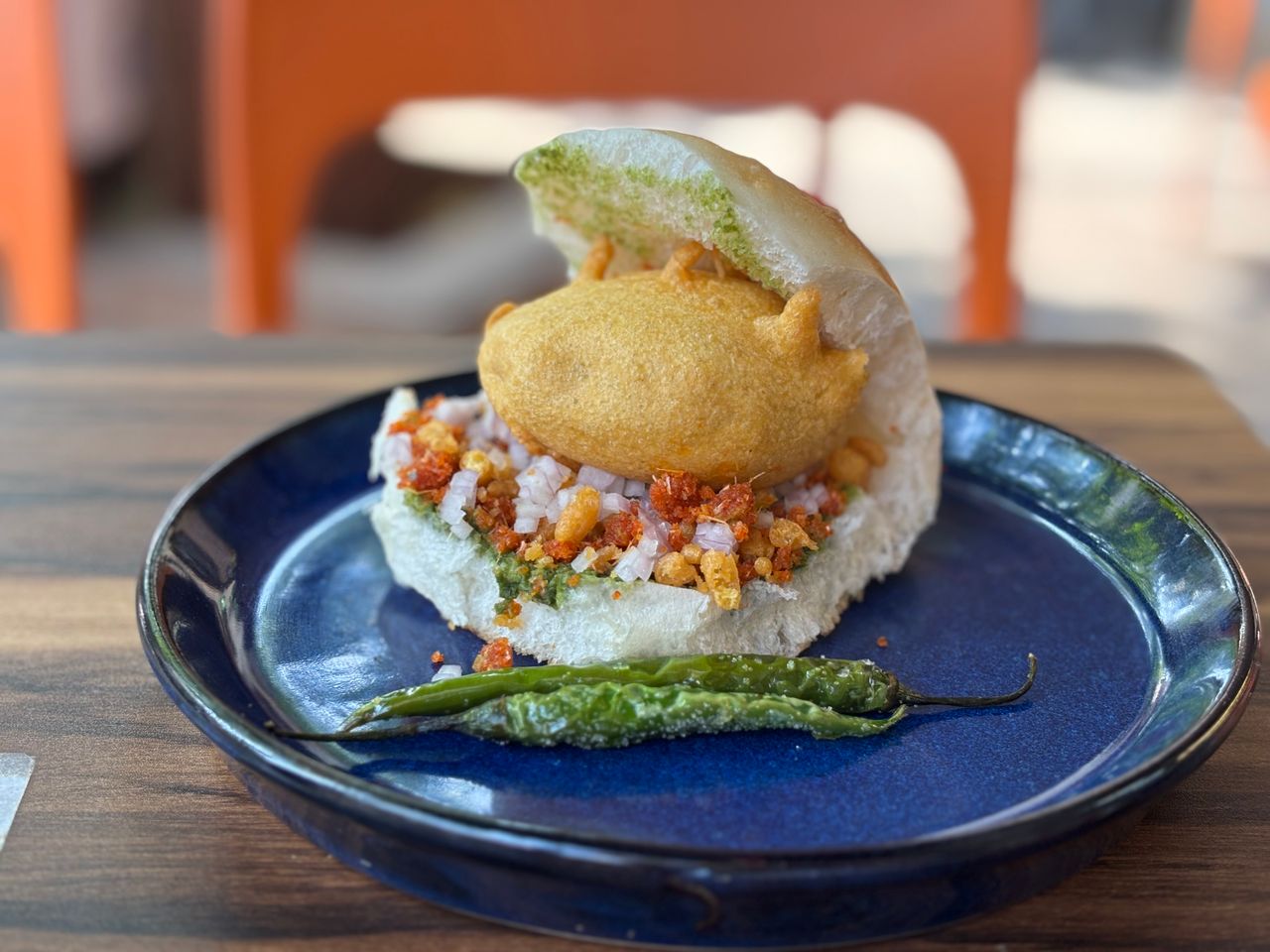
Besan is chickpea or gram flour. It may be used in pakora, bhaji, kadhi, batters, and binders. A besan-based snack may not contain wheat in its recipe, but the fryer can be shared with wheat-battered items, and chickpea itself is a separate legume question. Ask about the flour, oil, and equipment.
Cashew paste and peanuts as thickener and garnish
Cashew paste may add richness to butter chicken, korma, and other creamy curries, where it disappears into the sauce. Peanuts may be ground into Gujarati or Maharashtrian dishes, added to chaat, or used in some oils. Biryani may include fried cashews or other garnishes. Ask about the sauce, garnish, oil, and shared utensils.
Wheat as the default bread, everywhere
Roti, naan, paratha, and poori commonly use wheat. Dosa and idli are often rice- and lentil-based, but recipes, chutneys, sambar, and the shared tawa still need checking. Ask about flour, batter, chutney ingredients, and the griddle before ordering.
Indian dishes that need extra questions
| Dish | Ingredients or equipment to check | Question to ask |
|---|---|---|
| Dal tadka / dal makhani | Dairy (ghee, butter, cream) + legume base | Ask whether ghee, butter, cream, or a shared ladle is used |
| Paneer dishes (palak paneer, paneer butter masala) | Dairy | Ask about paneer, cream, butter, yogurt, and the sauce base |
| Chaat (pani puri, bhel puri, sev puri) | Besan (chickpea flour) sev, peanuts, yogurt in some variants | Ask about sev, peanuts, yogurt, chutneys, sauces, and shared utensils |
| Dosa / idli with chutney and sambar | Coconut and peanut in chutney; shared tawa cross-contact | Ask about batter, chutneys, sambar, and the shared tawa |
| Butter chicken / creamy Punjabi curries | Dairy (butter, cream) + cashew paste (tree nut) | Ask whether cashew paste, cream, butter, or ghee is blended into the sauce |
| Pakora / bhaji | Besan (chickpea flour) batter; shared fryer | Ask about chickpea flour, wheat in the fryer, and shared oil |
| Biryani | Fried cashews and raisins as garnish; raita (dairy) served alongside | Ask about cashew garnish, spice paste, ghee, and raita |
| Mithai (Indian sweets: ladoo, barfi, gulab jamun) | Dairy (khoya, milk solids) and tree nuts (pistachio, cashew, almond) | Ask about khoya, milk solids, nuts, fillings, and shared display tools |
Choosing a venue and asking questions
A hotel restaurant, a small family restaurant, a dhaba, and a street stall each require their own questions. A venue with more time or a person who can speak with the kitchen may make communication easier, but it does not verify the recipe or cross-contact controls. Vegetarian labeling can help if you avoid meat, fish, or shellfish; it does not answer questions about dairy, gluten, nuts, peanuts, sesame, mustard, or shared equipment. Ask about the dish, oil, tawa, fryer, sauce, and utensils every time. Regional recipes differ, so treat the examples in this hub as prompts rather than rules for an entire state or cuisine.
City guides
Everything for Delhi in one place: hidden allergens, accommodation, food experiences, international hospitals, and allergy cards.
Accommodation guideSouth Delhi, Connaught Place, Vasant Kunj, and Old Delhi compared by hospital proximity, food access, and hotel kitchen reliability.
Food experiencesOld Delhi food walks, cooking classes, and how to manage allergies at Chandni Chowk without giving up the experience entirely.
City hubFish, shellfish, and coconut in coastal cooking, plus besan and gluten in vada pav, pav bhaji, and misal pav. Hospitals, allergy cards, and insurance.
City hubCashews, coconut, and seafood in Goan cooking, beach shack cross-contact, and North Goa vs South Goa hospital access.
City hubPeanuts and besan in misal pav and bakarwadi, gluten in Pune's bakery culture, hospitals, allergy cards, and insurance.
Accommodation guideBandra, Andheri, and South Mumbai compared by hospital proximity, food access, and hotel kitchen reliability.
Accommodation guideNorth Goa vs South Goa: beach shack risk, hospital proximity by town, and what to ask before booking.
Accommodation guideKoregaon Park, Camp, and Erandwane compared by hospital proximity and food access.
Food experiencesMohammed Ali Road food walks and Mumbai cooking classes, and which format is lower risk with a food allergy.
Food experiencesGoan cooking classes, feni tastings, and cashew exposure, and which format is lower risk than a beach shack meal.
Food experiencesMisal pav tasting tours and Pune cooking classes, and how to manage the city's heavy peanut exposure.
Airport guidePharmacy locations, the in-terminal medical facility, the nearest hospital, and getting into Delhi.
Communicating your allergy in India
FSSAI's current rules cited below cover eight allergen categories on packaged food, with a separate "Contains:" statement. Restaurant, dhaba, and street-stall meals still require direct questions, so a written Hindi-English card is a communication aid—not a substitute for checking the dish and preparation.
- Mujhe [allergen] se allergy hai — मुझे [allergen] से एलर्जी है (I am allergic to [allergen])
- Mujhe ghee/makkhan se allergy hai — मुझे घी/मक्खन से एलर्जी है (I am allergic to ghee/butter)
- Mujhe moongfali se allergy hai — मुझे मूंगफली से एलर्जी है (I am allergic to peanuts)
- Kya isme [allergen] hai? — क्या इसमें [allergen] है? (Does this contain [allergen]?)
- Kripya bina ghee/makkhan ke banayein — कृपया बिना घी/मक्खन के बनाएं (Please make it without ghee/butter)
- Yeh allergy jaanleva ho sakti hai — यह एलर्जी जानलेवा हो सकती है (This allergy can be life-threatening)
- Mujhe doctor chahiye — मुझे डॉक्टर चाहिए (I need a doctor)
Build a Hindi-English allergy card covering ghee, mustard oil, and your specific allergens
Build My India CardWant the allergens written out in Hindi? Build a Hindi allergy card to show kitchen staff.
Hindi may be useful in some parts of India, but language coverage varies by region and person. If your trip is centered on Punjab, Chandigarh, or a Punjabi-speaking community, the India (Punjabi) allergy card may be a useful additional option. Ask a companion, hotel, or guide to help when the written request is not understood.
In the south, Kerala's official language is Malayalam and Tamil Nadu's kitchens work in Tamil, so a trip there is better served by the Malayalam allergy card for Kerala or the Tamil allergy card for Tamil Nadu.
How FSSAI allergen labeling actually works
The Food Safety and Standards Authority of India (FSSAI) rules cited here cover eight allergen categories on packaged food: cereals containing gluten, crustaceans, milk and milk products, eggs, fish, peanuts and tree nuts, soybeans, and qualifying sulphites. Read the specific package and its "Contains:" statement. Do not extend packaged-food labeling assumptions to dishes cooked to order in restaurants, dhabas, or street stalls.
Packaged food: read the specific label
Organized retailers such as DMart, Reliance Fresh or Smart, Nature's Basket, and Spencer's are examples to check, but stock and product ranges change. Read the label on the specific FSSAI-licensed package, including the allergen declaration and "Contains:" statement. The green vegetarian or brown non-vegetarian symbol describes diet preference, not allergen content.
Getting around India
Moving between Indian cities can make meal timing and medication planning harder. Keep medication accessible, carry a backup snack you can verify, and leave enough time to ask questions instead of making a rushed food decision. Search trains, buses, and ferries between Indian cities below.
Need mobile data for maps and translation while moving between cities? Compare Saily eSIM plans for India, and check the current coverage and your phone’s eSIM compatibility before buying. Affiliate link: AllergyPass may earn a commission if you purchase through it, at no extra cost to you.
Cross-destination and preparation guides
Why written allergy cards in the local language work better than verbal requests, and how to use them effectively at Indian restaurants and street food stalls.
Preparation guideWhat to confirm before buying travel insurance if you have a food allergy, including coverage for reactions treated at India's private hospital network.
Preparation guideWhat changes when you leave home: language barriers, unfamiliar food cultures, different labeling laws, and new cross-contamination environments.
Connectivity guideWhy staying connected matters for allergy travel: access to your digital allergy card, translation tools, and emergency information, and how to set up an eSIM before you land.
Preparation guidePlanning for anaphylaxis risk on a longer or more remote trip, including epinephrine logistics and emergency planning.
Emergency information for India
- Emergency number: 112 is India's unified Emergency Response Support System number; check current local guidance before travel.
- Care: For a severe reaction, follow your clinician's action plan, use prescribed emergency medication promptly, call 112, and go to the nearest appropriate emergency department.
- Medication: Carry the medication prescribed for you and keep it accessible rather than in checked luggage. Do not assume a particular pharmacy or auto-injector will be available locally.
- Key emergency phrase: Mujhe gambhir allergy ki pratikriya ho rahi hai, 112 par call karein (मुझे गंभीर एलर्जी की प्रतिक्रिया हो रही है, 112 पर कॉल करें): I am having a severe allergic reaction, please call 112
Check the official 112 India emergency portal before travel because emergency arrangements can change. Do not delay care while trying to reach a named private hospital or a particular pharmacy.
A first-hand account
The city guides above are written as reference, and most allergy travel writing assumes you are moving as a family. For a different shape of trip, Cindi at An Easy Journey has written up traveling India solo with food allergies: ordering with nobody else to double-check the answer, and the judgment calls that follow. A traveler's account, not a source for the labeling or emergency information on this page.
Sources
This guide draws on FSSAI's food labeling regulations and official Indian government sources for emergency services. It is intended as practical travel information, not medical advice.
- Food Safety and Standards (Labelling and Display) Regulations, 2020 (FSSAI): the source regulation for India's mandatory allergen declaration and packaged food labeling requirements.
- Emergency Response Support System (ERSS) — 112 India: the official Government of India portal for the unified 112 emergency number.
- Ministry of Home Affairs, ERSS overview: the government policy source describing how the 112 system is deployed across states.
Pre-trip checklist
Get the full pre-trip checklist and destination guides in your inbox
Subscribe →Complete pre-trip checklist for food allergy travel is available in our free food allergy travel checklist guide.
Nearby destinations
Traveling on elsewhere in South Asia? This hub covers the same region.
Frequently asked questions
Is India safe for travelers with food allergies?
Yes, though it takes more than steering clear of spicy dishes. Across India's very varied regional cooking, allergens tend to live in the foundation of a dish rather than in a garnish you can ask to leave off: the fat it was cooked in, the flour used to bind or coat it, or the dairy used to finish it. Ghee and dairy sit underneath most vegetarian cooking, mustard oil is the standard frying fat across the east, besan (chickpea flour) turns up as an invisible batter or thickener, and cashew paste is a common way to add creaminess without dairy. Kitchens are also often shared across many dishes on one griddle (tawa) or in one fryer, so cross-contact is common even when the recipe itself is fine. None of that has to be labeled in a restaurant or at a street stall, since FSSAI's allergen rules cover packaged food only, which is why a written Hindi-English allergy card carries most of the weight in practice.
Is Indian vegetarian food automatically allergy-safe?
No, and this is the assumption that trips people up most. Vegetarian genuinely helps if you're avoiding meat, fish, or shellfish, since India has one of the largest vegetarian populations anywhere. It does nothing for dairy, gluten, peanut, tree nut, or sesame allergies, because those are exactly what Indian vegetarian cooking leans on for protein and richness. Ghee is used as both a cooking fat and a finishing touch across most regional cuisines, and it is dairy even though the milk solids have been separated out. Dal tadka and dal makhani are routinely finished with a spoon of ghee or butter and a splash of cream. Paneer is the default vegetarian protein on most menus, and yogurt (dahi) and buttermilk (chaas or lassi) appear as a curry base, as raita on the side, and as a drink. Pure vegetarian restaurant chains lean just as hard on ghee, paneer, yogurt and nuts as anywhere else.
What does FSSAI's allergen labeling law actually cover?
Eight categories have to be declared on packaged food, in bold, with a separate 'Contains:' line: cereals containing gluten (wheat, rye, barley, oats, spelt and their derivatives), crustaceans, milk and milk products, eggs, fish, peanuts and tree nuts, soybeans, and sulphites at 10mg/kg or above. The catch is the scope. It is packaged food only, so restaurants, dhabas and street stalls, which is where most of a trip's eating actually happens, fall outside it entirely. There is also a gap in the list itself that matters regionally: mustard is not one of the eight mandatory categories, and mustard oil (sarson ka tel) is the standard cooking fat across Bengal, Odisha and much of the east rather than an occasional flavouring. For a mustard allergy in that region the labeling law offers nothing at all, which makes a written Hindi-English card more important there specifically, not less.
How do I say food allergy in Hindi?
The everyday version is Mujhe [allergen] se allergy hai (मुझे [allergen] से एलर्जी है), I am allergic to [allergen]. The allergen words worth knowing are moongfali (मूंगफली, peanuts), doodh and dairy products (दूध), gluten (ग्लूटेन), til (तिल, sesame), sarson (सरसों, mustard), ande (अंडे, eggs) and dal (दाल, lentils). For the two that hide most, Mujhe ghee/makkhan se allergy hai (मुझे घी/मक्खन से एलर्जी है) covers ghee and butter. To ask rather than tell, Kya isme [allergen] hai? (क्या इसमें [allergen] है?), does this contain [allergen], and to request a change, Kripya bina ghee/makkhan ke banayein (कृपया बिना घी/मक्खन के बनाएं). If the reaction can be severe, add Yeh allergy jaanleva ho sakti hai (यह एलर्जी जानलेवा हो सकती है), and in an emergency, Mujhe doctor chahiye (मुझे डॉक्टर चाहिए), I need a doctor. A printed card gets the wording right without relying on pronunciation in the moment.
Which Indian dishes carry the highest allergy risk?
Dal tadka and dal makhani (finished with ghee, butter, or cream), paneer dishes (dairy by default), chaat like pani puri and bhel puri (besan sev, peanuts, yogurt, and assembled fast from many small components at a stall), butter chicken and other creamy Punjabi curries (dairy plus cashew paste, which disappears completely once the sauce is blended smooth), pakora and bhaji (besan batter in a shared fryer), biryani (fried cashew and raisin garnish, dairy raita on the side), and Indian sweets like ladoo, barfi and gulab jamun (khoya milk solids plus pistachio, cashew or almond in nearly all versions). Two near-misses are worth naming. Besan snacks read as a safe gluten-free choice but are usually fried in oil shared with wheat-battered items. South Indian dosa and idli are a genuinely wheat-free starting point, but the coconut and peanut chutneys alongside carry their own profile, and the same tawa often cooks a wheat paratha earlier in service.
This article is for informational and travel preparation purposes only and does not constitute medical advice. Always consult a qualified healthcare professional before traveling with a food allergy, and carry any prescribed emergency medication at all times. See our full medical disclaimer.