 AllergyPass
Traveling With Severe Food Allergies
A Step-by-Step System
Traveling with several severe food allergies takes planning, but the plan can be simple: confirm your medical needs, carry your medication and documents, prepare destination-specific cards, ask clear restaurant questions, and know what to do if a reaction starts.

Step 1: Before you leave
Talk to your allergist
Before an international trip, review your allergy action plan with your allergist or another qualified clinician. The plan should explain what to do if you react and list the medication prescribed for you. Ask whether you need a clinician letter or medical summary for travel, and keep a copy with your medication.
If your destination uses another language, translate the key medical information with a qualified service or use a clear bilingual summary. The translated document supports communication; it does not replace an emergency plan or a clinician's assessment.
Check medication rules for every destination
Medication and customs rules vary by country, airline, and transit point. Check the official guidance for every destination and connection before you travel. Keep your medication in its original labeled packaging, carry your prescription or clinician letter, and keep it accessible rather than in checked luggage.
Do not build your plan around replacing medication abroad. Availability, brand names, strengths, and prescription rules vary. Ask your clinician how much medication to take for the itinerary, including delays or remote travel, and learn the generic name of your prescribed medicine.
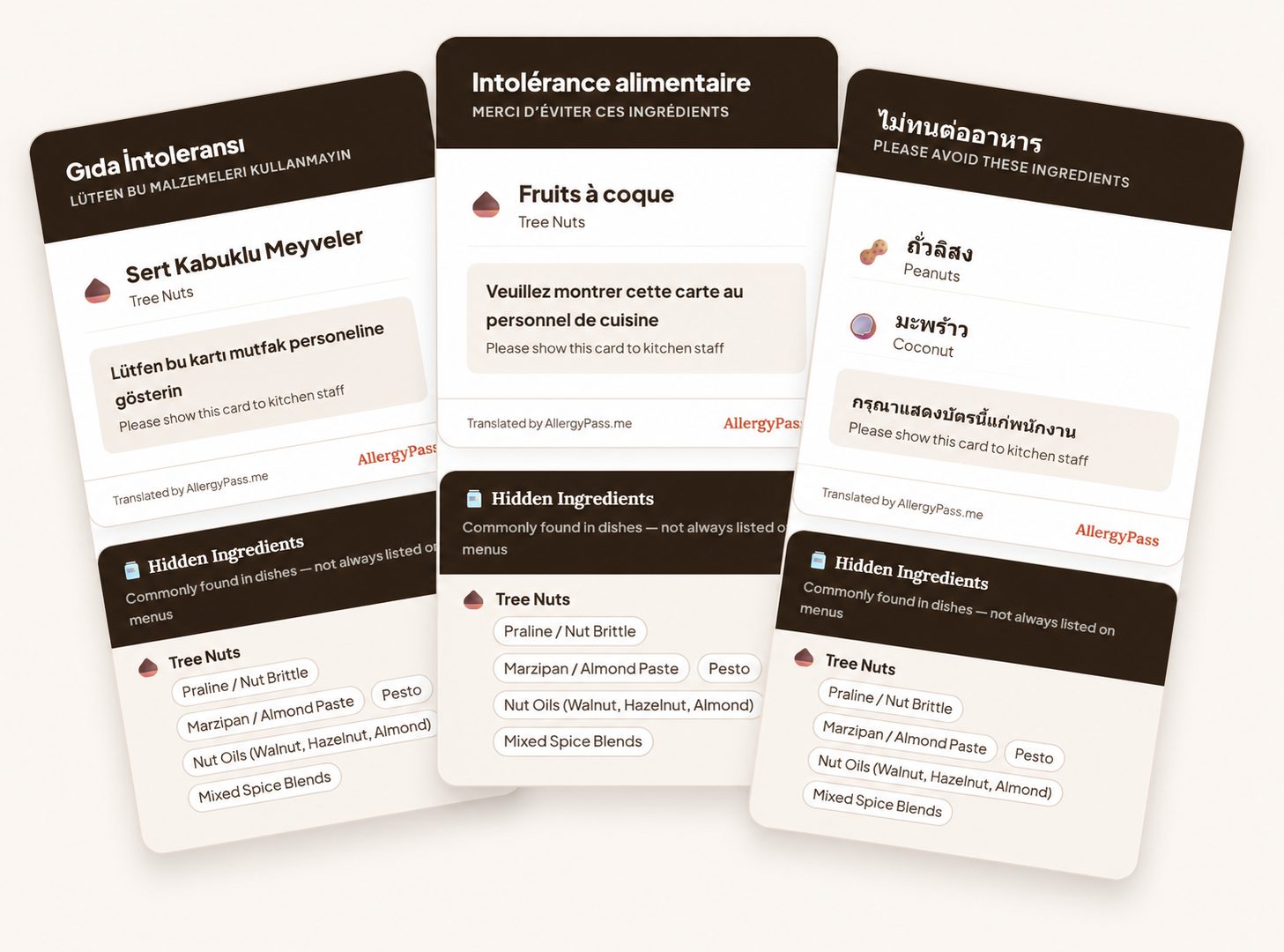
Build your destination-specific allergy card before you travel. Multilingual, formatted for restaurants.
Build My Allergy CardBuild your allergy cards
A written allergy card in the local language can support communication in each country you visit. It should name your allergens clearly, mention relevant derivatives, explain that the allergy may be serious, and ask about ingredients and cross-contact. Keep a printed copy as well as an offline digital copy.
A short statement such as "I am allergic to peanuts" may not answer questions about peanut oil, flour, sauces, shared utensils, or preparation surfaces. Include the details that matter for your own allergy plan, and ask staff to confirm what the kitchen can and cannot control.
AllergyPass generates travel allergy cards in multiple languages. Check the card against your clinician's advice, print one for each destination, and save an offline digital version on your phone.
Research hospital locations
For each city or remote area, identify how to reach emergency medical care and save the relevant address, phone number, and local emergency number offline. In a reaction you may not have reliable internet, signal, or time to search. Ask your accommodation about the nearest appropriate facility when you arrive.
An international hospital may be easier for some travelers to navigate, but it is not always the nearest or best option in an emergency. Research local options in advance, note the language and payment arrangements, and ask your accommodation for practical directions on arrival.
Step 2: What to pack
The full kit:
- Prescribed emergency medication: carry the quantity your clinician recommends, accessible during transit
- Antihistamines: only as directed in your personal action plan; do not substitute for epinephrine in anaphylaxis
- Clinician letter or medical summary: include the generic medication name and useful travel information
- Allergy cards: printed and digital, one per destination language
- Medical ID: bracelet or card listing your allergy and emergency contact
- Safe snacks: for airports, long transit, and destinations with limited safe options
- Emergency-care details: local emergency number, facility address, and directions saved offline
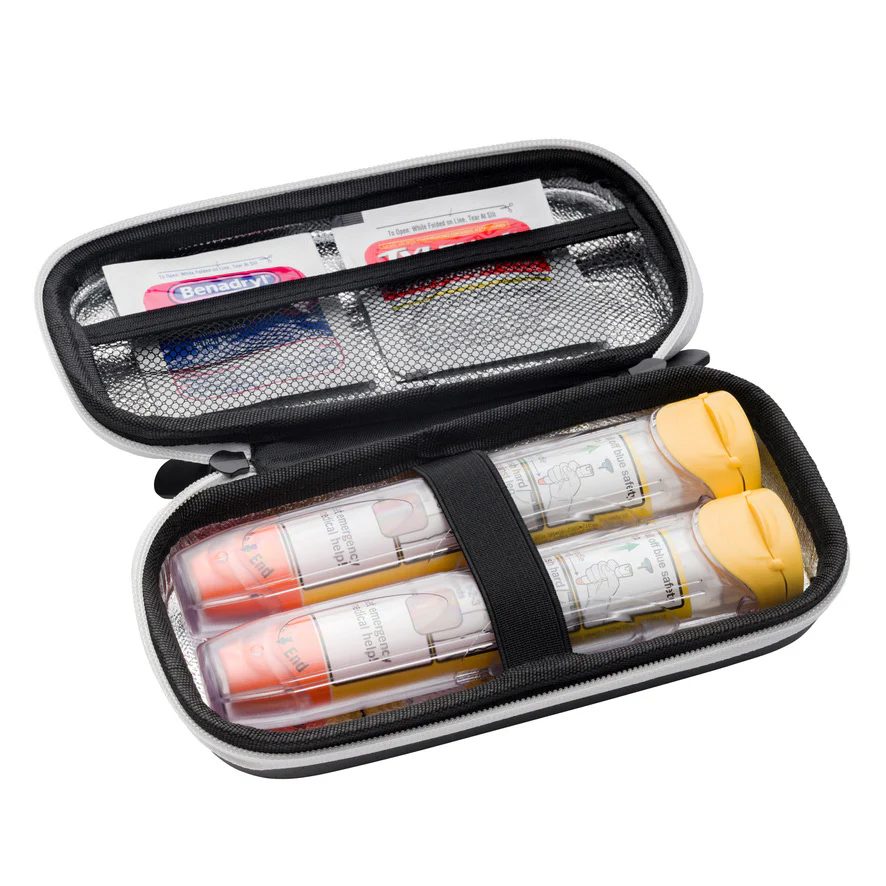
Protect medication from extreme heat, freezing, and direct light, and follow the storage instructions for your specific device. Keep it accessible during transit and check the expiry date before leaving; a clinician or pharmacist can answer product-specific storage questions.
Step 3: Communicating at restaurants

A card helps, but it cannot verify a kitchen's ingredients or handling. Ask whether the staff understand your allergy, whether the dish contains derivatives, and whether the kitchen can control shared oil, utensils, pans, and work surfaces. If answers are vague, leave without ordering.

Destination-specific hidden-allergen breakdowns are available for Thailand, Japan, and Vietnam, and the Southeast Asia hub and Europe hub cover the wider regions.
Step 4: Travel insurance for allergic reactions
Insurance terms differ by policy and destination. Before you buy, check how the policy treats emergency medical care, pre-existing conditions, evacuation, hospital admission, and claims made after an allergic reaction. Do not assume that a low headline price or a general travel policy covers every allergy-related expense.
SafetyWing Nomad Insurance is one policy to compare for extended trips. Its Description of Coverage does not name food allergies or anaphylaxis and its pre-existing-condition definition is broad, so read the current terms and get written clarification before relying on it for an allergy-related claim. See our full SafetyWing review for plan details and cost.
For any trip length, do not assume a policy will cover an allergy-related emergency. Ask the insurer about your diagnosis, prescribed medication, planned activities, destination, and any prior reactions, and save the answer with your policy documents.
Step 5: If something goes wrong
If a reaction starts, follow your personal action plan. The steps below are general reminders, not a replacement for the instructions from your clinician or the device manufacturer.
- Use prescribed epinephrine according to your action plan: antihistamines are not a substitute for epinephrine in anaphylaxis
- Position yourself carefully: lie flat with legs raised if possible; if breathing is difficult, sit with legs outstretched, and avoid sudden standing or walking
- Seek emergency care even after improvement: symptoms can return and further treatment or observation may be needed
- Show your action plan or medical summary: give local medical staff your allergies and prescribed medication information
- Contact the insurer when safe to do so: ask about assistance and documentation, but do not delay emergency care to make the call
Tell your travel companions before the trip what your action plan says, where your medication is, how to call local emergency services, and what your reaction may look like. If you are traveling alone, consider medical identification and keep your plan accessible offline.
How allergy risk varies by destination

Destinations differ in ingredients, dining formats, language, and access to care. The examples below are prompts for research, not a safety ranking. Check the specific city, venue, recipe, and emergency arrangements for your itinerary.
Destination-specific guides with full hidden allergen breakdowns are available for each of these: Thailand, Japan, Vietnam, Bali, and France.
Sources and further planning
Use your clinician's advice and current destination guidance for personal decisions. These sources support the travel-planning and emergency principles in this guide:
- CDC Travelers' Health: Allergies and Travel: preparation, translated allergy cards, travel health kits, and emergency planning.
- CDC Yellow Book: Severely Allergic Travelers: prescription planning, accessible carry-on medication, action plans, airline questions, and destination medical-care planning.
- Anaphylaxis UK: What to do in an emergency: emergency medication, positioning, and the need to follow device-specific instructions.
Frequently asked questions
Can you travel internationally with a severe food allergy?
Yes, but plan with your allergist or another qualified clinician. Carry your prescribed emergency medication in accessible carry-on luggage, keep a current action plan and allergy card with you, research how to access emergency care, and check insurance exclusions before buying. A card helps communication; it does not make a restaurant or destination risk-free.
What should I bring when traveling with a food allergy?
Pack the medication and documents your clinician has prescribed or recommended, keeping injectable epinephrine accessible in your carry-on rather than checked luggage. Also bring a current action plan, a clinician letter or medical summary, written allergy cards for your destinations, medical identification, offline emergency-care details, and safe transit snacks.
Should I travel with more than one EpiPen?
Many patients are prescribed two devices, and some travel plans call for more when medical care may be delayed or medication is difficult to replace. The right number depends on your prescription, device instructions, itinerary, and clinician's advice. Keep the prescribed devices accessible in your carry-on and check their expiry dates.
This article is for informational and travel preparation purposes only and does not constitute medical advice. Always consult a qualified healthcare professional or allergist before traveling with a food allergy, and carry any prescribed emergency medication at all times. See our full medical disclaimer.