 AllergyPass
Malaysia Food Allergy Hub:
Peanuts, Satay, Belacan, and What to Ask
Peanuts often appear in Malaysian satay sauce, while rojak dressing may combine peanuts and belacan (shrimp paste). This hub explains where common ingredients can hide, how to ask in Malay, and how Kuala Lumpur, Penang, and other regions may differ.
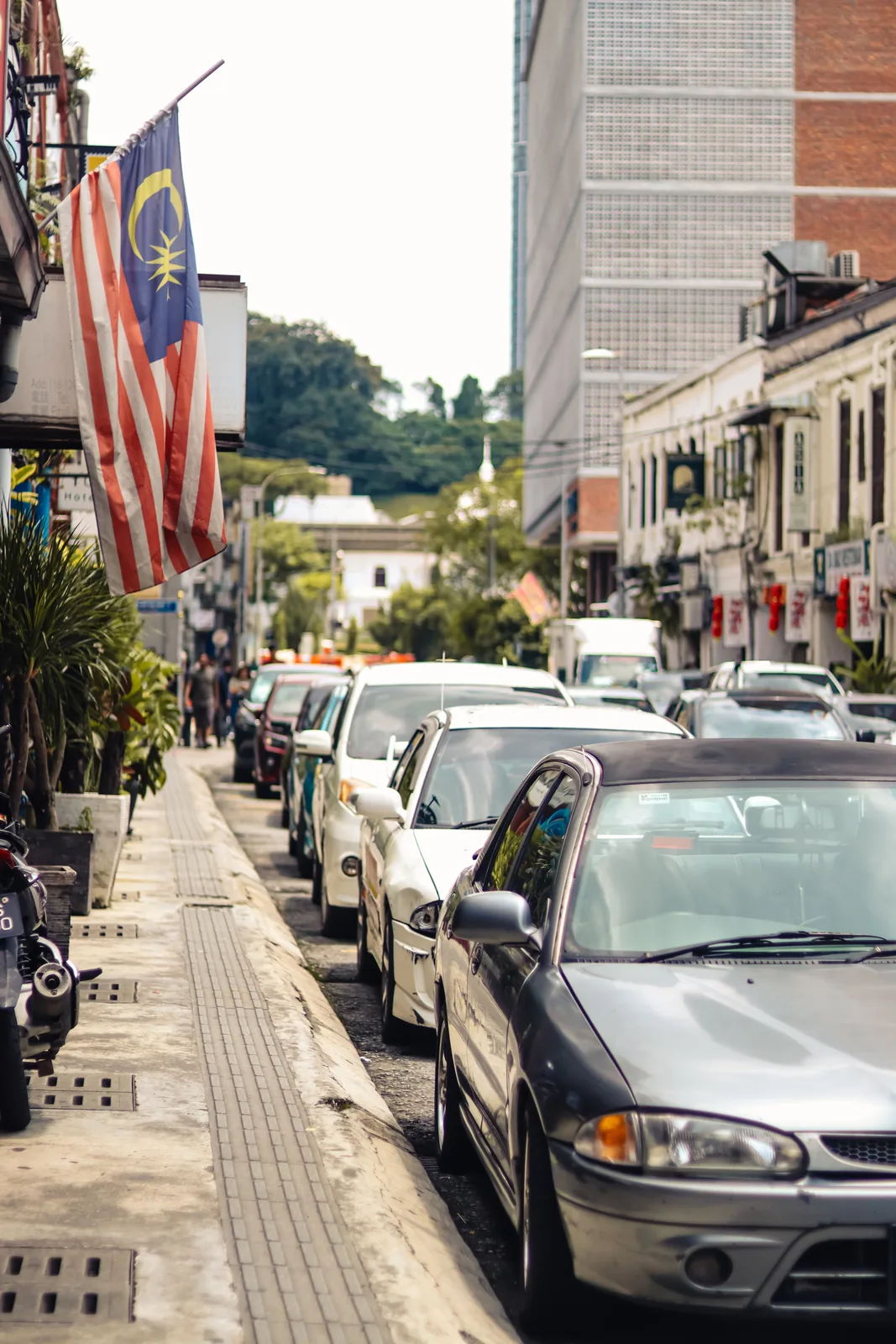 Malaysia
In this hub
Understanding Malaysian food allergens
Malaysia's Malay, Chinese-Malaysian, Indian-Malaysian, and Nyonya food traditions overlap but use different sauces, stocks, marinades, and cooking methods. Cuisine labels can help you form questions, but they cannot tell you whether a particular dish is suitable. Ask what went into the actual recipe and how it was prepared.
Belacan: the Malay shrimp paste foundation
Belacan is fermented shrimp paste, similar to Indonesian terasi. It is used in some Malay sambal and flavor bases, including some sambal served with nasi lemak, but recipes vary by cook and region. It may be fully blended into a sauce and invisible in the finished dish. If you avoid shellfish, ask specifically about belacan, dried shrimp, and other seafood ingredients rather than assuming a sambal is plain chili.
Does Malaysian food have peanuts? Satay sauce and rojak
Peanut sauce commonly accompanies Malaysian satay. Rojak is often dressed with a thick sauce that may contain peanuts and shrimp paste, but the recipe is not identical everywhere. Peanuts can also appear as a garnish or in a condiment served with noodle dishes. Ask about the dressing, garnish, oil, and preparation surface rather than ordering from the dish name alone.
Shellfish and soy in Chinese-Malaysian cooking
Some Chinese-Malaysian dishes use prawns, cockles, dried shrimp (hae bee), soy sauce, or oyster sauce. Char kway teow is a useful example: one version may contain shellfish and egg, while another cook may use a different mix. Ask what is in the wok, sauce, stock, and garnish for the plate being prepared.
Tree nuts and dairy in Indian-Malaysian curries
Indian-Malaysian and mamak dishes can include wheat, egg, dairy, mustard, or tree nuts depending on the recipe. Roti canai may involve wheat and ghee, while curry sauces may use dairy or nuts in some kitchens. Ask about the bread, curry, garnish, and shared griddle or pan.
Hawker centres: the cross-contamination factor
Hawker centres are open-air or semi-covered food courts with many independent stalls. They can be harder to assess because stalls may turn orders over quickly, use shared or crowded cooking areas, and keep communal sauces nearby. Treat every stall as its own restaurant: show the card, ask about the actual dish and equipment, and walk away if the answer is uncertain.
Key Malay phrases for allergy communication
- Saya alah kepada [allergen], I am allergic to [allergen]
- Saya alah kepada kacang tanah, I am allergic to peanuts
- Saya alah kepada makanan laut bercangkerang, I am allergic to shellfish
- Saya alah kepada belacan, I am allergic to shrimp paste
- Saya alah kepada kekacang pokok, I am allergic to tree nuts
- Adakah makanan ini mengandungi [allergen]?, Does this food contain [allergen]?
- Sila jangan tambah belacan, Please don't add shrimp paste
- Alahan ini boleh membawa maut, This allergy can be fatal
- Saya perlukan doktor, I need a doctor (emergency)
Build a Malaysia allergy card in Malay and English, covering belacan, peanuts, shellfish, and your specific allergens.
Build My Malaysia CardMalaysian dishes that need extra checking
Managing a peanut allergy across more than one destination, not just Malaysia? See our dedicated peanut allergy travel card guide, which covers the same hidden-ingredient approach for any country.
Foods that may be easier to evaluate
- Nasi putih (plain steamed white rice): May be simpler than a seasoned dish, but ask whether stock, oil, or shared utensils were used.
- Plain grilled or steamed fish (ikan bakar/ikan kukus): Can be easier to evaluate without sauce or marinade; confirm the rub, grill, brush, and serving tools.
- Plain chicken rice (nasi ayam): Ask about the rice stock, seasoning, dipping sauce, and preparation surface rather than treating the chicken as the whole dish.
- Steamed vegetables (sayur kukus): Ask whether oyster sauce, shrimp paste, soy seasoning, or shared utensils were used.
- Simple broths and clear soups: Confirm whether fish, shrimp, seafood powder, paste, or shared ladles were used in the pot.
Halal certification and allergy labeling
Halal certification addresses religious dietary requirements, not food-allergy control. A halal-certified restaurant can still use peanuts, shellfish, shrimp paste, dairy, soy, or other allergens. For packaged food, Malaysia's Ministry of Health food-labeling guidance is a useful reference, but a packaged label does not verify a restaurant's recipe or cross-contact controls.
Showing your allergies in Malay
A written Malay-language allergy card removes the guesswork of translating your allergy across three different cuisines, sometimes at the same food court. Build one before you land.
Want the allergens written out in Malay? See our Malay allergy card. For Indian-Malaysian banana-leaf restaurants and mamak stalls, the Tamil allergy card is a useful second card.
City guides
Each city has its own dining patterns and practical planning questions. Pick your city below.
Restaurant-dense, three cuisines side by side. The KL-specific guide.
City hubHawker-centre dense, allergens often cooked into the broth. The Penang-specific guide.
Landing at KLIA
Where allergy communication works best in Malaysia
Kuala Lumpur and Penang restaurants: Some mid-range and upscale venues may have more time and space to discuss ingredients, but staff knowledge and kitchen controls vary. Ask before ordering.
Shopping mall food courts: They may offer clearer menus or more formal service than a street stall, but they are still multi-stall environments. Confirm with the individual vendor.
Hotel restaurants: You may have more opportunity to speak with a supervisor or chef, especially if you contact the hotel before arrival. This is not a guarantee of allergen-free preparation.
Hawker centres and street stalls: Shared equipment, rapid turnover, and inconsistent communication can make verification harder. Confirm with each stall individually and leave if staff cannot answer.
Regional differences across Malaysia
Malaysia is not a single dining environment. Regional cuisines, venue types, language needs, and access to emergency care vary between Peninsular Malaysia and the Borneo states of Sabah and Sarawak. Treat these as planning differences, not as a safety ranking.
Kuala Lumpur
Kuala Lumpur offers a broad mix of hotels, restaurants, malls, and hawker centres. That gives you more venue types to screen, but it does not guarantee better allergy communication. If you plan to eat at Jalan Alor or another busy food street, prepare your card and questions before you arrive.
Penang
Penang's Nyonya (Peranakan Chinese) cooking may involve belacan, coconut milk, aromatics, and candlenuts, a tree nut that may not appear in a dish's name. Hawker centres and sit-down restaurants require different questions, but neither format is automatically suitable; ask about the exact recipe, stock, sambal, and shared equipment.
Malacca (Melaka)
Malacca's heritage district includes Peranakan and other regional food traditions. If you eat around Jonker Street, ask about belacan, peanuts, sauces, and shared preparation surfaces rather than relying on the venue's tourist setting.
Sabah (Kota Kinabalu)
Seafood is even more central here than in Peninsular Malaysia. If visiting Mount Kinabalu or the Danum Valley, plan for limited dining options in remote areas, carry your allergy card, and carry safe snacks for remote stretches.
Sarawak (Kuching and interior)
Indigenous Sarawakian cuisine introduces less familiar ingredients: ambuyat (sago-based staple), midin fern, umai (raw fish salad), and dishes prepared with wild forest produce. If traveling into Sarawak's interior for longhouse stays, proactively communicate your allergies before arrival.
Getting around Malaysia
Compare and book trains, buses, and ferries across Malaysia in one place. If your next stop is Singapore, compare the Kuala Lumpur to Singapore route and allow time for the border crossing.
Accommodation
Neighborhood comparisons across KL and Penang by hospital proximity, food access, and hotel kitchen reliability.
Experiences
Hawker centre navigation, cooking classes, and food tours that accommodate dietary restrictions.
Emergency
Epinephrine auto-injectors
If a clinician has prescribed epinephrine, carry the amount specified in your personal emergency plan and keep it accessible, not in checked luggage. Do not assume a Malaysian pharmacy will stock your device or that a prescription can be filled immediately; bring enough medication for the trip and ask your clinician or pharmacist how much backup is appropriate.
Planning for remote destinations
Rural Malaysia, including areas around Mount Kinabalu, Sarawak's interior, the Cameron Highlands, and the Perhentian and Tioman islands, presents specific challenges for severe allergy management. Hospital access can require hours of travel. Before visiting any remote area, research the nearest hospital with emergency facilities, save the number of the nearest medical centre, and carry your full medication supply plus extras.
Emergency contacts and hospitals
- Emergency number: 999 for Malaysia's integrated emergency response service.
- Before a city stay: Save the nearest emergency department and its direct number using a current map or hospital directory.
- Before a remote stay: Ask the accommodation how long it takes to reach emergency care and what transport is available.
- During a reaction: Follow your personal emergency plan, use prescribed medication as directed, and call 999 rather than relying on a restaurant or hotel to choose care.
- Key emergency phrase: Saya mengalami reaksi alahan yang serius, tolong panggil 999, I'm having a serious allergic reaction, please call 999
Travel insurance
Confirm that your chosen policy covers emergency treatment and transport before you go. Review pre-existing-condition, medication, evacuation, and authorization terms in the current policy documents; ask the insurer for written clarification if an allergy-related claim matters to your trip. Insurance does not replace an emergency plan or accessible medication.
Check SafetyWing Nomad Insurance →
Pre-trip checklist
Get the full pre-trip checklist and destination guides in your inbox.
Subscribe for the checklist and future Malaysia updates → or go straight to the food allergy travel checklist.
Nearby destinations
Traveling on to a neighboring country? These hubs cover the same region.
Hawker-centre culture and the three distinct allergen profiles across Chinese, Malay, and Indian cuisines.
Regional guideCountry-by-country risk comparison across the region and cross-border preparation.
Frequently asked questions
Does Malaysian food have peanuts?
Yes. Peanuts are a common Malaysian food allergen, most notably in satay sauce, rojak dressing, and as a crushed garnish on several noodle dishes including some versions of char kway teow. Rojak deserves particular attention: the mixed fruit and vegetable salad is typically dressed with a thick peanut and shrimp paste sauce, which makes it a combined peanut and shellfish risk in a single dish. Peanut oil is also used as a cooking medium in some kitchens, so exposure is not limited to dishes where peanuts are visible. Hawker centres add a second route, because shared condiment stations carrying chilli sauce, peanut sauce and sambal are common across a whole centre rather than per stall. For a peanut allergy, treat satay and rojak as unsafe by default and confirm any sauce, sambal or bumbu with the individual kitchen rather than the centre as a whole.
What allergen is usually in satay sauce?
Peanuts are the main allergen in Malaysian satay sauce, which is closely related to Indonesian bumbu kacang. Recipes can also include soy, and occasionally shrimp paste or other ingredients, so a peanut allergy should treat satay sauce as unsafe by default while other allergies confirm the specific recipe with the stall. It is worth separating the dish into its parts: the grilled meat itself is often a lower-risk option when ordered plain, and almost all of the risk sits in the sauce served alongside rather than in the skewer. That distinction only helps if the kitchen can keep them apart, which is the harder question at a hawker centre, where peanut sauce is typically kept at a shared condiment station and the same tongs, brushes and plates may move between sauced and unsauced items during a busy service.
Is Malaysia safe for food allergy travelers?
Yes, with preparation. Malaysia's food scene runs across three distinct culinary traditions, and each carries a different allergen profile, so a precaution that works at one stall does not automatically carry to the next. Malay cooking centres on belacan (shrimp paste), peanuts and coconut milk (santan), with tree nuts appearing in some dishes. Chinese-Malaysian cooking leans on shellfish, soy sauce and sesame oil. Indian-Malaysian, or mamak, cooking uses cashew-based gravies, plus ghee and yogurt as dairy sources, and mustard seed. Knowing which tradition a dish comes from tells you roughly what to expect before you ask about ingredients. One local signal is worth ignoring: Malaysia has a highly developed halal certification system, but halal addresses religious dietary compliance and has no relationship to allergen content, so a halal-certified kitchen may still use peanuts, shellfish or shrimp paste heavily. A written Malay-language allergy card is the single most useful tool, whichever city you are in.
Should I start in Kuala Lumpur or Penang?
Kuala Lumpur leans more on restaurant dining across its three cuisines, which usually means a kitchen you can ask questions of and staff with time to answer them. Penang is hawker-centre dense, and its characteristic risk is that allergens are frequently cooked into broths and stocks rather than added as a visible ingredient, so there is nothing on the plate to point at. First-time visitors often find KL slightly easier to manage. Penang rewards extra caution around two dishes in particular: asam laksa, whose broth is fish-based, and char kway teow, which traditionally includes prawns and cockles and often uses dried shrimp as a flavour base, making the shellfish structural rather than optional. In either city, treat each hawker stall as an independent restaurant requiring its own confirmation. Each city has its own dedicated guide below.
What are the most common hidden allergens in Malaysian food?
Belacan is the one to know first. It is fermented shrimp paste, structurally similar to Indonesian terasi, and it is foundational to Malay sambal, the chilli condiment served with most Malay meals, including the sambal alongside nasi lemak. It goes into the cooking base early and is fully incorporated by the time the dish is served, so it is never visible as a distinct ingredient, which makes it a hidden shellfish allergen. Beyond belacan: peanuts in satay sauce and rojak dressing; shellfish across Chinese-Malaysian cooking, where char kway teow traditionally includes prawns and cockles and dried shrimp (hae bee) is a common flavour base; soy sauce and oyster sauce as foundational condiments in nearly all Chinese-Malaysian stir-fries; cashew-based gravies and dairy from ghee and yogurt marinades in Indian-Malaysian curries and roti canai; and coconut milk throughout Malay and Nyonya cooking.
Is Malaysian hawker food risky for allergies?
Yes, structurally more so than sit-down restaurants, and for reasons that are about how the centres work rather than about carelessness. Wok stations are used in rapid succession for multiple orders with limited cleaning between dishes. Many stalls prepare dishes from more than one cuisine tradition at the same station, so a Malay dish and a Chinese-Malaysian one can share a surface. Condiment stations carrying chilli sauce, peanut sauce and sambal are frequently shared across the whole centre rather than belonging to a single stall. And communication varies enormously from one stall to the next, since each is an independent business rather than part of one kitchen. For a severe allergy, the practical rule is to treat every hawker stall as its own restaurant requiring its own confirmation, and not to assume that an answer from one stall describes the centre.
How do you say food allergy in Malay?
The core phrase is Saya alah kepada [allergen], I am allergic to [allergen]. For the allergens that matter most locally: Saya alah kepada kacang tanah (peanuts), Saya alah kepada makanan laut bercangkerang (shellfish), Saya alah kepada belacan (shrimp paste) and Saya alah kepada kacang pelaga (tree nuts). To ask rather than tell: Adakah makanan ini mengandungi [allergen]?, does this food contain [allergen]. To request a change: Sila jangan tambah belacan, please don't add shrimp paste. For severity: Alahan ini boleh membawa maut, this allergy can be fatal. In an emergency: Saya perlukan doktor, I need a doctor. A written card in Malay is more reliable than any of these spoken, particularly at hawker centres where noise and turnover are high and the same card has to work across three different cuisine traditions in one food court.
This article is for informational and travel preparation purposes only and does not constitute medical advice. Always consult a qualified healthcare professional before traveling with a food allergy, and carry any prescribed emergency medication at all times. See our full medical disclaimer.