Language Guide · Korean

Korean Allergy Card: How to Say Your
Food Allergy in Korean

Every allergen term AllergyPass tracks, translated into Korean, plus the phrase structures South Korean kitchens recognize and real answers on kimchi and gochujang. The card starts the conversation; it does not guarantee a restaurant can accommodate you.

Build my Korean allergy card For South Korea, two minutes
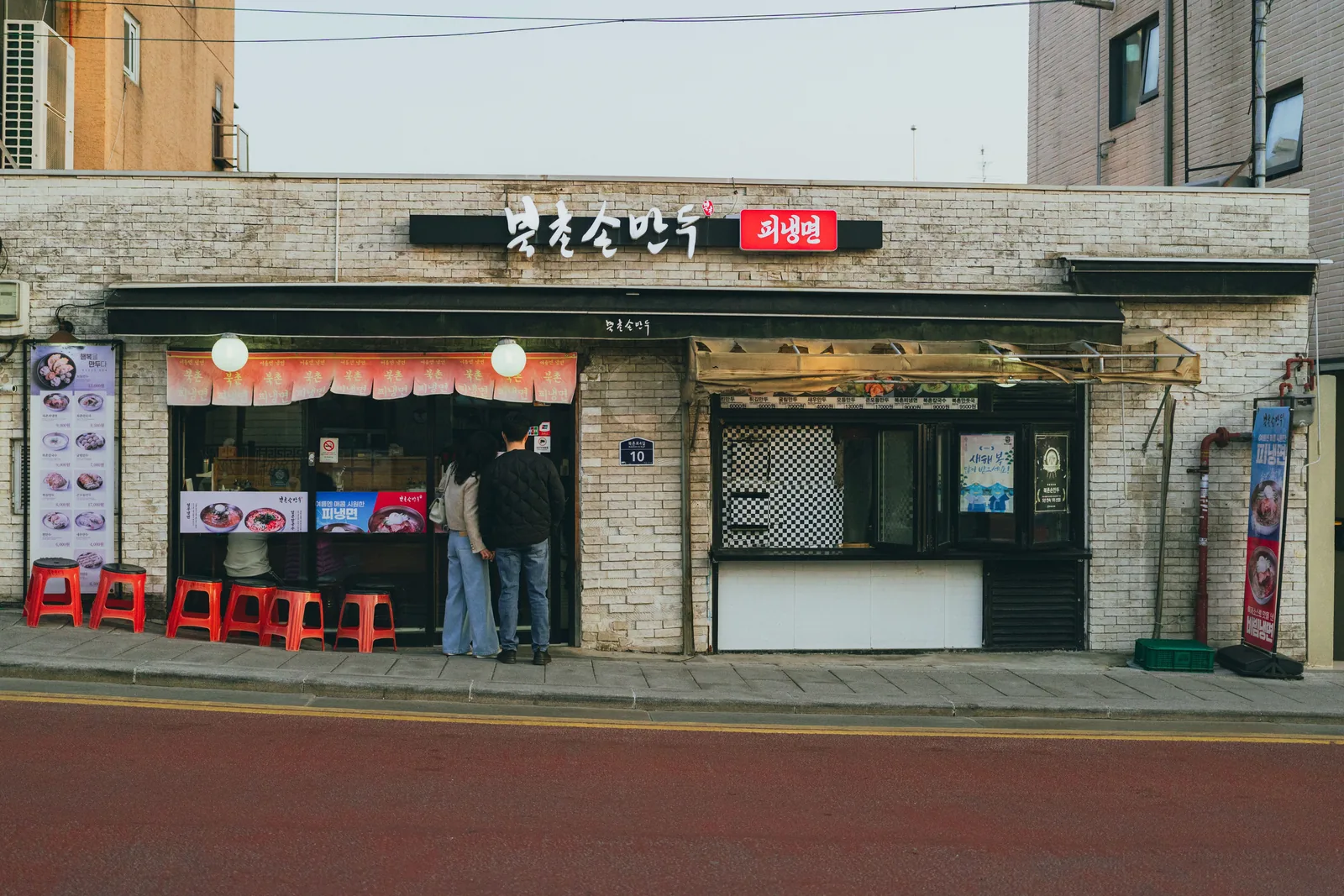
A Korean street with red storefront signage
Direct answer: The AllergyPass Korean card states 저는 심각한 음식 알레르기가 있습니다. 제 음식에 다음 재료가 포함되지 않도록 해주세요 — "I have a serious food allergy. Please make sure my food does NOT contain the following ingredients." For South Korea's two most-asked food questions: traditional kimchi often contains jeot, a fermented seafood paste (usually salted shrimp or fermented anchovy), so it is frequently not safe with a shellfish or fish allergy; gochujang is usually a soy-and-chili paste, not a shellfish risk, though wheat and restaurant-added seafood stock are worth checking. Show your card in writing, then ask staff to confirm ingredients and preparation.

The one sentence structure to know

A reusable pattern used across AllergyPass's Korean guides is 저는 [allergen]에 알레르기가 있어요 (Jeoneun [allergen]-e allereugi ga isseoyo) — "I have an allergy to [allergen]." Swap in any allergen from the tables below, then show the written card and ask about the recipe and preparation:

Jeoneun ttangkong-e allereugi ga isseoyo

I am allergic to peanuts.

For a severe allergy, five more lines matter — these are the exact strings printed on the AllergyPass Korean card:

Card heading

Food Allergy Card

Main allergy statement

I have a serious food allergy. Please make sure my food does NOT contain the following ingredients.

Severity warning

Even small amounts may cause a severe allergic reaction.

Cross-contact request

Please avoid cross-contact. Do not use shared oil, fryers, grills, utensils, cutting boards, sauces, broths, or cooking surfaces.

EpiPen notice

I carry an epinephrine auto-injector (EpiPen).

Every major allergen in Korean

These are the highest-frequency allergens in the AllergyPass card. Packaged labels, menus, and restaurant recipes may use more specific wording, so use each term as a starting point and check the full ingredient list or recipe:

EnglishKorean
Peanuts땅콩
Tree nuts견과류
Dairy / milk우유 / 유제품
Eggs달걀
Gluten글루텐
Wheat
Soy대두
Fish생선
Shellfish갑각류 / 조개류
Sesame참깨
Shrimp새우
Crab
Almond아몬드
Cashew캐슈넛
Walnut호두

Get all of this on one written card, in Korean

Build My Korean Card

What other allergens and dietary terms does a Korean allergy card cover?

Direct answer: Beyond the common allergens above, the AllergyPass card builder includes additional allergies, medical conditions, sensitivities, intolerances, and dietary rules in Korean. 71 of AllergyPass's 71 tracked allergens and dietary restrictions currently have a Korean translation; any not yet translated fall back to English on the card. The complete list, grouped by category:

Allergies

EnglishKorean
Peanuts땅콩
Tree Nuts견과류
Milk / Dairy우유 / 유제품
Eggs달걀
Gluten글루텐
Soy대두
Fish생선
Shellfish갑각류 / 조개류
Sesame참깨
Mustard겨자
Celery셀러리
Sulfites아황산염
Lupin루핀
Shrimp / Prawns새우
Crab
Lobster바닷가재
Mollusks연체동물
Almond아몬드
Cashew캐슈넛
Walnut호두
Pistachio피스타치오
Hazelnut헤이즐넛
Pine Nuts
Wheat
Oats귀리
Rye호밀
Barley보리

Medical conditions

EnglishKorean
Celiac Disease셀리악병 (글루텐을 소량이라도 반드시 피해야 함)
Crohn's Disease크론병
IBS (Irritable Bowel Syndrome)과민성 대장 증후군 (IBS)
Histamine Intolerance히스타민 불내증
MCAS (Mast Cell Activation Syndrome)비만세포 활성화 증후군 (MCAS)
Alpha-gal Syndrome알파-갈 증후군 (포유류 고기 알레르기)

Sensitivities & intolerances

EnglishKorean
Buckwheat메밀
Corn옥수수
Coconut코코넛
Banana바나나
Avocado아보카도
Kiwi키위
Pears
Garlic마늘
Onion양파
Caffeine카페인
Legumes콩류
Chickpea병아리콩
Lentil렌틸콩
Pea Protein완두 단백질
MSGMSG
Artificial Colors인공 색소
Preservatives방부제
Cilantro / Coriander고수
Cinnamon계피
Spicy Food매운 음식
Sunflower Seeds해바라기씨
Lactose Intolerance유당불내증
Fructose Intolerance과당불내증

Dietary preferences

EnglishKorean
Vegetarian채식주의
Vegan비건
Pescatarian페스카테리언 (생선 허용 채식)
Low FODMAP저 FODMAP 식이

Religious dietary rules

EnglishKorean
Halal할랄
Kosher코셔
Jain Vegetarian자이나교 채식
Hindu Vegetarian (No Beef)힌두교 채식 (소고기 제외)
Buddhist Vegetarian불교 채식 (육류, 마늘, 양파 제외)

Ingredients to avoid

EnglishKorean
No Pork돼지고기 제외
No Beef소고기 제외
No Chicken닭고기 제외
Gelatin젤라틴
No Alcohol알코올 제외
Alcohol알코올

These terms are communication aids. Before relying on any translation, compare it with the label, recipe, or medical wording relevant to your situation, and ask the restaurant how the food is prepared.

Does kimchi have shrimp, seafood, or peanuts?

Traditional kimchi is fermented with jeot, a salted seafood paste used in the brine — not an occasional ingredient but a default one, since kimchi accompanies most Korean meals. The two most common types are saeujeot (salted shrimp), a shellfish allergen, and myeolchi-jeot (fermented anchovy), a fish allergen. Which one a specific kitchen or product uses determines which allergy is at risk, and recipes vary by restaurant, region, and even batch — so a wrong guess here isn't a small one.

Peanuts and tree nuts are a different story: traditional kimchi doesn't contain either. Its allergen risk comes entirely from jeot, and nut allergens are generally uncommon in Korean cooking compared to Southeast Asian cuisines where peanut is a routine garnish or sauce base.

Kimchi-e saeujeot deureo innayo?

Does the kimchi contain salted shrimp?

The Korean terms to carry in writing are 새우젓 (saeujeot, salted shrimp) and 땅콩 (ttangkong, peanut). Many restaurants in Seoul now offer vegan kimchi, made without jeot and usually substituted with kelp stock or a mushroom-based paste — worth asking for by name if jeot is a hard no.

Does gochujang have shellfish or soy?

Usually not shellfish. Gochujang is typically a fermented chili paste made from red chili powder, glutinous rice, and fermented soybeans, so its main allergens are soy — always — and, depending on the brand, wheat used as a thickener. That matters beyond the paste itself: gochujang is the base of both tteokbokki and bibimbap sauce, so a soy or wheat allergy meets it across a large share of a Korean menu rather than in one dish.

A restaurant's gochujang-based sauce can differ from the bottled paste, though. A kitchen may add its own seafood stock or anchovy base to a gochujang sauce, so the sauce is still worth asking about even though the paste itself is not usually a shellfish risk. In Korean cooking, the more common shellfish source is kimchi's jeot, not gochujang.

IngredientKoreanAllergen it usually carries
Soy sauce간장Soy
Soybean paste된장Soy
Sesame참깨Sesame
Salted shrimp새우젓Shellfish
WheatGluten / wheat
Milk우유Dairy
Egg달걀Egg
Peanut땅콩Peanut
Fish생선Fish

What to ask at Korean BBQ and about banchan

Plain, unmarinated samgyeopsal (pork belly) on a clean grill is the lowest-risk Korean BBQ option. The harder problem is everything that arrives without being asked for:

Dish or item What to ask
Marinated meats (bulgogi, galbi) The marinade is built on ganjang (soy sauce) and finished with sesame oil — ask before ordering.
Banchan (side dishes) Ask about sesame oil, soy, and kimchi's jeot for each dish that arrives unasked.
Dipping sauces (ssamjang) Ssamjang is built on doenjang and gochujang — ask about soy, wheat, and sesame.
The grill plate A marinade cooked on it before you arrived leaves residue. Ask for a clean one: 새 불판 주세요 (sae bul-pan ju-se-yo).

Stick to plain pork, plain rice, and plain salt if you need to minimize risk, ask for a clean grill plate, and hand over a written Korean-language card rather than relying on a verbal request in a busy restaurant.

Frequently asked questions

How do you say food allergy in Korean?

The AllergyPass Korean allergy card opens with 저는 심각한 음식 알레르기가 있습니다. 제 음식에 다음 재료가 포함되지 않도록 해주세요 — I have a serious food allergy. Please make sure my food does NOT contain the following ingredients. For a single allergen, a reusable spoken pattern is 저는 [allergen]에 알레르기가 있어요 (Jeoneun [allergen]-e allereugi ga isseoyo), I have an allergy to [allergen]. Show the phrase in writing, then ask staff to confirm the ingredients and preparation.

Does kimchi have shrimp?

Often, yes. Traditional kimchi is fermented with jeot, and the most common type is saeujeot (salted shrimp), a shellfish allergen — so kimchi containing saeujeot is not automatically safe with a shellfish allergy. Some batches instead use myeolchi-jeot (fermented anchovy), a fish allergen, and some restaurants now serve a vegan kimchi made without either. Because the recipe varies by restaurant and by batch, ask specifically: Kimchi-e saeujeot deureo innayo? — Does the kimchi contain salted shrimp? The Korean term to carry in writing is 새우젓 (saeujeot).

Does kimchi have seafood?

Usually, yes, in the form of jeot, a fermented seafood paste used in the brine. Depending on the batch, that's either saeujeot (salted shrimp, a shellfish allergen) or myeolchi-jeot (fermented anchovy, a fish allergen) — so the answer depends on which one a specific kitchen or product uses. Packaged kimchi labels should state which; at a restaurant, ask directly and check whether a vegan kimchi, made without jeot, is available.

Does kimchi have peanuts?

No. Traditional kimchi's allergen risk comes from jeot (fermented shrimp or anchovy paste), not from peanuts or tree nuts — those allergens are uncommon in Korean cooking generally compared to Southeast Asian cuisines. The Korean word for peanut is 땅콩 (ttangkong); carry it in writing on a card rather than relying on a spoken request, since a specific kitchen's recipe can still vary.

Does gochujang have shellfish?

Usually not. Gochujang is typically a fermented chili paste made from red chili powder, glutinous rice, and fermented soybeans, so its main allergens are soy and, depending on the brand, wheat used as a thickener. A restaurant's gochujang-based sauce can vary from the bottled paste, though, and a kitchen may add its own seafood stock or anchovy base — so the sauce is still worth asking about. In Korean cooking, kimchi's jeot is the more common shellfish risk, not gochujang itself.