 AllergyPass
Allergic Reactions & Emergency Care
in Thailand
If a food allergy reaction becomes serious in Thailand, use your prescribed epinephrine, call 1669, and get to emergency care. Save the numbers and hospital contacts below before your trip.
 Thailand
1669: National EMS (ambulance)
191 : Police
1155: Tourist Police (tourist assistance and language support)
In this guide
Choosing an emergency department
Private hospitals in Bangkok and major tourist cities may have international-patient desks, language support, and dedicated emergency facilities. That can make communication and billing easier, but services vary by hospital and shift.
Public hospitals also provide emergency care. In a time-critical reaction, use the nearest appropriate emergency department or follow the ambulance team's direction; do not delay treatment because a facility is public or private. Bring your allergy card, medication list, and insurance details only if they are immediately available.
Hospital options by city
Bangkok
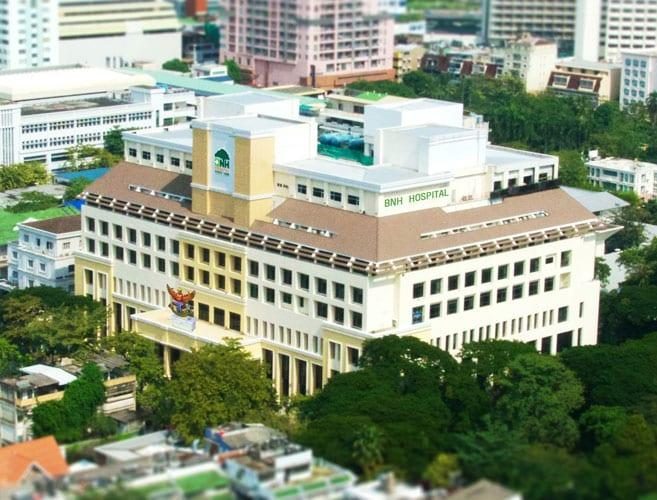
Sukhumvit Soi 3, Bangkok. An internationally oriented hospital with a 24-hour emergency department and extensive foreign-patient experience. Confirm insurer arrangements directly before treatment.
Emergency: +66 2 667 1000
The Bangkok Hospital network has facilities in Bangkok and other tourist destinations. Use the nearest appropriate emergency department rather than crossing the city to reach a preferred branch.
Emergency: +66 2 310 3000
Sukhumvit 49. Strong pediatric department and emergency care. English-language support is available, but insurer arrangements and department availability should be confirmed directly.
Emergency: +66 2 022 2222
Chiang Mai
JCI-accredited private hospital with a 24-hour emergency and trauma center. The hospital lists an International Medical Services department with multilingual coordinators.
Emergency: +66 52 089 888 (hotline 1719)
Private hospital in central Chiang Mai with emergency services. Check current emergency access and language support directly before travel.
Emergency: +66 52 004 601 (main: +66 52 004 699)
Phuket
Private hospital in Phuket with emergency and trauma services. Check the current emergency entrance and contact details before travel.
Emergency: +66 76 254 425
Koh Samui
Private hospital on Koh Samui offering 24-hour emergency care. Confirm insurer arrangements and current department access directly.
Emergency: +66 77 429 500 (hotline 1719)
Pattaya
JCI-accredited private hospital in Pattaya, part of the BDMS network, with 24-hour emergency and trauma services.
Emergency: +66 38 259 986 (main: +66 38 259 999; hotline 1719)
Travel insurance and direct billing
Some private hospitals have international insurance desks and may be able to arrange direct billing, but this depends on the hospital, insurer, policy, and treatment. Ask the admissions team before assuming a direct-billing arrangement is available.
If direct billing is unavailable or you use a smaller facility, keep all receipts, clinical notes, and payment documentation for reimbursement. Costs vary substantially by facility and intervention; request an estimate only when doing so will not delay emergency treatment.
Before buying a policy for a Thailand trip, check three things: does it cover emergency anaphylaxis treatment, does it exclude food allergies as a pre-existing condition, and does it include medical evacuation, which matters most on Koh Samui and the smaller islands where a serious case may need transferring to Bangkok. SafetyWing Nomad Insurance is one policy to compare. Read the current policy wording, especially the pre-existing-condition and medical-evacuation sections, and get written clarification about allergy-related treatment before buying.
For allergic reactions specifically
If you carry an EpiPen or adrenaline auto-injector, keep it on your person, not in checked luggage or a bag left at the hotel. For anaphylaxis or difficulty breathing, use it promptly if prescribed, call 1669, and go to the nearest appropriate emergency department. Follow your personal action plan; do not stand or walk around unnecessarily while waiting for help, and use a second injector only as directed by your plan or emergency clinicians.
Tell emergency staff what you ate and which allergen you suspect. A photo of the dish can help. If you have your AllergyPass card, show it: it lists your allergens and can include emergency contact information.
Add your emergency contact details to your allergy card
Build your Thai allergy cardSources and current-contact notes
- Thailand National Institute for Emergency Medicine: national emergency medical service information.
- Thailand Tourist Police: 1155 tourist assistance and the official emergency-number directory shown on its site.
- NHS anaphylaxis guidance: epinephrine-first and ambulance guidance used for the general reaction sequence. Follow your clinician's personal action plan.
- Bangkok Hospital network directory: current Phuket, Siriroj, Samui, and other network contact listings. Verify directly before travel.
- Chiang Mai Ram Hospital contact page: current main and emergency contact details should be checked before travel.
Frequently asked questions
What should I do if I have an allergic reaction in Thailand?
Use your prescribed epinephrine promptly, call 1669, and go to the nearest appropriate emergency department. Do not delay care while trying to reach a particular private hospital. Public hospitals also provide emergency care, so do not delay treatment because a facility is public rather than private, and follow the ambulance team's direction once they are with you. Do not stand or walk around unnecessarily while waiting for help, and use a second injector only as directed by your personal action plan or by emergency clinicians. Bring your allergy card, medication list and insurance details if they are immediately to hand, but do not go looking for them at the cost of time. At the hospital, tell staff what you ate and which allergen you suspect; a photo of the dish helps, and an allergy card tells them what you react to and who to contact. Hospital services and language support vary by facility, so save current contact details before you travel.
Can I buy antihistamines in Thailand?
Yes. Antihistamines such as cetirizine and loratadine are widely available without a prescription at pharmacies (raan khai ya) throughout Thailand, including in smaller towns and tourist areas, which makes restocking straightforward if you run low. What they do not do is treat anaphylaxis. They can help with mild allergic symptoms, but they are not a substitute for epinephrine, and reaching for one instead of an auto-injector during a severe reaction costs time that matters. For that reason, easy pharmacy access is not a reason to travel without your own prescribed adrenaline auto-injector, which should be carried on your person rather than left in checked luggage or in a bag at the hotel. If a reaction becomes severe, the sequence does not change regardless of what you bought locally: use your prescribed epinephrine promptly, call 1669, and go to the nearest appropriate emergency department.
This article is for informational and travel preparation purposes only and does not constitute medical advice. Always consult a qualified healthcare professional before traveling with a food allergy, and carry any prescribed emergency medication at all times. See our full medical disclaimer.