 AllergyPass
Food Allergy Card for Kids Travel
A Parent's Guide
Traveling with a child who has a food allergy is a different problem from managing your own. You are communicating on someone else's behalf, managing a child's understanding and anxiety at the same time as your own, navigating every new food environment with an extra layer of responsibility. A food allergy card for kids travel is one of the few tools that speaks for them when you can't. This guide covers what that looks like in practice, and how to make it manageable.

Preparation before you travel
Get an allergy card in the local language
For parents traveling with food-allergic children, a written allergy card is one of the most useful communication tools. It reaches the kitchen when you cannot speak the language. Include a note that the allergy belongs to a child, the specific allergens, the need to avoid cross-contact, and what staff should do if they cannot verify a dish.
AllergyPass's card builder creates a food allergy card for travel in 40+ languages. Print multiple copies so you have one to leave at the hotel restaurant and one to carry to each restaurant you visit.
Prepare your child's medical documentation
Before travel, prepare the following documents and carry them in your hand luggage:
- A letter from your child's doctor or allergist confirming the diagnosis, the allergens, the prescribed medication, and the dosage. This should be on official letterhead.
- A copy of your child's allergy action plan (if your allergist has provided one), summarizing what to do in case of exposure.
- Prescription documentation for epinephrine auto-injectors, antihistamines, and any other prescribed allergy medication. Keep medication in original labeled packaging.
- Your travel insurance policy documentation, confirmed to cover allergic reactions as a medical emergency.
Talk to your child about the trip
Children handle allergy management better when they understand the plan rather than being shielded from it. Before the trip, explain in age-appropriate terms what the allergy means in the specific destination you are visiting: what foods to be cautious about, what happens if they feel a reaction starting, and what the plan is. Calibrate the conversation to reduce anxiety rather than increase it. The goal is a child who feels equipped, not one who feels afraid to eat anything.
For older children (typically from around 7-10 and up, depending on maturity), begin involving them in the communication process. Letting them hold the allergy card, show it to restaurant staff, or repeat the allergy to a server builds competence and confidence for the eventual transition to self-management.
Pack more medication than you think you need
Keep all prescribed doses in your carry-on where you can reach them. Follow your child’s clinician’s instructions about backup doses, check expiry dates, confirm insurance coverage, and research the local emergency number for every country on the itinerary. Do not delay emergency care while trying to find a particular hospital.
Airlines: booking, boarding, and in-flight
Notify the airline at booking
Some airlines offer special meals, but menus, notice periods, and cross-contact policies vary. When booking, record the allergy in the airline’s assistance system, then call or email to confirm what the request means. Repeat the check before departure.
Do not rely solely on the pre-ordered meal. Bring your child’s own backup food from home as backup. In-flight meal changes happen for many reasons (supply issues, weight restrictions, meal loading errors), and having a safe alternative means your child is not hungry and you are not making a risk decision mid-flight.
Notify cabin crew when boarding
When boarding, introduce yourself to the lead cabin crew member, explain your child's allergy, and confirm where the epinephrine is in your bag. For severe airborne sensitivities (some nut allergies), ask whether the crew can make an announcement requesting nearby passengers not consume the relevant food during the flight. This is not a guaranteed accommodation, but many airlines will do it on request.
Manage the airport environment
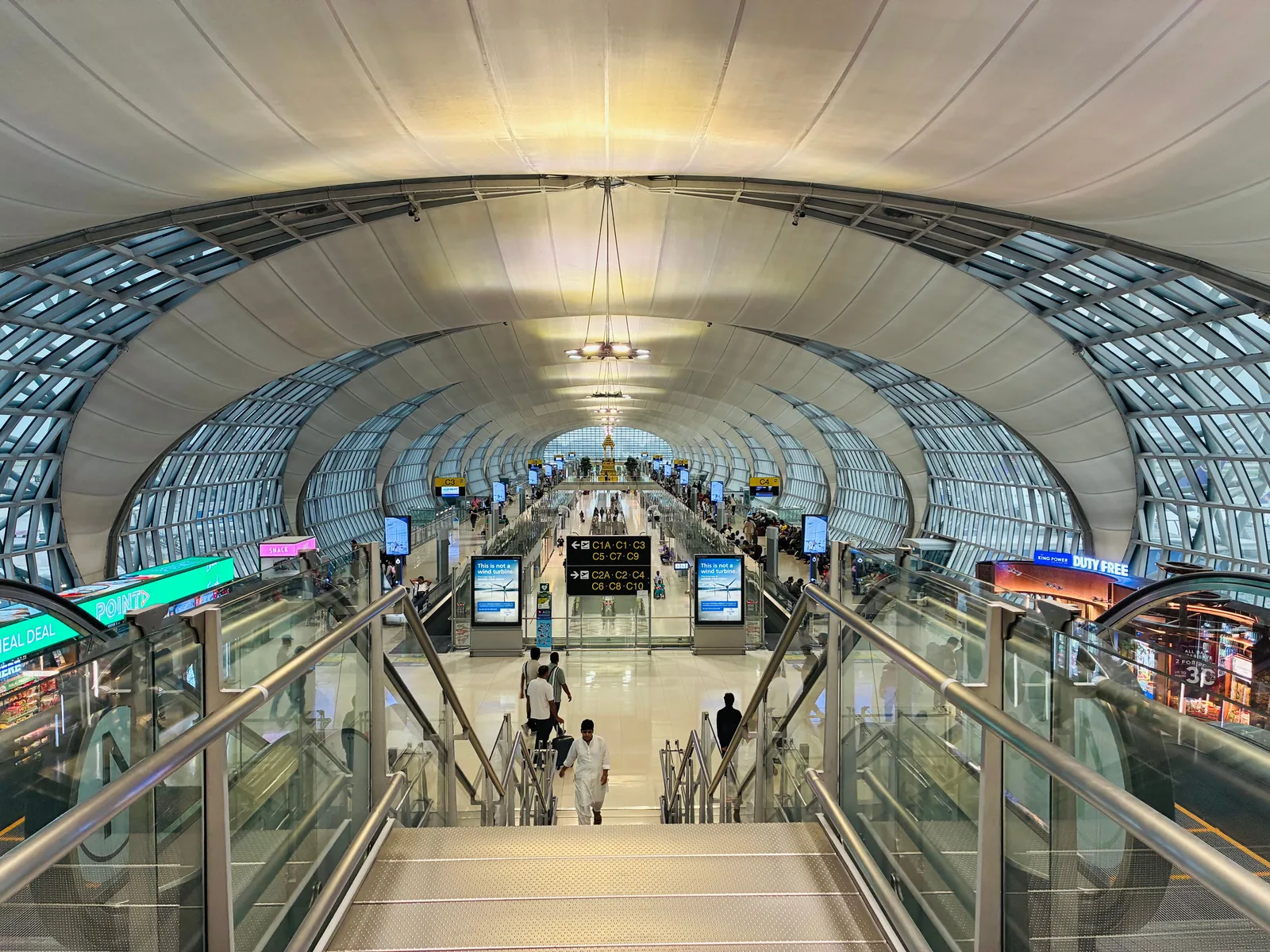
Airport food courts and departure lounges are unpredictable allergy environments. Labeling on grab-and-go items varies by airport and country. Children are also more likely to be hungry and tired during transit, which makes rushed food decisions more likely. Pack enough backup food for the full journey including layovers, and treat airport food as a supplement when labeling is clear rather than the primary food source.
Hotels: communicating before and after arrival
Contact the hotel before arrival
Email the hotel before your arrival, addressed to the restaurant manager or food and beverage manager rather than general reservations. Explain your child's allergy specifically, list the allergens, and ask:
- How the breakfast buffet handles shared utensils, bread, spreads, and packaged items.
- Whether the kitchen can explain a separate preparation for your child’s meal.
- Who the point of contact is for food allergy questions during your stay.
An email creates a paper trail. Follow up by speaking directly with the restaurant manager or head chef on your first day, and hand them your allergy card in the local language.
Breakfast buffets require specific attention
Breakfast buffets create several questions at once: shared serving utensils, bread crumbs, unlabeled items, and food added to a common display. For a severe allergy, ask whether the kitchen can prepare and serve a separate item, and use packaged food when the buffet cannot be explained.
Restaurants: communicating on your child's behalf

Arrive with a plan, not a question
Arrive with a shortlist of dishes to ask about, show the allergy card immediately when seated, and ask the server to take it to the kitchen before ordering. This gives staff time to check the recipe and preparation instead of leaving the decision until the food is already being made.
Ask targeted questions about preparation
For a child's allergy, the questions that matter most are about preparation method, not just ingredients. "Is this cooked in the same oil as [allergen]?" and "Is the grill or pan used for this dish shared with [allergen]-containing dishes?" give you more useful information than "Does this dish contain [allergen]?" which invites a yes/no answer about named ingredients only.
Choose lower-complexity dishes
For children who are often suspicious of unfamiliar dishes anyway, choosing simpler preparations are often easier to explain and more likely to be accepted. Grilled protein with rice or plain vegetables may have fewer ingredients to verify than a sauce-heavy dish, but still ask about marinades, stock, oil, utensils, and the cooking surface. This reduces unknowns without making the trip about fear of food.
Carry backup snacks at all times
Children get hungry at inconvenient moments: between activities, on transport, when the restaurant turns out not to be able to accommodate the allergy. Carrying a supply of food your child can eat means you always have a fallback and are never forced into a rushed food decision that bypasses the usual communication process.
Tour guides, activities, and other operators
Many travel activities for families include food components: cooking classes, food tours, welcome drinks, excursion snacks, hotel activity packs. For each activity involving food, communicate the allergy at booking and again at the start of the activity.
Provide the guide or activity operator with a copy of your allergy card and a brief verbal summary of what to do if your child shows signs of an allergic reaction. Confirm they know where the epinephrine is (typically in your bag) and that you should be the first person notified. For activities where you may be separated from your child (kids' clubs, age-restricted activities), this briefing is particularly important.
If your child is traveling on a school trip or with an organized group, provide the trip leader with a complete written summary of the allergy, the allergens, the action plan, and the medication. This should be provided in writing before departure, not just verbally. Confirm who is responsible for carrying and administering the epinephrine if you are not present.
If your child has a reaction abroad
Despite careful preparation, reactions can occur. Knowing the plan in advance removes the cognitive burden in a stressful moment.
- Follow your child’s action plan. If the plan calls for epinephrine, give it promptly and call emergency services. Do not wait to see whether symptoms improve.
- Know the local emergency number before you need it. 112 works across EU countries; outside the EU, verify the number for each destination. Save it in your phone and on the child’s card.
- Seek emergency medical care after epinephrine when the action plan directs you to. Epinephrine is temporary and symptoms can return. Follow your child’s clinician’s written instructions and tell responders what was given and when.
- Have your travel insurance details accessible. In a medical emergency you will need your policy number and the emergency assistance phone number. Keep these somewhere accessible, not buried in email.
Build an allergy card in the local language for your destination, ready to show at restaurants and hotels
Build My Child's Allergy CardFor very severe or anaphylaxis-risk allergies, also read Traveling with Severe Food Allergies. See also our guide to travel insurance for food allergies and do translation cards actually work.
How this guide was researched
This guide draws on guidance from food allergy organizations including FARE (Food Allergy Research and Education) and Allergy UK, airline policies on medical devices and allergen accommodation, established hotel industry practice for allergy requests, and best practices in travel allergy communication. It focuses specifically on the practical logistics facing parents traveling with food-allergic children internationally and is reviewed periodically. It does not replace advice from your child's allergist, who should be consulted before any international trip to confirm the child's current allergy management plan and any destination-specific considerations.
Sources and references
- FARE (Food Allergy Research and Education): Traveling with Food Allergies
- Allergy UK: Travel and Allergy advice
- European Emergency Number Association (112)
- US FDA: Food Allergen information
Frequently asked questions
How do I communicate my child's food allergy in a country where I don't speak the language?
A written allergy card in the local language beats verbal explanation every time. It lets kitchen staff read your child's specific allergens directly without a language barrier. The AllergyPass card builder generates these in 40+ languages. Print multiple copies and hand one to restaurant staff when you sit down, before ordering.
Can I bring my child's epinephrine auto-injector on a plane?
Keep your child’s prescribed epinephrine in carry-on luggage, in its original labeled packaging, with any supporting prescription or medical letter. Airline and airport procedures vary, so check them before departure. Never put the only dose in checked luggage, and tell cabin crew where it is when boarding.
How do I handle food at hotels when traveling with a food-allergic child?
Email the hotel before arrival, addressed to the restaurant or food and beverage manager. Ask about shared utensils, bread and spreads, packaged backups, and whether the kitchen can explain a separate preparation. On arrival, speak with the restaurant manager and hand over the local-language card. For severe allergies, ask whether your child can be served from the kitchen rather than a buffet line.
This article is for informational and travel preparation purposes only and does not constitute medical advice. Always consult a qualified healthcare professional before traveling with a food allergy, and carry any prescribed emergency medication at all times. See our full medical disclaimer.