 AllergyPass
Busan Food Allergy
Travel Guide
Busan offers markets, noodle dishes, fish cakes, and coastal food experiences, but fish, shellfish, stock, sauces, and shared equipment can be easy to miss. Here is how to ask about the exact recipe, carry your Korean-language card, and plan for emergency care.
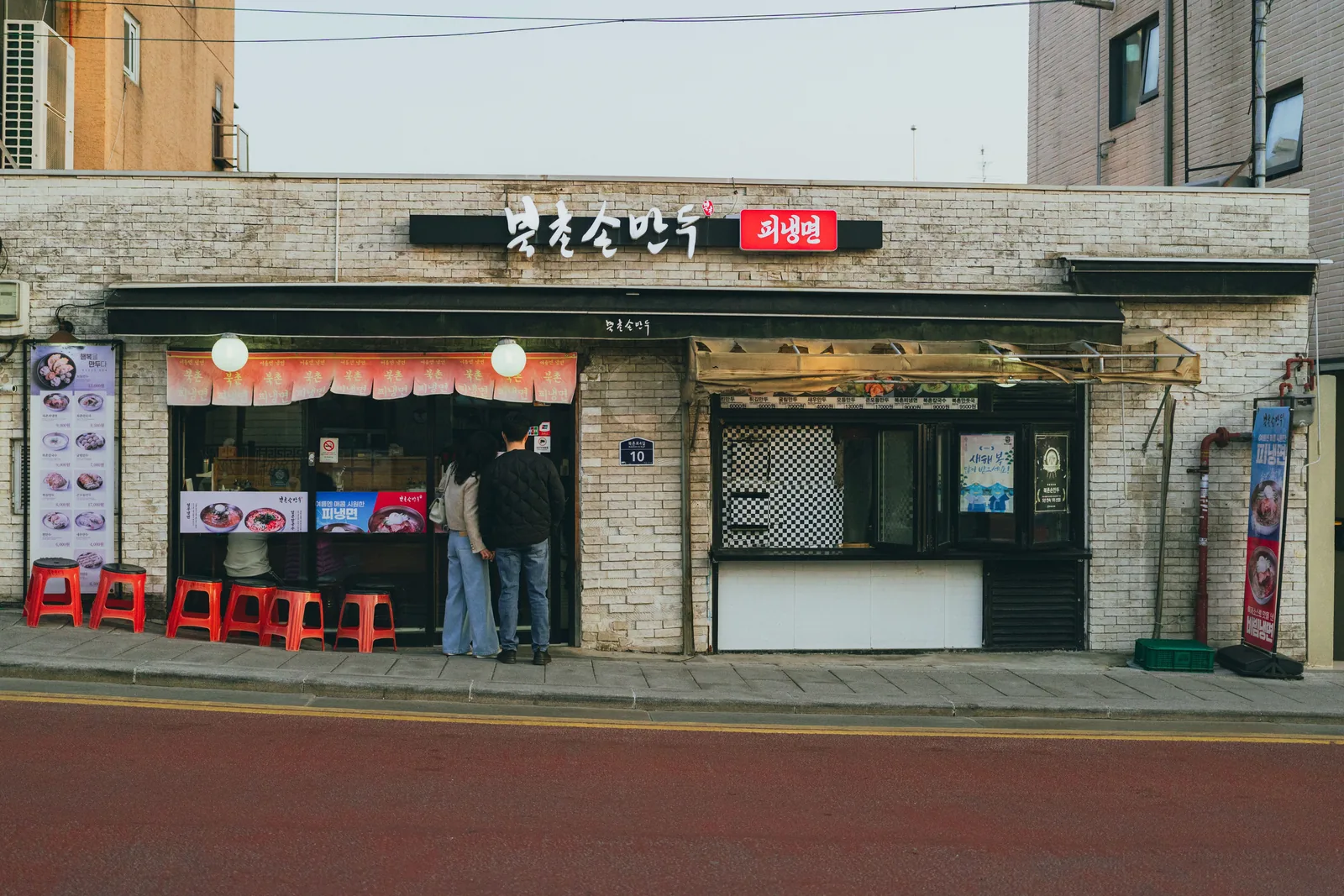 Busan, South Korea
Busan's signature dishes and the questions to ask
Busan's coastal food culture makes fish, shellfish, fermented seafood, and seafood stock common questions, alongside the soy, sesame, wheat, and egg found across Korean cooking. The dish name is a starting point, not a complete ingredient list.
- Eomuk (odeng) — a fish-cake product made from fish paste and used as street food or in soup. Ask whether the product or broth contains fish, shellfish, wheat, or other ingredients, and do not assume a “plain” skewer is fish-free.
- Agujjim — spicy braised monkfish stew. Ask about the fish, sauce, stock, fish sauce, fermented seafood paste (jeotgal), and shared serving tools.
- Milmyeon — a cold noodle dish made with wheat-based noodles. Ask about the noodle, broth, toppings, sauces, and shared preparation; do not substitute “cold” for “gluten-free.”
- Haemul pajeon — a seafood and scallion pancake. Ask about the exact seafood, wheat batter, sauce, oil, and shared pan. Recipes vary by restaurant.
- Ojingeo bokkeum — spicy stir-fried squid. If squid or mollusks are an allergen for you, the dish is not a workaround; also ask about sauce, stock, and shared wok preparation.
Where to eat: Jagalchi Market, Haeundae, and restaurants
Jagalchi Market is a seafood market, so a fish or shellfish allergy can make spontaneous eating difficult. You can browse, but ask each vendor about the exact item, stock, sauce, grill, oil, utensils, and nearby preparation. A visible ingredient does not answer the shared-surface question; if the vendor cannot explain it, do not taste it.
Haeundae has many hotels and restaurants serving visitors, but an English menu or photo does not confirm ingredients or cross-contact. Ask the same questions about fish, shellfish, stock, sauces, oils, and shared equipment wherever you eat.
At Jagalchi and older neighborhood restaurants, show a written Korean-language allergy card to the person taking the order and, when possible, the person preparing the food. Use it alongside a verbal check; a card communicates the allergen but cannot confirm how a particular kitchen handles shared equipment.
Build a Korean-language allergy card before you eat your first meal in Busan.
Build My Korea Allergy CardEmergency healthcare in Busan
A serious reaction is an emergency, not a hospital-comparison exercise. Use your prescribed emergency medication and call 119. For non-immediate planning, verify the current emergency-department and international-patient information for a hospital near your accommodation; the details below are starting points, not a guarantee of availability or language support at every hour.
Busan
875 Haeun-daero, Haeundae-gu, Busan. The hospital's official English site provides current information about its International Healthcare Center and emergency care. Check the current route, intake instructions, and language availability before relying on it.
Phone: +82 51-797-0566
179 Gudeok-ro, Seo-gu, Busan. Its official emergency-care page explains the emergency-department process. Check the current route, intake instructions, and language availability before relying on it.
Phone: +82 51-240-7000
For anaphylaxis or difficulty breathing, use your prescribed epinephrine auto-injector as directed and call 119. Do not delay emergency care while trying to identify a particular hospital. Keep your medication, action plan, passport, and Korean-language allergy card accessible; show the card to responders and emergency staff.
Frequently asked questions
How should I plan Busan differently for a fish or shellfish allergy?
Start with the assumption that seafood may be part of the dish, broth, sauce, garnish, or shared cooking surface. Carry a Korean-language card, ask what is in the stock and sauce, and be ready to skip a stall that cannot answer. A city-wide ranking does not replace checking the exact recipe.
Does eomuk (Korean fish cake) always contain fish?
Standard eomuk, also called odeng, is a fish-cake product made with fish paste; recipes and packaged products vary, and some may include shellfish or other ingredients. If fish is an allergen for you, treat ordinary eomuk and its broth as unsuitable unless the vendor or label clearly explains otherwise.
How should I find emergency care in Busan?
For a serious reaction, use your prescribed emergency medication and call 119 rather than choosing a hospital by reputation. For non-immediate planning, verify the current emergency and international-patient information for Inje University Haeundae Paik Hospital or Pusan National University Hospital, and choose based on your location, transport, and the hospital's current instructions.
This article is for informational and travel preparation purposes only and does not constitute medical advice. Always consult a qualified healthcare professional before traveling with a food allergy, and carry any prescribed emergency medication at all times. See our full medical disclaimer.