Language Guide · Indonesian

Indonesian Allergy Card: How to Say Your
Food Allergy in Bahasa Indonesia

Every allergen AllergyPass tracks, in Bahasa Indonesia, plus the five exact sentences printed on an Indonesia-bound card and what actually needs asking about in satay sauce, sambal, and coconut-based curries. Built for Indonesia and Bali specifically — Indonesian is a distinct language from Malay, not a variant of it.

Build my Indonesian allergy card For Indonesia and Bali, two minutes
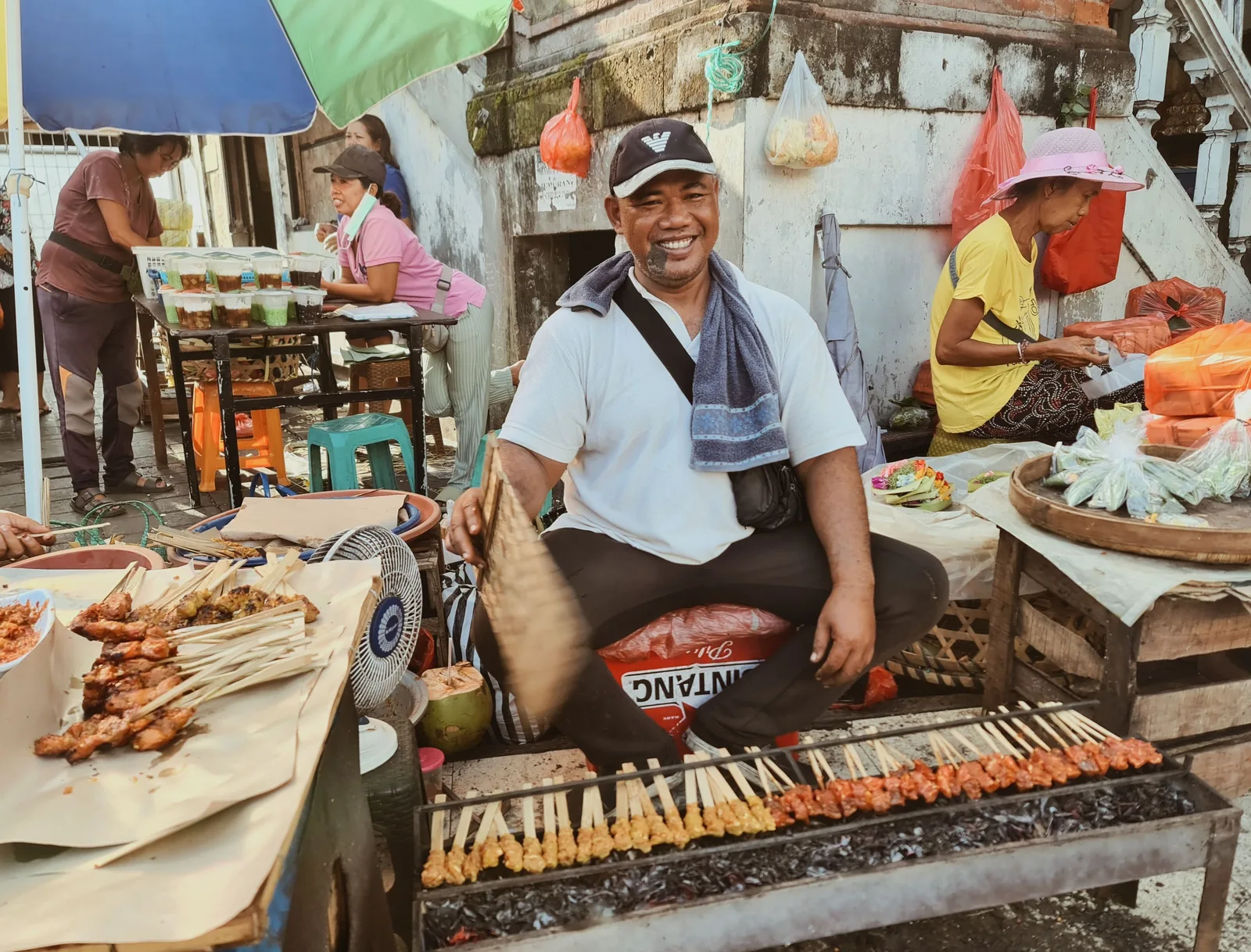
Satay vendor grilling skewers at a market in Bali, with a crate of Bintang beer visible
Direct answer: AllergyPass's Indonesian card opens with Kartu Alergi Makanan and states the allergy as Saya memiliki alergi makanan serius. Mohon pastikan makanan saya TIDAK mengandung bahan-bahan berikut. — "I have a serious food allergy. Please make sure my food does NOT contain the following ingredients." Peanuts (Kacang tanah) are the allergen to flag most carefully for Indonesia and Bali: they're common in satay sauce and gado-gado, and the general Indonesian word for beans overlaps with the word for peanuts, so the specific term matters.

The exact sentences on an Indonesian allergy card

AllergyPass prints five fixed lines on every Bahasa Indonesia card — not free-form translations, but the same strings the card builder uses for every Indonesia-bound traveler. Each is paired with its English meaning:

Card heading

Food Allergy Card

Main allergy statement

I have a serious food allergy. Please make sure my food does NOT contain the following ingredients.

Severity warning

Even small amounts may cause a severe allergic reaction.

Cross-contact request

Please avoid cross-contact. Do not use shared oil, fryers, grills, utensils, cutting boards, sauces, broths, or cooking surfaces.

EpiPen notice

I carry an epinephrine auto-injector (EpiPen).

The allergens to flag first for Indonesia

These are the terms travelers most often need for Indonesia and Bali specifically — the allergens behind satay sauce, sambal, and shared kitchen equipment. The complete list of 71 tracked allergens and dietary terms follows below.

EnglishIndonesian
PeanutsKacang tanah
Tree NutsKacang pohon
ShellfishMakanan laut bercangkang
Shrimp / PrawnsUdang
CrabKepiting
MollusksMoluska
FishIkan
Milk / DairySusu / Produk susu
EggsTelur
GlutenGluten
WheatGandum
SoyKedelai
CoconutKelapa
SesameWijen
HalalHalal

Get all of this on one written card, in Bahasa Indonesia

Build My Indonesian Card

What other allergens and dietary terms does an Indonesian allergy card cover?

Direct answer: Beyond the destination-specific allergens above, the AllergyPass card builder includes additional allergies, medical conditions, sensitivities, intolerances, and dietary rules in Bahasa Indonesia. The complete list, grouped by category:

Allergies

EnglishIndonesian
PeanutsKacang tanah
Tree NutsKacang pohon
Milk / DairySusu / Produk susu
EggsTelur
GlutenGluten
SoyKedelai
FishIkan
ShellfishMakanan laut bercangkang
SesameWijen
MustardMustar
CelerySeledri
SulfitesSulfit
LupinLupin
Shrimp / PrawnsUdang
CrabKepiting
LobsterLobster
MollusksMoluska
AlmondAlmond
CashewKacang mete
WalnutKenari
PistachioPistachio
HazelnutHazelnut
Pine NutsKacang pinus
WheatGandum
OatsOat
RyeGandum hitam
BarleyJelai

Medical conditions

EnglishIndonesian
Celiac DiseasePenyakit Celiac (harus menghindari semua gluten, bahkan dalam jumlah kecil)
Crohn's DiseasePenyakit Crohn
IBS (Irritable Bowel Syndrome)Sindrom iritasi usus (IBS)
Histamine IntoleranceIntoleransi Histamin
MCAS (Mast Cell Activation Syndrome)Sindrom Aktivasi Sel Mast (MCAS)
Alpha-gal SyndromeSindrom Alpha-gal (alergi daging mamalia)

Sensitivities & intolerances

EnglishIndonesian
BuckwheatSoba
CornJagung
CoconutKelapa
BananaPisang
AvocadoAlpukat
KiwiKiwi
PearsPir
GarlicBawang putih
OnionBawang bombay
CaffeineKafein
LegumesKacang-kacangan dan polong
ChickpeaKacang arab
LentilLentil
Pea ProteinProtein kacang polong
MSGMSG
Artificial ColorsPewarna buatan
PreservativesPengawet
Cilantro / CorianderKetumbar
CinnamonKayu manis
Spicy FoodMakanan pedas
Sunflower SeedsBiji bunga matahari
Lactose IntoleranceIntoleransi Laktosa
Fructose IntoleranceIntoleransi Fruktosa

Dietary preferences

EnglishIndonesian
VegetarianVegetarian
VeganVegan
PescatarianPescatarian (ikan diperbolehkan)
Low FODMAPDiet FODMAP rendah

Religious dietary rules

EnglishIndonesian
HalalHalal
KosherKosher
Jain VegetarianVegetarian Jain
Hindu Vegetarian (No Beef)Vegetarian Hindu (tanpa daging sapi)
Buddhist VegetarianVegetarian Buddha (tanpa bawang putih atau bawang)

Ingredients to avoid

EnglishIndonesian
No PorkTanpa daging babi
No BeefTanpa daging sapi
No ChickenTanpa ayam
GelatinGelatin
No AlcoholTanpa alkohol
AlcoholAlkohol

These terms are communication aids. Before relying on any translation, compare it with the label, recipe, or medical wording relevant to your situation, and ask the restaurant how the food is prepared.

Hidden allergens in Indonesian and Balinese cooking

Peanuts show up constantly in Indonesian and Balinese food, most visibly in satay's dipping sauce and in gado-gado, a vegetable dish built on a peanut dressing rather than finished with one. In both dishes, peanut sauce (bumbu kacang) is the point, not a garnish, so asking for it to be left off doesn't solve the shared-prep and shared-utensil risk underneath. A less visible risk is terasi, fermented shrimp paste, which is stirred into the bumbu (spice base) at the start of cooking for many curries, stir-fries, and sambals; by the time the dish reaches the table it has cooked into the sauce and disappeared, making it a hidden shellfish allergen for anyone who assumes a dish is plant-based because it looks that way.

Coconut milk (santan) is easier to spot: it's the base of many Balinese curries and braises and usually appears on menus by name. Candlenut (kemiri), by contrast, is ground into spice pastes as a thickener for dishes like rendang and sayur lodeh, leaves no visible nut in the finished dish, and is often not recognized by kitchen staff as a tree nut at all. For a deeper look at how these ingredients move through Balinese kitchens, see our peanut allergy in Bali guide and the wider Indonesia food allergy hub.

Does Indonesian food have peanuts? What about tree nuts?

Yes — peanuts are one of the most common allergens in Indonesian cooking. Satay's peanut sauce, gado-gado's dressing, pecel, and many sambal condiments are all peanut-based. The AllergyPass card's Indonesian term for peanut is Kacang tanah, and it's worth using that specific two-word term rather than a shorter one: the Indonesian word for peanuts sits inside a broader family of words for beans and legumes, so specificity on a written card matters more here than it would in English.

Tree nuts are a separate line on the card — Kacang pohon — and cover almonds, cashews, walnuts, and similar nuts as a category. Indonesian cooking's most distinctive tree-nut risk is candlenut (kemiri), discussed above: it's ground into sauces rather than served whole, so flagging the general tree-nut category on your card is the first step, and asking specifically about kemiri in any sauced or curried dish is the second.

What to ask before you order in Indonesia

Recipes vary by warung, region, and stall. Ask about the specific dish rather than assuming a category is safe or unsafe:

Dish or ingredient What to ask
Satay (sate) with peanut sauce Ask about the dipping sauce, the marinade, and whether the same tongs or brush touch other dishes — the grilled meat is often lower-risk than the sauce.
Gado-gado / pecel These are peanut-sauce dishes by design; treat them as unsuitable for a peanut allergy rather than asking for the sauce to be removed.
Sambal (any variety) Ask which sambal it is and whether it's batch-made in shared equipment — some varieties are built on shrimp paste, others on peanuts.
Coconut-milk curries (opor ayam, rendang, sayur lodeh) Ask whether the spice paste includes candlenut (kemiri), and confirm the dish uses coconut milk if you need to avoid it.
Nasi goreng / mie goreng Ask about shrimp paste, egg, soy sauce, and whether the wok or fryer is shared with other dishes.

Frequently asked questions

Does Indonesian food have peanuts?

Yes. Peanuts are common in Indonesian cooking, especially in satay's peanut dipping sauce (bumbu kacang), gado-gado, and many sambal condiments. The AllergyPass card's exact term for peanut is Kacang tanah, and it is worth using deliberately: Indonesian groups peanuts with a wider family of beans and legumes, so a written card with the specific term is more reliable than a shorter, general word.

What does an AllergyPass card say in Indonesian?

It opens with the heading Kartu Alergi Makanan, states your allergy in the sentence Saya memiliki alergi makanan serius. Mohon pastikan makanan saya TIDAK mengandung bahan-bahan berikut., and lists every allergen you flag using the Indonesian terms in the tables on this page, each shown next to its English name so kitchen staff can read it directly.

How many allergens can I flag on an Indonesian allergy card?

71 of AllergyPass's 71 tracked allergens and dietary restrictions currently have an Indonesian translation; any not yet translated fall back to English on the card until they are.

Is Indonesian the same as Malay?

No. Indonesian (Bahasa Indonesia) and Malay (Bahasa Melayu) are closely related languages with shared vocabulary, but they are not interchangeable — spelling, common words, and everyday usage differ enough that a Malay card is not a substitute for an Indonesian one. This page and the AllergyPass card builder's ID destination use Bahasa Indonesia specifically, for Indonesia.

What about tree nuts like candlenut (kemiri) in Indonesian food?

Candlenut (kemiri) is ground into spice pastes used in curries, sambals, and braised dishes across Indonesia and Bali, and because it is blended in, there's rarely a whole nut to spot on the plate. The AllergyPass card's general term for tree nuts is Kacang pohon; travelers with a tree-nut allergy should flag that category on their card and separately ask kitchens whether kemiri is in the dish, since staff don't always think of it as a nut.