 AllergyPass
Turkish allergy card
Your restrictions in Turkish and English, ready to save on your phone or print.
A live sample. Your finished card is personalized in the builder.
Get this card in Turkish
Your allergens, written in Turkish for kitchens in Türkiye, with the optional cross-contamination warning shown in this sample.
- Printable PDF with a cut-out card, plus an image for your phone
- Every allergen in Turkish and English, side by side
- Apple and Google Wallet passes for cards with up to three allergens
$7.99 one-time for Turkish English is free · All Languages $29.99 · instant digital delivery, no shipping charge
Continue with this cardSecure checkout by LemonSqueezy · 14-day refund policy
Where the Turkish card works
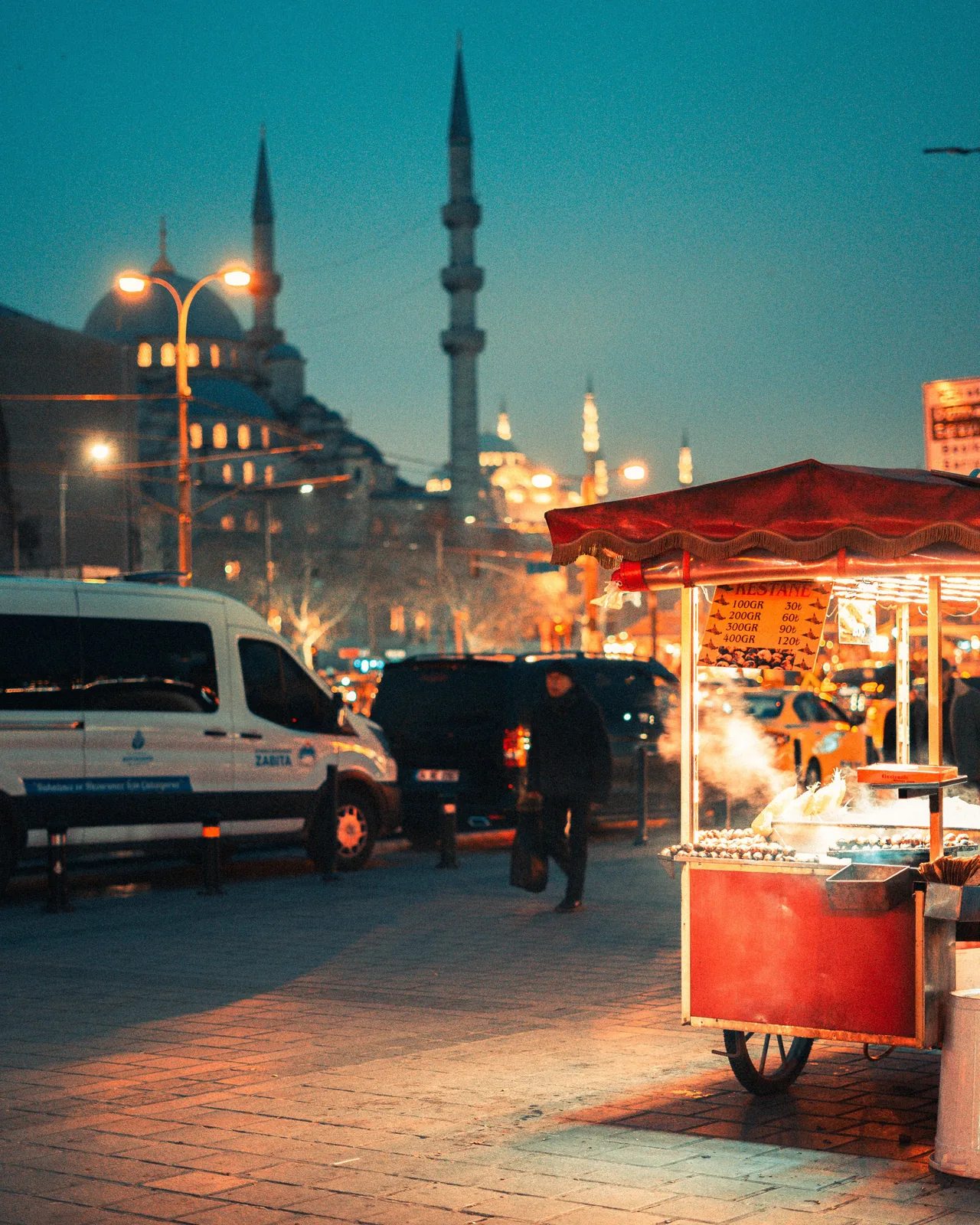
Turkish is the language of Türkiye and of northern Cyprus, so the card works in Istanbul lokantas and in Kyrenia alike. The south of the island uses Greek: see the Greek allergy card.
- Turkey
- Cyprus
Each of these 2 destinations is its own choice in the builder. A One Language card covers the destination you pick; All Languages covers every one of them.
What is the biggest risk in Türkiye?
Nuts and sesame lead, because they turn up in food that is sold everywhere and eaten on the move. Simit, the ring of bread sold from street carts, is covered in sesame seeds. Tahin helvası is made from sesame paste. Baklava is built from layers of filo filled with chopped walnuts or pistachios, and which nut a shop uses varies, so ask each time rather than assuming.
Dairy is the second pattern, and it is easy to miss because it is added at the end. Mantı, small meat dumplings, are served with fresh yogurt and melted butter. İskender kebap is lamb laid over bread and covered in yogurt, tomato sauce and butter, according to the same official tourism guide. Rice pudding, sütlaç, is made from rice, sugar, rice flour and milk. Künefe looks like a pastry but carries soft white cheese under the shredded dough.
Wheat is everywhere from bread to dessert, including kadayıf, the shredded-wheat pastry that is topped with pistachio or walnut. Some dishes are less obvious: ask whether a pilaf is made from rice or bulgur, whether butter went into it, and whether a meze uses tahini or yogurt, because recipes differ from one kitchen to the next.
Why written Turkish beats spoken English
In tourist areas of Istanbul and the coast you will often find staff who speak some English. The cooks, and the people running the small neighborhood restaurants where much of the best food is, may not. Allergy words are a weak point in any second language, and "nuts" in English can be heard as one nut rather than all of them.
A card in Turkish removes the guesswork. It names each allergen you selected in the words a Turkish cook uses, keeps the English next to it so you can check what you are showing, and can be handed straight to the kitchen when the server is busy.
Put your selected allergens in Turkish and English on a card to show kitchen staff.
Build my Turkish cardAllergen labelling in Türkiye
Türkiye's food labelling rules are set by the Turkish Food Codex regulation on labelling and consumer information, published in the Official Gazette on 26 January 2017. Its Annex 1 lists 14 allergens, the same set the EU uses: cereals containing gluten, crustaceans, eggs, fish, peanuts, soybeans, milk, tree nuts, celery, mustard, sesame, sulphites, lupin and molluscs.
The regulation is not only about packets. The current text says it covers food served by mass catering businesses, and Article 15 says that for food that is not prepacked, restaurants must give the listed allergens to the customer in an easily visible way, through menus, boards or similar material. Symbols are allowed.
That is a useful baseline, but it is not a guarantee. A menu may use symbols you do not recognize, a board may be in Turkish only, and a small lokanta may not show anything at all. Treat any allergen marking as a starting point and confirm it with your card.
Northern Cyprus
Turkish is also the language of northern Cyprus, so the card works there too. We found no official allergen rule for restaurants in the north. A US Department of Commerce guide notes that labelling in the north is looser than in the Republic of Cyprus and not aligned with EU norms. Do not expect menu allergen information, and rely on the card and your own questions. In the Greek-speaking south, use the Greek allergy card.
Real dining situations in Türkiye
Esnaf lokantası. These tradesmen's restaurants serve home-style food from a counter: you choose dishes and pay per plate, with bread free. Everything is already cooked, which helps, because you can point at a tray and ask what is in it before anything reaches your plate. Show the card at the counter and ask about butter, yogurt and nuts in each dish you are considering.
Kebab and grill houses. The meat is often simple, and the risk is in what comes with it: yogurt sauces, butter poured over at the end, and bread underneath. Ask for the sauce on the side and check what the bread base is made with if wheat is on your card.
Meyhane and meze tables. Shared plates arrive quickly and several at a time. Show the card when you order, ask which meze contain your allergens, and keep the safe dishes on your side of the table.
Pastry shops and street carts. Baklava counters and simit carts sell unwrapped food with no label. If nuts or sesame are on your card, treat these as high risk and ask before you buy, or skip them.
What happens after you pay, and what to check
Pick your allergens in the builder, choose whether to add a severe-allergy line and a shared-equipment warning, and check out. The card is emailed to you as a printable PDF with a cut-out version and as an image sized for your phone. With up to three allergens you can also save it to Apple or Google Wallet. Nothing is shipped.
Before you fly, check the allergen list on both versions, save the image to your phone so it works offline, and keep a printed copy in your wallet. One Language covers the destination you choose. If Türkiye is one leg of a longer trip, All Languages covers every language we offer, including any added later.
Frequently asked questions
What do you get with the Turkish allergy card?
A printable PDF with a cut-out card and an image sized for your phone, both sent by email. Every allergen you choose is written in Turkish with the English underneath. Cards with up to three allergens can also go into Apple or Google Wallet.
Do restaurants in Türkiye have to show allergens on the menu?
Türkiye's 2017 food labelling regulation says restaurants must give the listed allergens for food that is not prepacked, shown in a visible way on menus, boards or similar material. Not every small place does it, so show your card and ask anyway.
Which Turkish desserts contain nuts?
Baklava is made with walnuts or pistachios between layers of filo, and kadayıf comes with pistachio or walnut. Künefe hides soft cheese inside. If tree nuts or milk are on your card, ask about every dessert before you order it.
Does the Turkish card work in northern Cyprus?
Yes. Turkish is the language of northern Cyprus, and it is one of the destinations you can choose for this card in the builder. We found no official allergen rule for restaurants there, so rely on the card and on direct questions.
Is yogurt in a lot of Turkish main dishes?
Often. Mantı dumplings are served with yogurt and melted butter, and İskender kebap is covered in yogurt, tomato sauce and butter. If milk is on your card, ask whether yogurt or butter is added before the plate leaves the kitchen.
This article is for informational and travel preparation purposes only and does not constitute medical advice. Always consult a qualified healthcare professional before traveling with a food allergy, and carry any prescribed emergency medication at all times. See our full medical disclaimer.