 AllergyPass
Wellness Experiences in Thailand
for Tourists
Thailand offers everything from dry traditional massage to oil treatments, herbal therapies, spas, and retreats with structured meals. The useful question for an allergy traveler is what will touch your skin, what you will eat, and whether the venue can answer before you arrive.
 Thailand
In this guide
Traditional Thai massage (nuad boran)
The foundation of Thai wellness is nuad boran, traditional Thai massage, which has been practiced in Thailand for over 2,500 years. It is a dry, clothed technique: the recipient lies on a mat fully clothed while the therapist applies rhythmic pressure along energy lines (sen), combined with passive stretching that resembles assisted yoga.
What distinguishes genuine nuad boran from the oil massage labeled "Thai massage" in Western spas: no oil, no table, no ambient music requirement. The physical effect is closer to a deep stretch and pressure therapy session than a relaxation massage. Travelers expecting a gentle Western-style experience are sometimes caught off guard by the intensity. Some soreness the day after your first session is normal, particularly if you have tight muscles, and resolves within 24 to 48 hours.
Price and venue type do not tell you everything about technique. If training matters to you, ask what certification or experience the therapist has and what the session involves before booking.
Medical contraindications
Thai massage involves sustained deep pressure and passive joint mobilization. There are specific medical situations where this is contraindicated or where modified treatment is required.
Conditions requiring modified treatment: pregnancy (second and third trimester), hypermobility or joint laxity, herniated or prolapsed discs, active arthritis in inflamed joints, or recent injury or bruising. Inform the therapist of any of these before the session begins.
What to communicate before your session
At a reputable spa, an intake form will prompt medical disclosure before your session. At a street massage shop, communicate this verbally before the therapist begins. Critical things to mention: current injuries or acute pain, pregnancy and stage, cardiovascular or blood pressure conditions, joint conditions, spinal conditions, and your preferred pressure level.
The phrase "mai ow nak" means "not too heavy" in Thai, the most useful phrase for communicating pressure preference when a therapist has limited English. "Ow nak" means "heavy/firm." Say "yoot" (stop) if you need the session to stop at any point.
How to recognize a trained therapist
At mid-range and premium spas: look for Wat Pho certification (certificates reputable spas display), an intake process that asks about your health history, and technique that feels deliberate and systematic rather than random. When booking through GoWabi or a spa's own platform, reviews mentioning specific therapist names are more reliable than general spa ratings.
Oil massage vs. traditional: which to choose
Thai herbal treatments
Thai herbal wellness is distinct from Western aromatherapy. The botanical ingredients used (lemongrass, galangal, kaffir lime, turmeric, camphor, phlai (Thai ginger)) have documented pharmacological properties and are applied with therapeutic intent rather than purely for ambient effect.
Luk pra kob (hot herbal compress): A cloth bundle of dried Thai medicinal herbs heated in steam and applied with pressure to muscles and energy points. The heat and herb compounds absorb transdermally. This differs from a standard hot stone massage: the botanical compounds do pharmacological work. Inform the spa of any plant allergies before the treatment, as lemongrass (a grass family plant) and turmeric occasionally cause reactions in sensitive individuals.
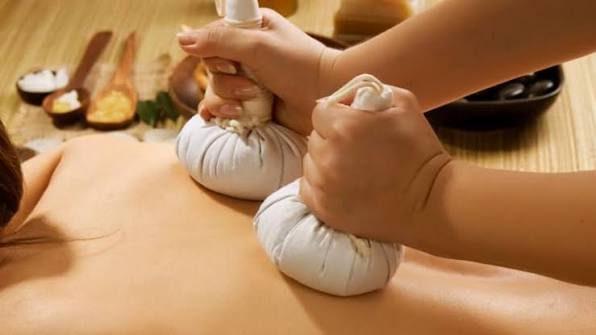
Herbal steam rooms: Found at mid-range and premium spas. A small steam room infused with Thai medicinal herbs. 15 to 20 minutes in a Thai herbal steam room before a massage treatment is a recognized preparation technique that opens the pores and relaxes the musculature. Most spas include it as part of a treatment package.
Tok sen: A northern Thai technique using a wooden hammer and wedge to apply vibration along energy lines. Less widely available than mainstream nuad boran but available at specialist northern Thai spas in Bangkok and widely in Chiang Mai. Dry technique, no products.
Bangkok spas: choosing the right tier
Bangkok has street massage shops, standalone spas, and hotel spas. Each tier offers a different booking process, treatment menu, privacy level, and way to ask about products; compare the venue against your own needs.
Street massage shops
The foot massage shops and traditional Thai massage parlors found on nearly every Bangkok street. Open-plan rooms, thin mats or chairs, basic product selection. Traditional Thai massage here is often excellent: the technique is real, the therapists are typically experienced, and the price is a fraction of a spa. For pure traditional massage with no products, this tier works well.
What it lacks: private rooms, advance booking, English-fluent staff, and product variety for accommodating specific allergies. If you need an oil-based massage with a specific product substitution, this is not the right tier.
Mid-range standalone spas
Standalone spas may offer private rooms, more treatment choices, and a booking channel for questions. Ask what will touch your skin, whether the current ingredient list is available, and whether the venue can decline a treatment it cannot verify.
Do not assume a carrier-oil substitution is suitable. Send the exact allergen before booking and request written confirmation from the venue.
Premium hotel spas
Hotel spas may have a direct reservation team and documented treatment menus, but the actual products and procedures vary. Contact the spa before booking, request the current ingredient information, and do not treat a hotel category as proof that a substitution is medically suitable.
Communicating product or skin allergies at Bangkok spas
Product allergies relevant to spa visits differ from food allergies. The most common concerns: nut oil allergies (coconut oil, almond oil, and macadamia oil are common carrier oils in Thai massage), fragrance sensitivities, latex allergies, and specific botanical ingredients in body scrubs (lemongrass, turmeric, and jasmine are common in Thai spa treatments).
Communicate by email or booking note before the appointment rather than verbally at arrival. Written communication gives the spa time to check their product list, prepare a substitution, and confirm with you before you arrive. A verbal note at the reception desk at a busy mid-range spa may not reliably reach the therapist.
Can massage oils actually trigger a food allergy reaction?
Do not use a treatment menu to decide whether an oil is medically safe for your allergy. Processing, labeling, formulation, and the product used by the spa vary. Ask for the current product name and ingredient information, and discuss the risk with your clinician if you have a serious food or skin allergy.
Terms such as “cold-pressed,” “organic,” or “refined” are not enough to establish that a product suits you. If the spa cannot identify the product or cannot provide an alternative you have verified, choose a treatment without that product.
Food allergy and contact dermatitis are different concerns, and a spa treatment can involve both food-derived oils and fragrances or botanicals. Tell the therapist about any known skin or scent reactions as well as food allergies; seek medical advice for your own risk rather than relying on a general product category.
None of this changes the practical advice above: name your specific allergen before the appointment, ask what product will be used, and do not assume that processing or a substitute removes your risk.
How to book Bangkok spas
GoWabi is one booking option. Check the listing and then contact the venue directly about your allergy; a platform listing does not confirm the current product or the kitchen's ability to accommodate you.
For hotel spas, book directly through the hotel. The reservation or concierge team can relay your product allergy to the spa team and confirm a treatment plan before you arrive. This direct line of communication is more reliable than a third-party platform for specific allergy accommodation at the premium level.
Book a Bangkok spa on GoWabi and note your allergen in the booking message before you arrive.
Browse Bangkok spas on GoWabi →Multi-day wellness retreats in Thailand
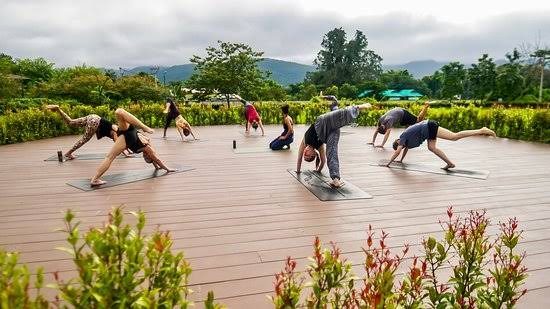
Thailand's retreat infrastructure is concentrated in three locations: Koh Samui (detox and cleanse programs), Chiang Mai (yoga, meditation, and traditional healing), and Pai (yoga and nature immersion in the northern mountains). Each has a distinct character.
Koh Samui
Koh Samui has a range of detox and cleansing programs, from short stays to longer programs with structured meals and treatments. Program length, food rules, supplements, and medical screening vary; review the current details directly with the retreat.
For food allergy travelers: detox programs that involve structured dietary protocols often accommodate specific allergens better than general retreat menus, because the dietary intake is already closely managed. Contact the retreat directly before booking to confirm allergy accommodation.
Chiang Mai
Chiang Mai has yoga, meditation, and traditional-healing programs, including multi-day stays in and around the city. Review the current schedule, accommodation, meal plan, and kitchen communication process before booking.
Pai
Pai has smaller yoga and wellness programs in a mountain setting. The venue, kitchen, transport, and medical access may be more limited than in a large city, so confirm the meal plan and emergency route before committing to a multi-day stay.
Food allergies at wellness retreats
Multi-day retreat programs often include structured meals, so food communication matters throughout the stay rather than only at booking. Ask who plans the menu, who cooks, and how snacks, drinks, supplements, and shared preparation are handled.
Do not assume a retreat can accommodate a food allergy because it has a wellness or detox focus. Communicate in writing before booking, name derivatives, and ask for confirmation that every included meal, snack, drink, and supplement can be checked. If the kitchen cannot answer, choose a different program.
Frequently asked questions
What wellness experiences is Thailand known for?
Traditional Thai massage (nuad boran), hot herbal compress (luk pra kob), herbal steam rooms, detox retreat programs, yoga and meditation retreats, and hotel spa programs are all available in Thailand. The treatment, products, booking process, and included meals vary by venue.
How much do wellness experiences cost in Thailand?
Prices vary by venue, treatment, season, and what is included. Check the current menu, booking terms, taxes, and retreat inclusions before paying; older price ranges are not reliable comparison data.
Do I need to book in advance?
Booking rules vary. Ask the venue about availability, cancellation terms, treatment length, product information, and how an allergy note reaches the therapist or kitchen. Retreats may have fixed intake dates and advance forms.
What is the difference between street massage and a Bangkok spa?
Street massage shops often offer basic dry massage, while standalone and hotel spas may offer private rooms and more ways to ask questions. These are tendencies, not guarantees. For product allergies, ask any venue what will touch your skin and whether it can show the current ingredient list before the appointment.
Can you get a Thai massage with a product or skin allergy?
A dry, clothed treatment may reduce product variables, but it is not a medical guarantee. Tell the venue and your clinician about your allergy, ask what will touch your skin, and request current product information before booking an oil, herbal, scrub, or wrap treatment.
How do I book a spa in Bangkok?
Use the spa's current booking channel or a reputable platform, then send your allergy question before confirming. For hotel spas, booking directly may make it easier to reach the spa team. Ask for written confirmation of the treatment, products, and any food arrangements.
Is Thai massage safe with a latex allergy?
Tell the venue about a latex allergy before booking and ask which treatments use gloves, elastic, adhesives, or other latex-containing materials. Ask the venue to confirm the alternative materials; do not infer them from the treatment name or venue tier.
Do I need to book wellness experiences in Thailand in advance?
Booking rules vary. Ask the venue about availability, treatment duration, cancellation terms, product ingredients, and how an allergy note reaches the therapist or kitchen. Retreats may have fixed intake dates and advance forms.
Can you get a Thai massage if you have a product or skin allergy?
A dry, clothed treatment may reduce product variables, but it is not a medical guarantee. Tell the venue and your clinician about your allergy, ask what will touch your skin, and request current product information before booking. Do not assume a substitute is suitable without checking it.
This article is for informational and travel preparation purposes only and does not constitute medical advice. Always consult a qualified healthcare professional before traveling with a food allergy, and carry any prescribed emergency medication at all times. See our full medical disclaimer.