 AllergyPass
Where to Stay in Bangkok
with Food Allergies
Your Bangkok address affects how easily you can find familiar food, reach a hospital, and communicate with a hotel kitchen. Here is the trade-off by area, plus the questions to ask before booking.
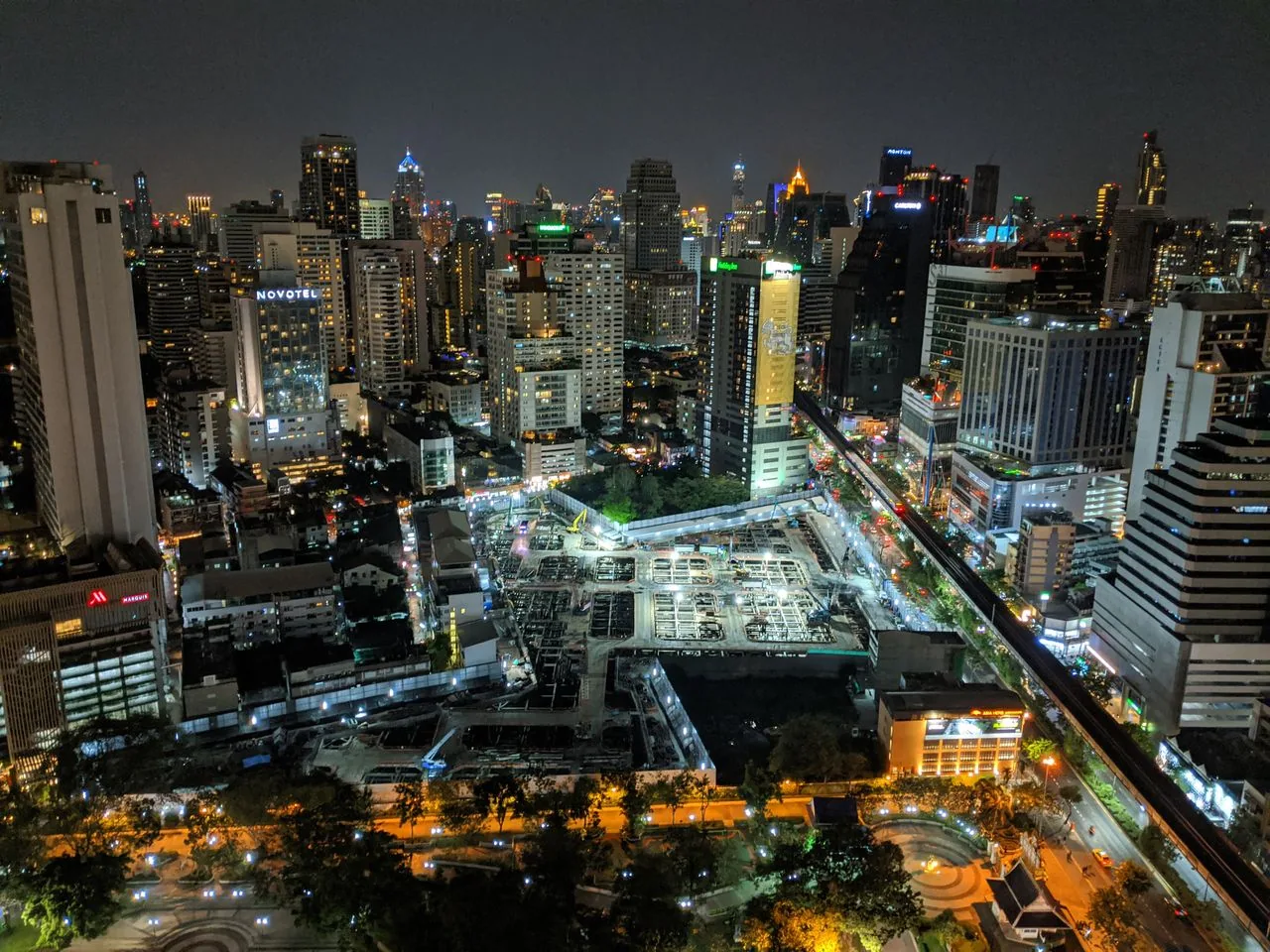 Bangkok, Thailand
What actually matters for allergy travelers choosing a neighborhood
Standard travel advice focuses on price, vibe, and tourist attractions. For allergy travelers, the relevant variables are different. The three that matter most:
- Food access: Can you find restaurants or packaged food that fit your plan nearby? Are the labels in a language you can read, and can a venue answer questions about the actual recipe?
- Emergency route: Which emergency department would you use, and how would you get there at the time of day you are most likely to need it? In a serious reaction, use the nearest appropriate care rather than crossing the city for a preferred hospital.
- Hotel communication: Can staff discuss your specific allergens, ingredients, and cross-contact controls with the kitchen? A familiar brand or star rating is not proof of that capability.
Bangkok neighborhoods: allergy traveler breakdown
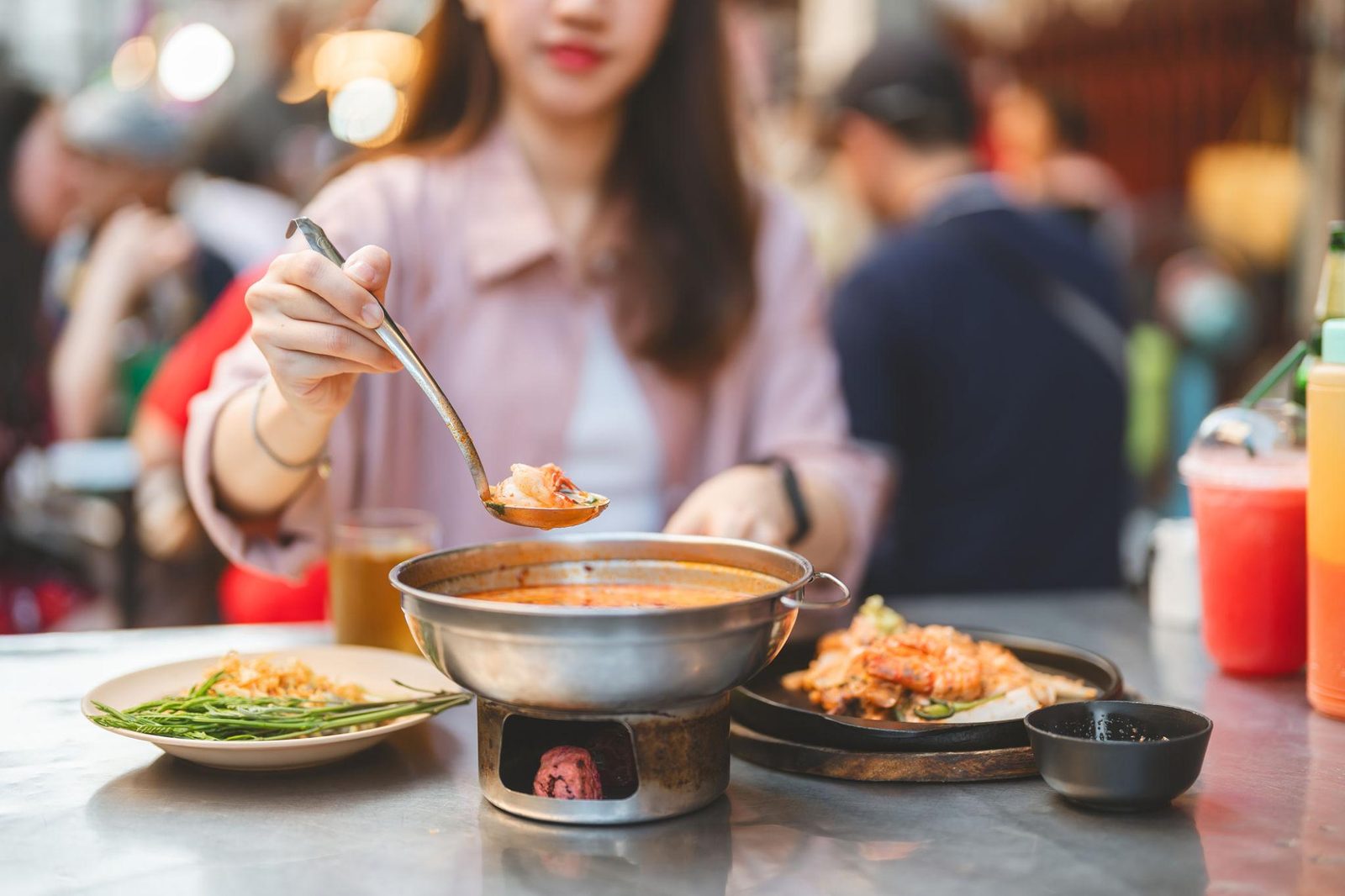
Sukhumvit (BTS Asok to Phrom Phong)
Lower Sukhumvit has a large mix of hotels, malls, restaurants, and imported-food shops. That gives you more fallback choices, not a guarantee that any particular kitchen can manage an allergy. Villa Market lists a Sukhumvit 33 branch, and Gourmet Market lists locations at EmQuartier and Paragon; check current hours and stock before relying on either.
Bumrungrad is on Sukhumvit Soi 3, but travel time depends heavily on traffic. A hotel restaurant may make advance communication easier; email your exact allergens and ask for the answer from the staff responsible for preparing the meal.
Silom / Sathorn
Silom and Sathorn mix business hotels, local restaurants, malls, and BTS/MRT access. You may find international dining and hotel kitchens that can discuss ingredients, but the answer still depends on the individual venue. Night markets and street-food stalls require the same recipe, oil, utensil, and cross-contact questions as elsewhere in Bangkok.
Silom is not next door to every hospital. Check the route to the facility you would actually use, and do not rely on BTS travel during a medical emergency; call 1669 or use the nearest appropriate emergency department.
Siam / Ratchathewi
Siam and Ratchathewi are convenient for shopping malls and BTS connections. Malls can give you more restaurant and packaged-food choices in one building, but food-court menus, staff knowledge, and cross-contact controls vary. Treat a mall as a place to compare options, not as an allergy guarantee.
The Siam interchange is useful for ordinary travel, but it does not replace an emergency plan. Map the nearest suitable emergency department from your hotel and check the route at the time you expect to travel.
Riverside / Charoen Krung
The riverside and Charoen Krung areas have full-service hotels and many local restaurants. An on-site restaurant can make advance questions and a simple breakfast routine easier, but no hotel kitchen should be assumed to be allergy-safe. The trade-off is that some stays are farther from BTS/MRT and from the supermarkets you may want for packaged-food backups.
Map your emergency route before booking. River boats and ordinary transit are useful for sightseeing, but they are not a substitute for emergency transport during a serious reaction.
Khao San Road / Banglamphu
Banglamphu has many hostels, guesthouses, and local or tourist-oriented restaurants, but fewer nearby supermarkets and no direct BTS station. Kitchen communication varies widely by property and venue. If you stay here, arrange a breakfast and packaged-food backup plan before arrival rather than relying on whatever is open downstairs.
Map the route to emergency care and account for traffic. A Thai-language allergy card helps communication, but it cannot make an unverified kitchen safe.
Supermarkets and packaged food in Bangkok

Villa Market lists a Sukhumvit 33 branch, while Gourmet Market lists locations at EmQuartier and Paragon. Imported packaged food may be useful when the label is readable and intact, but product range and stock vary by branch.
Tops, Foodland, convenience stores, and local markets may be closer to your hotel. Use them for products you can identify confidently; do not treat a familiar store name as proof that every package has English allergen information.
For a severe allergy, bring a backup plan from home and check the actual label of each product. Packaged food is not automatically safe just because it is imported.
Once you know which area fits your food access and hospital priorities, compare Bangkok hotels in one place. Contact the property directly before booking to confirm your specific allergy needs.
Browse Bangkok hotels →International hospitals in Bangkok
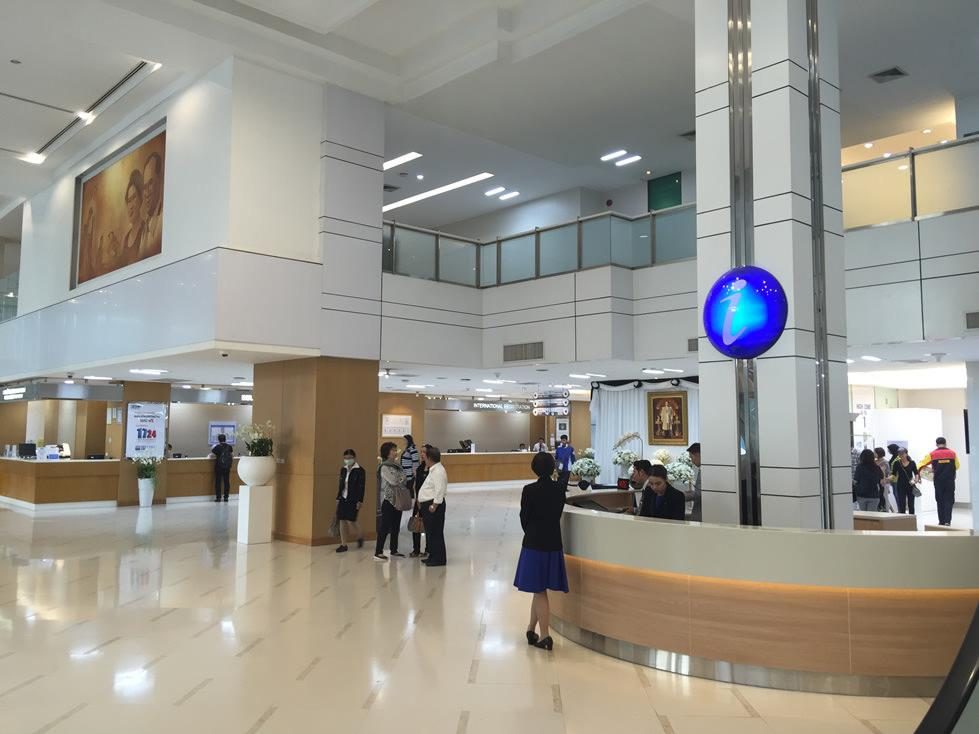
Sukhumvit Soi 3. Its official contact page lists a 24/7 call center and emergency ambulance service. Confirm the current emergency entrance, payment arrangements, and insurer process before relying on it.
Use the current contact details on the hospital's official page.
New Phetchaburi Road. Its Bangkok center publishes emergency and trauma services. Use the branch nearest you rather than crossing the city to reach a preferred facility.
Confirm the current emergency contact and access instructions directly.
Sukhumvit 49. Its trauma-center information describes 24/7 emergency calls and ambulance support. Confirm current services, language support, and payment arrangements directly.
Use the current contact details on the hospital's official page.
Thailand's National Institute for Emergency Medicine lists 1669 for emergency medical services. In a serious reaction, use your prescribed emergency medication according to your personal action plan and call 1669 or get to the nearest appropriate emergency department. Confirm your insurance, payment, and evacuation arrangements before you need them; a hospital may request a deposit or upfront payment.
What to ask your Bangkok hotel before you book
Email these questions before you arrive
- Can your restaurant kitchen prepare food without [specific allergen], and what steps do you take to reduce cross-contact?
- Can breakfast staff identify the ingredients in each dish, including fish sauce, shrimp paste, and peanut oil?
- Does the room include an in-room refrigerator cold enough for epinephrine storage and packaged safe snacks, not just a mini-bar for drinks?
- Is there a Villa Market, Gourmet Market, or other international supermarket within walking distance?
- What is the nearest appropriate emergency department, and what is the best way to reach it from the hotel?
- Can front-desk staff help call emergency services and explain the hotel address in Thai?
Thai breakfast and street dishes hide fish sauce, shrimp paste, and peanut oil in places you would not expect. Check common Thai dishes for hidden allergens in the Allergy Risk Checker before you arrive.
Frequently asked questions
Which Bangkok area is practical for food allergy travelers?
Lower Sukhumvit is one practical base because it combines international dining, supermarkets with imported packaged food, and direct BTS and MRT links. It may be easier to contact a full-service hotel or restaurant before arrival, but no neighborhood guarantees a safe meal. Choose based on your allergens, likely meals, transport, and emergency route.
Do Bangkok hotels accommodate food allergies?
Some international or full-service hotels may be easier to contact before arrival, but kitchen practices vary by property and restaurant. Ask whether staff can discuss your specific allergen, ingredients, and cross-contact controls. Do not assume a chain name, star rating, buffet, or guesthouse can accommodate you without a direct answer.
Which Bangkok hospital handles severe allergic reactions?
Bumrungrad International Hospital, Bangkok Hospital, and Samitivej Sukhumvit are private hospital options in different parts of Bangkok. During a serious reaction, the nearest appropriate emergency department matters more than a preferred name. Confirm current emergency access, specialists, language support, and payment arrangements directly before relying on a facility.

This article is for informational and travel preparation purposes only and does not constitute medical advice. Always consult a qualified healthcare professional before traveling with a food allergy, and carry any prescribed emergency medication at all times. See our full medical disclaimer.