 AllergyPass
Food Allergies in Austria:
Menu Letter Codes and Schnitzel
Austria implements EU allergen law through its own national rule, and most Vienna menus mark each dish with a letter code instead of spelling the allergen out. This guide covers what those codes mean, hidden allergens in Austrian cuisine, and which dishes need a direct question before you order.
In this guide
Austria's allergen rules and menu letter codes
Austria applies the EU's Food Information to Consumers (FIC) Regulation through its own national implementing rule, the Allergeninformationsverordnung (BGBl. II Nr. 175/2014), in force since 2014. It covers restaurants, cafés, bakeries, and caterers, the same as the EU baseline, but goes a step further on one specific point: even when allergen information is given verbally, the law requires the business to have that information based on written documentation kept on the premises, available on request. A staff member telling you a dish is safe isn't just their own judgment, it's meant to trace back to a written record the venue is legally required to hold.
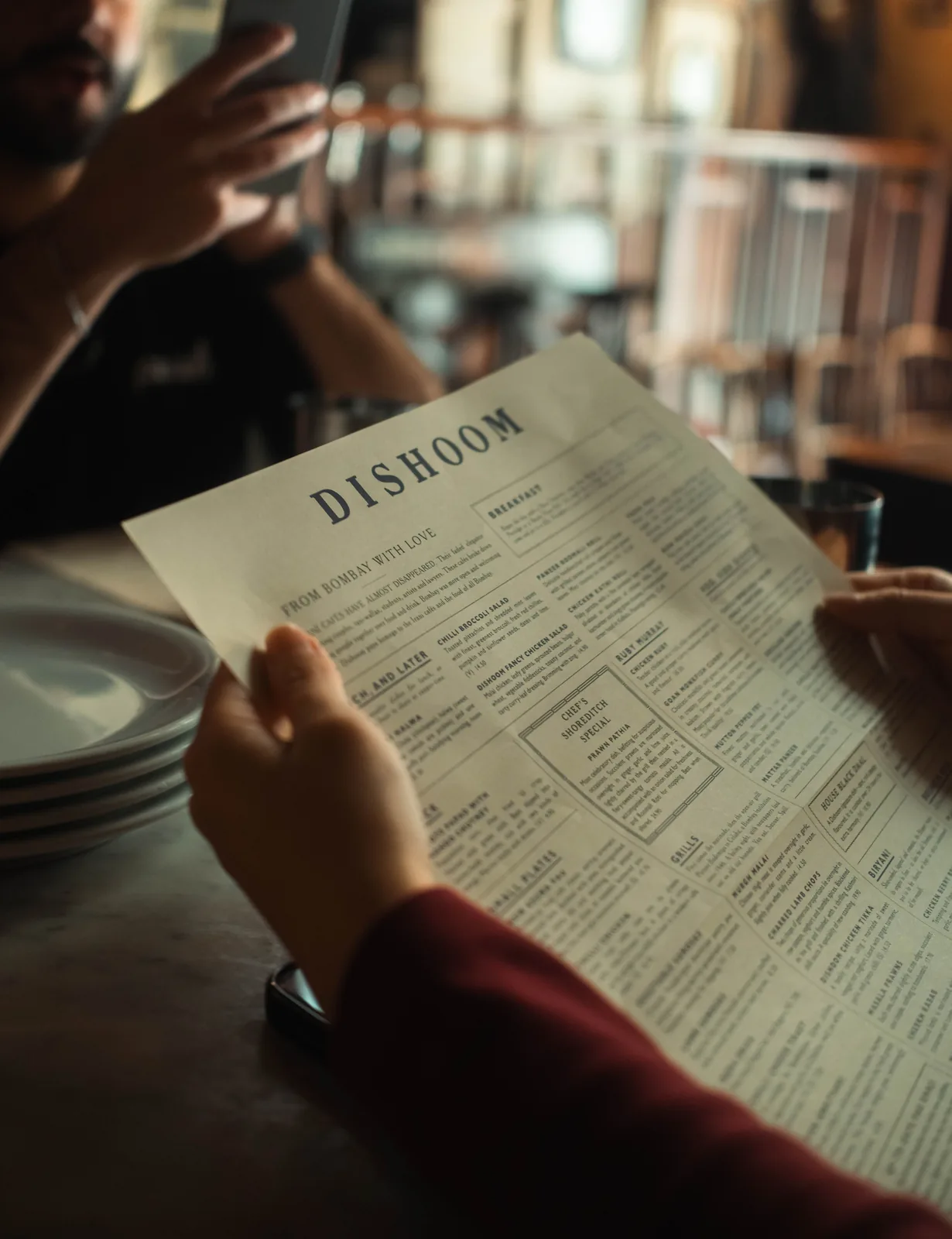
The most visible everyday consequence of this is the letter-code system that's become standard on Viennese menus: dishes are marked with one or more letters from A to R, corresponding to the 14 EU-declared allergens, rather than spelling the allergen out next to every item. The key that decodes the letters should be posted on the menu itself, at the counter, or handed over on request. If a menu has no letters at all, that doesn't mean the food is free of the 14 allergens, it usually just means the venue communicates the same legally required information a different way, so ask directly rather than assuming.
Austria's A-to-R code key
The official sequence skips I, J, K, and Q. Those letters are not missing allergens; Austria's code uses the following 14 entries:
- A gluten-containing cereals; B crustaceans; C egg; D fish
- E peanuts; F soy; G milk or lactose; H tree nuts
- L celery; M mustard; N sesame; O sulphites
- P lupin; R molluscs
Use the code as an ingredient check, not as a cross-contact guarantee. Ask to see the restaurant's key, then ask whether the dish, oil, pan, fryer, and utensils are suitable for the allergy that matters to you.
Hidden allergens in Austrian cuisine
Wheat and egg in the Schnitzel, the Spätzle, and the Kaiserschmarrn
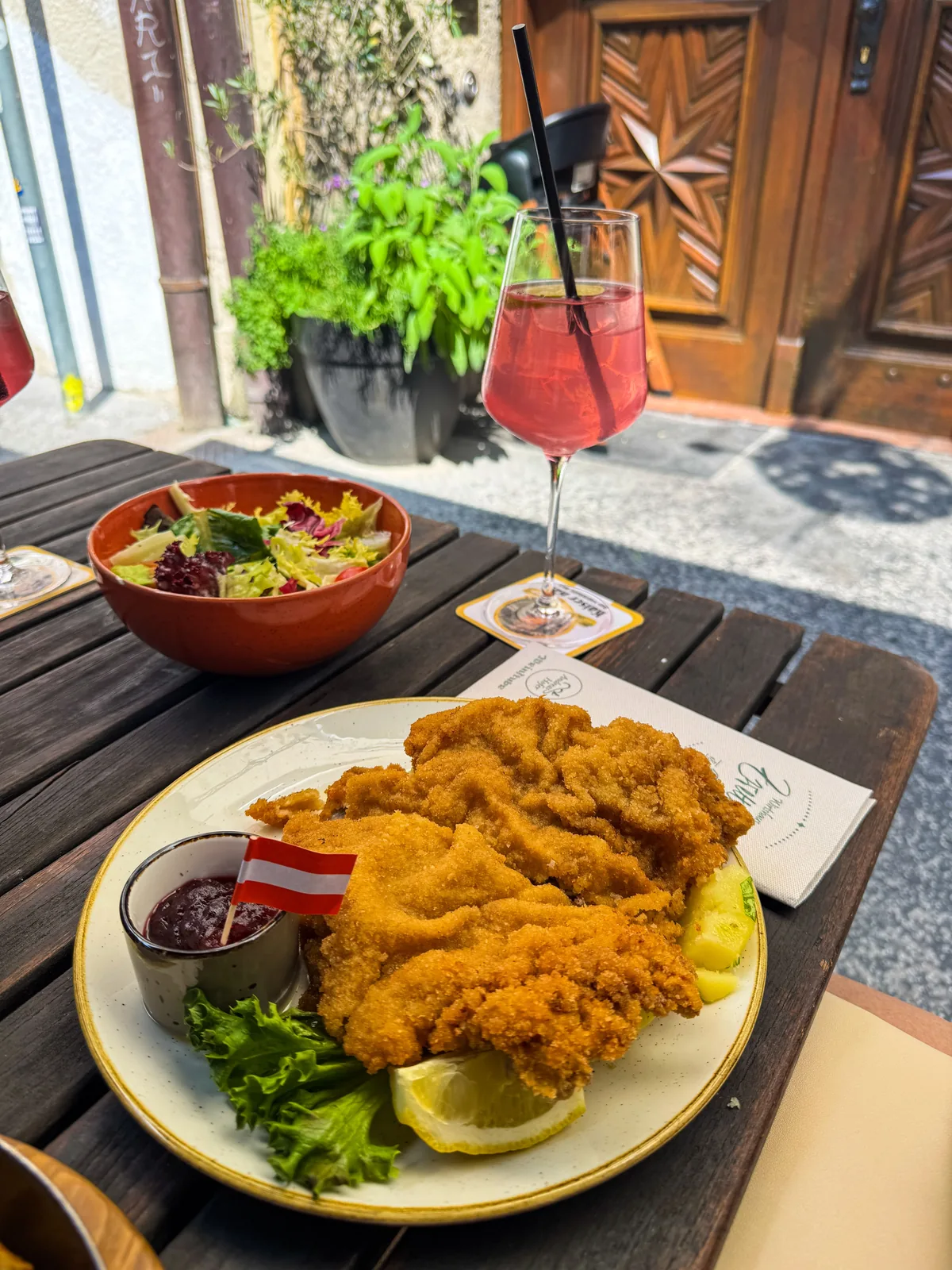
Wiener Schnitzel's breaded coating (Panade) is wheat flour and egg, applied as part of the traditional preparation rather than something that can simply be left off. Käsespätzle starts as a wheat-and-egg noodle dough before the cheese is even stirred in. Kaiserschmarrn, the shredded pancake dessert, is itself a wheat-and-egg batter finished in butter. Ask about the coating, the fryer or pan, and any sauce separately, since a dish description rarely mentions the breading or batter as an ingredient in its own right.
Dairy in Sachertorte, Apfelstrudel, and the sauces
Sachertorte layers chocolate sponge with apricot jam and a chocolate glaze, and traditional recipes use butter in the sponge and often cream in the accompaniment. Apfelstrudel's pastry uses butter, and it's routinely served with Schlagobers (whipped cream) or vanilla sauce. Cream-based sauces (Rahmsoße) and gravies thickened with butter or cream appear across savory dishes too, not just desserts. Ask about butter, cream, and any Schlagobers garnish separately from the main dish.
Get a German-English allergy card covering all EU 14 allergens, including the letter codes you'll see on Austrian menus.
Build My Austria CardTree nuts and poppy seeds in pastry
Poppy seeds (Mohn) are a genuinely Austrian risk that doesn't map neatly onto a tree-nut or seed-allergy label elsewhere, appearing in Mohnnudeln (poppy-seed noodles) and filled pastries as a defining ingredient rather than a garnish. Ground almonds or hazelnuts show up in some Torten fillings and in Marillenknödel (apricot dumplings), where the nut is sometimes part of the dough itself rather than an add-on. Flag poppy seeds specifically on a card if they're medically relevant, since they're easy to miss if you're only screening for the standard tree-nut list.
Key phrases for allergy communication in Austria
The allergen vocabulary itself is standard high German and identical to Germany's, since both countries declare the same 14 EU-listed allergens under the same names. What differs is everyday food vocabulary: a Viennese menu may use regional words for common ingredients that don't match what you'd see in Germany.
- Ich habe eine Lebensmittelallergie gegen [allergen]: I have a food allergy to [allergen]
- Ich bin allergisch gegen Gluten: I am allergic to gluten
- Ich bin allergisch gegen Milch: I am allergic to milk
- Enthält dieses Gericht [allergen]?: Does this dish contain [allergen]?
- Was bedeutet dieser Buchstabe auf der Speisekarte?: What does this letter on the menu mean?
- Diese Allergie kann lebensbedrohlich sein: This allergy can be life-threatening
- Ich brauche einen Arzt, rufen Sie 144: I need a doctor, call 144
A few regional food words worth recognizing even though they're not allergens themselves: Erdapfel (potato, Kartoffel in Germany), Paradeiser (tomato, Tomate in Germany), Marille (apricot, Aprikose in Germany), and Faschiertes (ground meat, Hackfleisch in Germany). Not knowing these won't cause an allergen to slip through, since the declared-allergen terms are standardized, but it can make a menu harder to read at a glance.
Austrian dishes that need closer checking
Choosing where to eat
Billa, Spar, Hofer, and dm all carry dedicated gluten-free and lactose-free product lines nationwide, so a self-catered meal or backup snack is a realistic option almost anywhere you're staying, provided you check the current label rather than the section sign. In Vienna specifically, the Naschmarkt has a wide enough vendor mix that asking one stall for detail and moving on if the answer isn't clear is a realistic strategy, unlike a single fixed-menu restaurant where you're more committed to one kitchen's answer.
At any restaurant, use the menu's letter codes as a first filter, then ask directly about the letters that matter to you. Staff are required to be able to explain the code, and per the Allergeninformationsverordnung, a written record should exist behind their answer even if they tell you verbally.
Emergency information for Austria
If you think you are having anaphylaxis, follow your personal action plan, use prescribed emergency medication as directed, and call for urgent help.
- Ambulance: 144 (Rettung, direct medical dispatch, 24 hours)
- General emergency: 112 (the pan-European number, also reaches every emergency service in Austria and can be dialed from a locked phone with no PIN)
- Poison control: +43 1 406 43 43
- Vienna: AKH Wien (Allgemeines Krankenhaus der Stadt Wien / Vienna General Hospital), Notfallambulanz, Währinger Gürtel 18-20, 1090 Vienna. Tel. +43 1 40400-0. Emergency department open 24/7; reachable directly by the U6 Michelbeuern-AKH subway station.
- Key emergency phrase: Ich habe eine schwere allergische Reaktion, rufen Sie 144: I'm having a severe allergic reaction, call 144
For the current code mapping, see oesterreich.gv.at's allergen-code guidance and the City of Vienna's Allergeninformationsverordnung guidance. For emergency numbers, see oesterreich.gv.at's official emergency numbers page.
Frequently asked questions
Is Austria safe for travelers with food allergies?
Austria applies the EU's Food Information to Consumers Regulation through its own national rule, the Allergeninformationsverordnung (BGBl. II Nr. 175/2014), which has been in force since 2014. It goes a step further than the bare EU minimum on one point: even when a restaurant gives allergen information verbally, the underlying information the staff member is reading from has to be based on written documentation kept on the premises. Most Vienna menus also carry a letter code from A to R next to each dish, corresponding to the 14 EU-declared allergens, so you can often spot a risk before you even ask. That combination, real written documentation behind the counter and a visible code on the menu itself, makes Austria one of the more legible countries in Europe for a traveler managing a food allergy.
What do the letter codes on Austrian menus mean?
Austrian restaurants commonly mark each dish with one or more letters from A to R, keyed to the 14 EU-declared allergens (gluten, crustaceans, eggs, fish, peanuts, soybeans, milk, tree nuts, celery, mustard, sesame, sulphites, lupin, and molluscs), rather than spelling every allergen out on the menu itself. The key that decodes each letter should be posted somewhere on the menu, at the counter, or available on request, and staff are required to be able to explain it. If a menu carries no letters at all, that does not mean the food is free of the 14 allergens, it usually means the venue is using a different, and often less useful, method of communicating the same legally required information, so ask directly.
What are the most common hidden allergens in Austrian food?
Wheat, egg, and dairy dominate Austrian cuisine's structural allergens. Wiener Schnitzel's breading (Panade) is wheat flour and egg, Käsespätzle's noodles are a wheat-and-egg dough before the cheese is even added, and Kaiserschmarrn is a wheat-and-egg batter finished with butter. Apfelstrudel and Sachertorte both combine wheat pastry with dairy and egg. Tree nuts show up in pastry more than in savory cooking: poppy seeds (Mohn) appear in Mohnnudeln and filled pastries, and ground almonds or hazelnuts turn up in some Torten fillings and Marillenknödel (apricot dumplings). None of these are marginal menu items, they're the dishes most associated with Austrian cuisine specifically, so a written allergy card matters more here than in a cuisine where the highest-risk dishes are easier to avoid.
How do you say food allergy in German the way it's used in Austria?
The allergen vocabulary itself is standard high German and identical to what's used in Germany, since both countries declare the same 14 EU-listed allergens under the same names: Ich habe eine Lebensmittelallergie gegen [allergen], I have a food allergy to [allergen]. Ich bin allergisch gegen Gluten (gluten), Milch (milk), or Sellerie (celery). Enthält dieses Gericht [allergen]?, does this dish contain [allergen]? What differs in Austria is everyday food vocabulary rather than allergen terms: a Viennese menu may say Erdapfel instead of Kartoffel for potato, Paradeiser instead of Tomate for tomato, and Faschiertes instead of Hackfleisch for ground meat, so recognizing a dish by name can be harder even when the allergen declaration itself is standardized. In an emergency: Ich brauche einen Arzt, rufen Sie 144.
Ready to plan your Austria food strategy?
Generate a German-English allergy card in under 60 seconds. Show restaurants exactly what you cannot eat: including gluten, dairy, tree nuts, and all EU 14 allergens.
Build My Austria CardThis article is for informational and travel preparation purposes only and does not constitute medical advice. Always consult a qualified healthcare professional before traveling with a food allergy, and carry any prescribed emergency medication at all times. See our full medical disclaimer.