 AllergyPass
Food Allergies in Germany:
How to Communicate Your Allergy auf Deutsch
Germany applies the EU allergen framework, but restaurant preparation and language still matter. This guide covers German allergen terms, packaged-food labels, common dishes, and questions that help you decide whether a meal is workable.
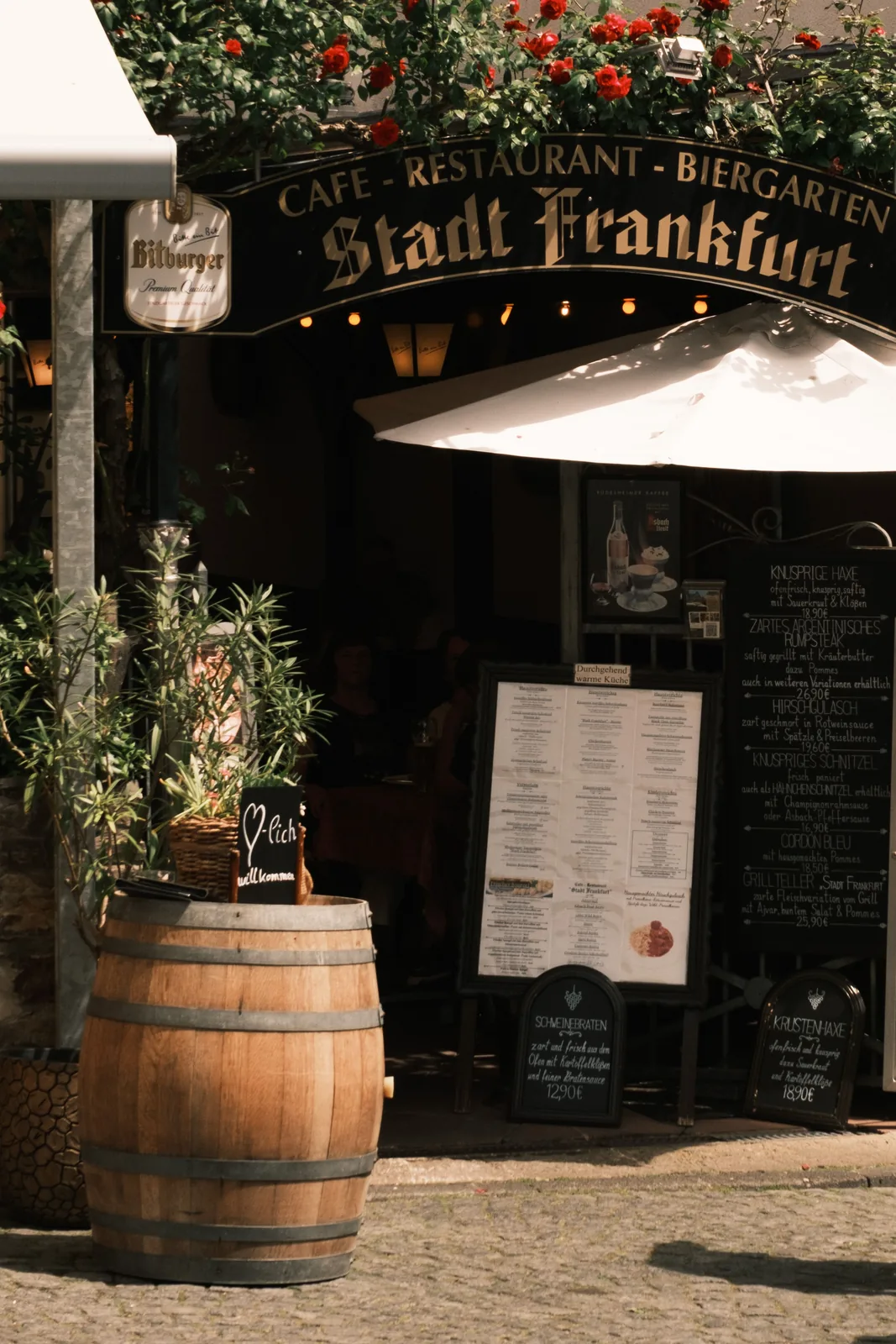 Germany
In this guide
Germany's allergen labeling: what to expect
Germany applies the EU Food Information to Consumers (FIC) Regulation. On packaged food, listed allergens must be emphasised in the ingredient list when present. For unpackaged food, including restaurant meals, allergen information is required under German rules and may be provided in writing, electronically, or orally with written or electronic documentation available on request.
The practical challenge is still the exact preparation. In a Gaststätte (tavern), Bierhalle (beer hall), or small regional restaurant, the allergen list may not answer how a dish is cooked or whether equipment is shared. Staff may also have limited English. A written German allergy card makes the request specific, but the kitchen still needs to confirm the dish.
Hidden allergens in German cuisine
Wheat: in the bread, the Schnitzel, and the gravy
Germany has a strong bread culture, with many varieties of Brot and Brötchen (rolls). Wheat and rye are common, and both contain gluten. Beyond bread, wheat appears in several German staples:
- Schnitzel: The breadcrumb coating (Panade) commonly uses wheat and egg. Ask about the coating, fryer, pan, and sauce for Wiener Schnitzel, Jägerschnitzel, and other varieties.
- Gravies and sauces (Soßen): Some brown gravies and cream sauces are thickened with wheat flour (Mehl). Ask about Jus, Bratensauce, Rahmsoße, and any stock or thickener.
- Brezel (pretzel): The Bavarian Brezel is wheat-based and ubiquitous at beer halls, Volksfeste (festivals), and as a table snack at many restaurants.
- Spätzle: These southern German egg noodles commonly use wheat flour and egg. Ask whether the recipe and shared cooking water fit your needs.
Mustard (Senf): the EU allergen in German sauces
Mustard (Senf) is an EU-declared allergen and appears in some German dishes and condiments, including:
- As a condiment alongside some Würste (sausages)
- In salad dressings and vinaigrettes
- In some traditional meat marinades and Sauerbraten (marinated pot roast) preparations
- In some Senf-Soße (mustard sauce) varieties served with meats and fish
Many travelers from outside Europe are not aware that mustard is a declared allergen at all. It's worth flagging specifically on a card written in German.
Celery (Sellerie): in soups, stocks, and spice mixes
Celery is an EU-mandated allergen and may appear in Suppengemüse (soup vegetables), stock, soup, and seasoning mixes. Some versions include celery root (Knollensellerie) or celery stalks, so ask about the stock and spice blend rather than only the visible vegetables.
Dairy in German sauces and pastries
Butter and cream appear in some traditional sauces, while Käsespätzle and many pastries use dairy. Cheese (Käse) may appear in sandwiches, on bread, and in cooked dishes. Ask separately about butter, cream, milk, cheese, and shared equipment.
Get a German-English allergy card covering all EU 14 allergens in German
Build My Germany CardKey German phrases for allergy communication
- Ich habe eine Lebensmittelallergie gegen [allergen]: I have a food allergy to [allergen]
- Ich bin allergisch gegen Gluten: I am allergic to gluten
- Ich bin allergisch gegen Milch und Butter: I am allergic to milk and butter
- Ich bin allergisch gegen Senf: I am allergic to mustard
- Ich bin allergisch gegen Sellerie: I am allergic to celery
- Enthält dieses Gericht [allergen]?: Does this dish contain [allergen]?
- Haben Sie eine Allergenkarte?: Do you have an allergen chart?
- Ohne Mehl, bitte: Without flour, please
- Ohne Milchprodukte, bitte: Without dairy products, please
- Diese Allergie kann lebensbedrohlich sein: This allergy can be life-threatening
- Ich brauche einen Arzt: I need a doctor (emergency)
German dishes that need closer checking
Tree nuts in German desserts and bakeries
Tree nuts are worth checking in German bakeries, confectionery, and desserts. Hazelnuts (Haselnüsse) and almonds (Mandeln) appear in some chocolate spreads, pastry fillings, and cake toppings.
Marzipan is made primarily from ground almonds and appears in some Stollen, chocolates, layered cakes (Torten), and sweets. Lübeck marzipan is a well-known regional product, so ask about almonds in gift-shop and supermarket confectionery.
Some Konditorei (cake shop) items use nuts, including Nusszopf (nut braid), Nusskuchen (nut cake), and hazelnut-filled pastries. Pralines, truffles, and filled chocolates may also contain ground or whole nuts. Ask about the specific item and counter handling.
Traditional Bäckereien may handle nut fillings, hazelnut cream, and almond toppings alongside other products. Ask about trays, tongs, display cases, and work surfaces. A sealed packaged product gives you an ingredient list, but it still needs to be read for the allergens relevant to you.
A card written in German should name your specific tree nuts: Haselnüsse (hazelnuts), Mandeln (almonds), Cashewnüsse (cashews), and so on. Larger establishments may have an ingredient list, while small independent Konditoreien may have less documentation for individual items. If staff cannot answer, choose another product.
Beer and sulphites in Germany
Beer matters for both gluten and sulphite questions. Many German beers use barley malt, which contains gluten, while recipes and labeling vary. A beer brewed under the Reinheitsgebot is not automatically gluten-free. For celiac disease, look for a product specifically labeled gluten-free and check how the venue handles it.
Wine (Wein) may contain sulphites, which are an EU-listed allergen. Ask about the product and read the label where available if sulphites are medically relevant.
Fish and seafood allergens in northern Germany
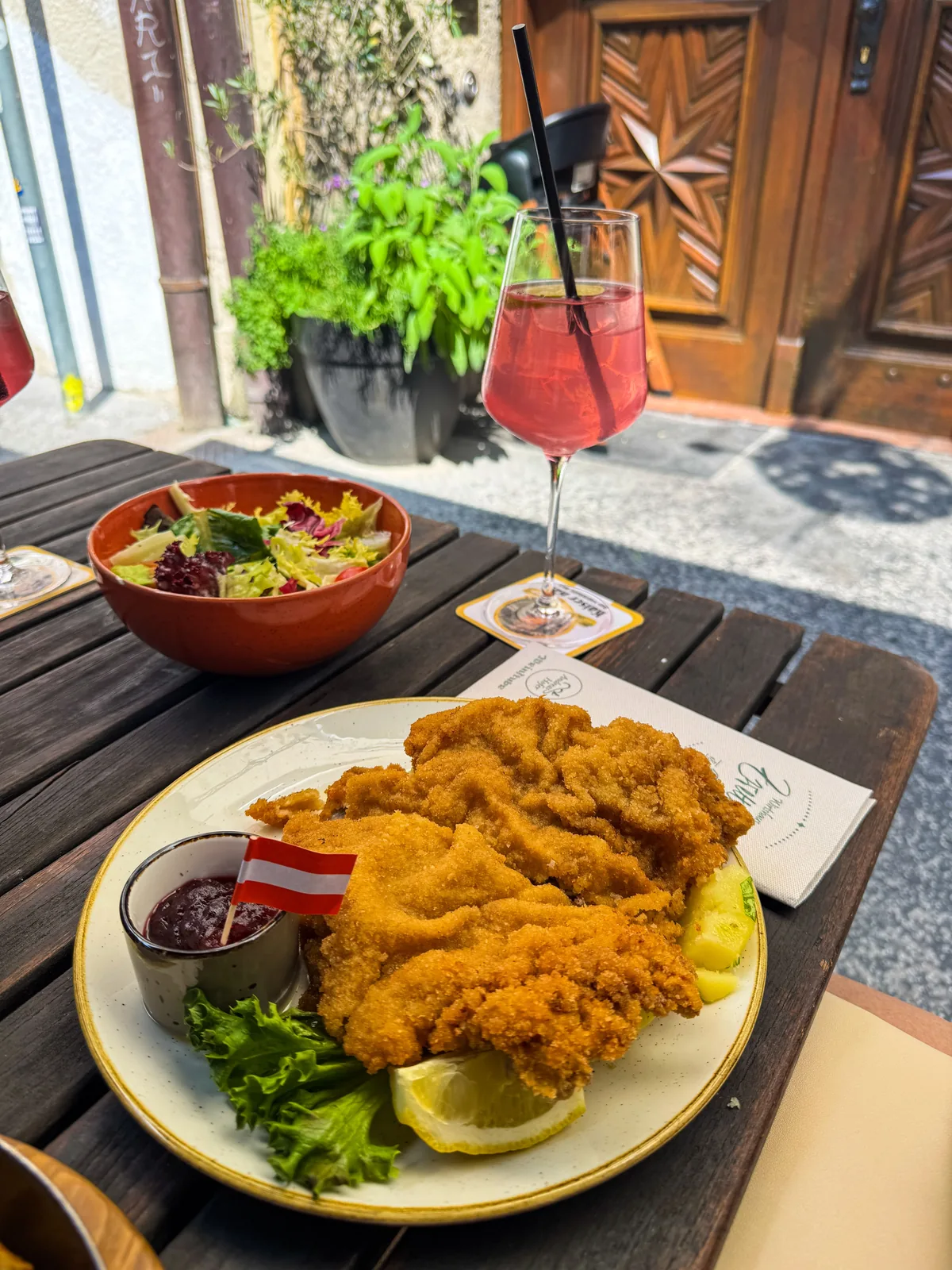
Fish and seafood questions vary by region and dish. Northern coastal cities such as Hamburg, Bremen, Kiel, Rostock, and Flensburg have many fish-focused restaurants, markets, and preserved-fish products, while the same ingredients can also appear in stocks, sauces, or prepared foods elsewhere.
Hering (herring) appears in preparations like Bismarckhering (marinated herring fillets), Rollmops (pickled herring rolls), and Matjes (young salted herring). These are served at market stalls, in traditional restaurants, and as supermarket staples. Smoked fish (Räucherfisch): particularly smoked eel (Räucheraal), smoked salmon (Räucherlachs), and smoked mackerel (Räuchermakrele): is also widely available at fish markets and delicatessens across northern Germany.
Fischbrötchen are open fish sandwiches sold at harbour-side stalls. They may contain herring, shrimp, or smoked fish on a bread roll, sometimes with remoulade or onions. Ask about the fish, sauce, bread, knives, surfaces, and shared preparation before ordering.
At fish restaurants and market stalls, ask whether multiple species share knives, surfaces, pans, or fryers. A card written in German should list fish (Fisch) and crustacean shellfish (Krebstiere) separately if both are relevant.
Choosing a venue in Germany
Major cities (Berlin, Munich, Hamburg, Frankfurt, Cologne): Larger cities offer more international restaurants and more opportunities to research a venue in advance. A vegetarian or vegan menu may reduce some questions, but it does not remove concerns about nuts, soy, sesame, gluten, or shared equipment.
Chain restaurants (McDonald's Germany, Burger King Germany, IKEA restaurant): Some publish allergen information or ingredient charts, but menus and procedures change. Check the current information for the exact branch and item, and ask about preparation.
German supermarkets: REWE, Edeka, Kaufland, Aldi, and Lidl may have "frei von" (free-from) sections and gluten-free products. Product ranges differ by branch, so read labels rather than relying on the section sign.
Traditional Gaststätten, Bierhallen, and Volksfeste: Bread, Brezel, Schnitzel, beer, mustard, and shared preparation can create several questions. Busy service or limited English may make detailed communication harder, so bring the written German Allergiekarte and leave if staff cannot answer clearly.
Emergency information for Germany
If you think you are having anaphylaxis, follow your personal action plan, use prescribed emergency medication as directed, and call for urgent help. Germany's official health guidance lists 112 for life-threatening medical emergencies, including an allergic shock.
- Emergency number: 112 (European emergency number, pan-Germany)
- Hospitals: Krankenhaus means hospital and Notaufnahme means emergency department. For a serious reaction, call 112 rather than choosing a hospital based only on a guide or language assumption.
- Medication: Carry your own prescribed emergency medication with you rather than relying on a local replacement during a reaction.
- Key emergency phrase: Ich habe eine schwere allergische Reaktion, rufen Sie 112: I'm having a severe allergic reaction, call 112
For current German labeling details, see the Federal Ministry of Food and Agriculture allergen-labeling guidance. For emergency numbers and when to call 112, see the German federal health portal.
Frequently asked questions
Is Germany safe for travelers with food allergies?
Germany implements EU mandatory allergen law rigorously, and food labeling is among the clearest in Europe. Supermarkets are a real strength: REWE, Edeka, Kaufland, Aldi and Lidl all carry dedicated free-from sections with clear allergen labeling, which makes any self-catering part of a trip straightforward. Large chain restaurants typically maintain detailed allergen charts (Allergenkarten). The practical challenge is the traditional end of the spectrum, Gaststätten, Bierhallen and small regional establishments, where staff may have limited English and the allergen information may sit in a folder that someone has to go and find rather than being immediately to hand. English proficiency also drops noticeably outside Berlin and Munich. A written German-language allergy card (Allergiekarte) resolves both problems at once, and is the most reliable communication tool.
What are the most common hidden allergens in German food?
The most common hidden allergens in German cuisine are wheat, mustard, dairy, sulphites and celery. Wheat is the broadest: bread and Brötchen arrive at most meals automatically, the Panade on a Schnitzel is wheat flour plus egg, Spätzle is wheat and egg, the Bavarian Brezel is wheat, and the traditional brown gravies and cream sauces (Jus, Bratensauce, Rahmsoße) are flour-thickened. Celery is the one that hides best: Suppengemüse, the standard flavouring base for German stocks and soups, typically includes celery root (Knollensellerie) and celery stalks, which makes most German soups and broths celery-containing at the stock level, and Selleriesalz turns up in seasoning blends. Mustard runs through sauces, dressings and cured meat preparations, dairy through most traditional sauces and the Käse culture, and sulphites through wine, beer and cured meats.
Is German bread safe for celiacs?
No, with narrow exceptions. Traditional German bread is almost exclusively wheat and rye-based, and both contain gluten. Germany has an extraordinary bread culture, hundreds of regional varieties of Brot and Brötchen, but the overwhelming majority contain gluten and bread arrives at most German meals automatically rather than on request. The wider problem for celiacs is that wheat is structural well beyond the bread basket: the Panade on a Schnitzel is wheat flour and egg and cannot be removed, Spätzle is a wheat-and-egg dough served alongside most meat dishes in Bavaria and Baden-Württemberg, the Bavarian Brezel is wheat and ubiquitous at beer halls and Volksfeste, and traditional gravies are flour-thickened. The supply side is genuinely good: dedicated glutenfreies Brot bakeries exist in major cities, and REWE, Edeka and Aldi all have well-labeled gluten-free sections. Cross-contamination at standard German bakeries is high.
How do you say food allergy in German?
The key phrase is: Ich habe eine Lebensmittelallergie gegen [allergen], I have a food allergy to [allergen]. For specific allergens: Ich bin allergisch gegen Gluten (gluten), Ich bin allergisch gegen Milch und Butter (milk and butter), Ich bin allergisch gegen Senf (mustard) and Ich bin allergisch gegen Sellerie (celery). To ask rather than tell: Enthält dieses Gericht [allergen]?, does this dish contain [allergen]. One phrase is worth more than the rest in Germany specifically, because large restaurants are required to hold the information and often do: Haben Sie eine Allergenkarte?, do you have an allergen chart. To modify an order, Ohne Milchprodukte, bitte, without dairy products, please. For severity: Diese Allergie kann lebensbedrohlich sein. In an emergency: Ich brauche einen Arzt, I need a doctor. A written Allergiekarte remains more reliable than any of these spoken in a busy restaurant.
Does German mustard contain allergens?
Mustard is itself an EU-declared allergen, and German cuisine uses it extensively. Senf appears in salad dressings, in many prepared sauces, in some meat marinades, and above all as a condiment alongside Würste, which is close to universal in German sausage culture. It also turns up in Senf-Soße varieties served with meats and fish, and in some regional Sauerbraten marinades, where it sits inside a dish whose name gives no hint of it. That combination, a declared allergen used as a default table condiment and as a background ingredient, is what makes it worth flagging explicitly on a card written in German rather than assuming it will be mentioned. Many travellers from outside Europe do not know mustard is a declared allergen at all, and so never think to ask.
Ready to plan your Germany food strategy?
Generate a German-English allergy card in under 60 seconds. Show restaurants exactly what you cannot eat: including mustard, celery, gluten, dairy, nuts, seafood, and all EU 14 allergens.
Build My Germany CardThis article is for informational and travel preparation purposes only and does not constitute medical advice. Always consult a qualified healthcare professional before traveling with a food allergy, and carry any prescribed emergency medication at all times. See our full medical disclaimer.