 AllergyPass
Food Allergies in Belgium:
What to Watch for Beyond the Waffle
Belgium's food is easy to recognize—waffles, chocolate, fries, mussels—but the useful allergy questions are less obvious. Dutch, French, and German are used in different language areas, and recipes, sauces, fryer oil, and shop displays still need to be checked at the venue.
 Belgium
In this guide
Why Belgium is different for allergies
Belgium uses the EU allergen-information framework. Its language areas are Dutch, French, and German, while Brussels is officially bilingual in Dutch and French. Food labels use the official language or languages required for the region where the product is marketed, so a package may not contain all three languages. In practice, choose your card for the venue and location: Dutch is useful in Flanders, French in Wallonia, and either Dutch or French in Brussels; German is relevant in the German-speaking area in the east.
Hidden allergens in Belgian cuisine
Dairy and hazelnuts in Belgian chocolate
Belgian chocolate may contain milk, hazelnuts, almonds, soy, or other ingredients, depending on the product. Dark chocolate is not automatically dairy-free, and a praline filling can contain nuts even when the outer chocolate looks plain. Read the package label where there is one; in a chocolatier, ask about the filling, recipe, and shared moulds or display utensils.
Egg and dairy baked into waffle batter
Belgian waffles are commonly sold as Liège or Brussels styles, but recipes differ between vendors. Batter may contain wheat, egg, and dairy; toppings can add more. Ask about the batter, iron, toppings, and whether the vendor can prevent contact with other ingredients. Removing a topping does not change the batter.
Shellfish in croquettes and moules-frites
Moules-frites is a familiar Belgian dish, but the mussels, sauce, and side dishes should still be checked separately. Shrimp croquettes (garnaalkroketten or croquettes de crevettes) have a seafood filling under a breaded coating, so ask about the filling, batter, fryer, and utensils rather than judging from the outside.
Shared fryer oil in frites culture
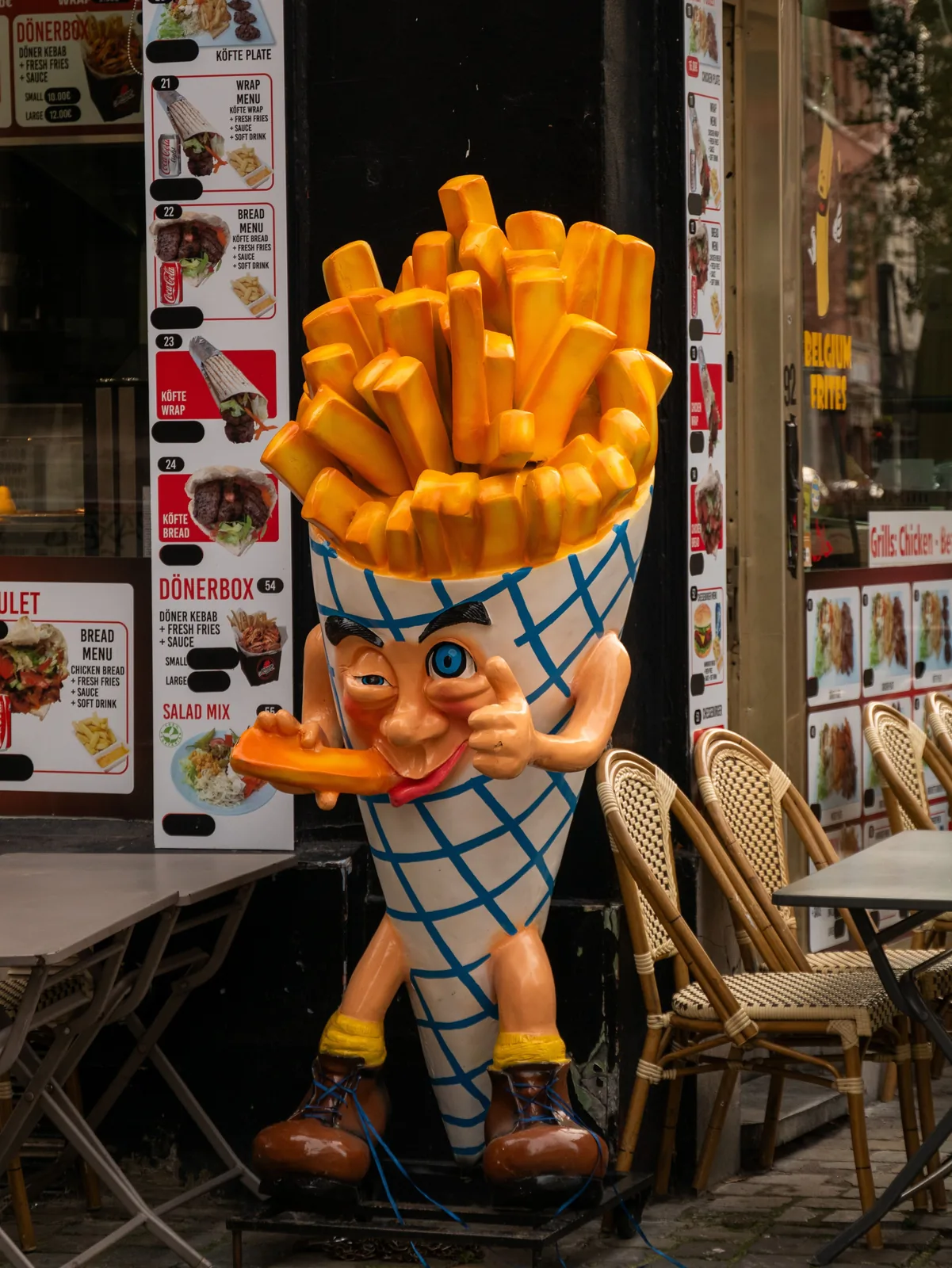
Some frituurs and friteries use the same fryer or oil for fries and breaded foods; others separate them. Ask whether the fries have their own fryer and whether the tongs, baskets, and work surface are shared. If staff cannot answer, do not treat plain potatoes as automatically suitable.
Gluten in Belgian beer
Many Belgian beers are brewed with barley, and witbier commonly includes wheat. Beer names and styles are not enough to establish that a drink is gluten-free. Check the product label or ask for a specifically gluten-free beer, and ask how it is served if shared taps or glassware are a concern.
Choose a $7.99 Belgium card in Dutch for Flanders or French for Wallonia and many venues in Brussels. If you need several destination languages, the one-time All Languages plan covers every available card.
Build My French Belgium CardWant to learn the Dutch allergen words yourself, not just carry a card? See the full Dutch food allergy phrasebook.
Key Dutch, French, and German phrases
Belgium's language area matters when you are ordering. Dutch is useful in Flanders, French in Wallonia and Brussels, and German in the German-speaking area in the east. A card is useful, but ask the staff member who will confirm the order to read it.
- Ik heb een voedselallergie voor [allergen] / J'ai une allergie alimentaire à [allergen] / Ich habe eine Lebensmittelallergie gegen [allergen] (I have a food allergy to [allergen])
- Ik ben allergisch voor [allergen] / Je suis allergique à [allergen] / Ich bin allergisch gegen [allergen] (I am allergic to [allergen])
- Zit er [allergen] in dit gerecht? / Ce plat contient-il [allergen]? / Enthält dieses Gericht [allergen]? (Does this dish contain [allergen]?)
- Is de frituurpan gedeeld? / La friteuse est-elle partagée? / Wird dieselbe Fritteuse benutzt? (Is the fryer shared?)
- Deze allergie kan levensbedreigend zijn / Cette allergie peut être mortelle / Diese Allergie kann lebensbedrohlich sein (This allergy can be life-threatening)
- Ik heb medische hulp nodig / J'ai besoin d'une aide médicale / Ich brauche medizinische Hilfe (I need medical attention)
Belgian dishes that need closer checking
| Dish | Key allergens | Notes |
|---|---|---|
| Garnaalkroketten / Croquettes de crevettes | Shellfish, dairy, wheat, egg | Ask about the filling, batter, fryer, and shared utensils. |
| Kaaskroketten / Croquettes au fromage | Dairy, wheat, egg | Ask about the recipe, fryer, and utensils. |
| Moules-frites | Shellfish (mussels), often cream or wine sauce | Ask about the mussels, sauce, stock, and shared pans. |
| Belgian waffles (Liège and Brussels) | Egg, dairy, wheat | Ask about the batter, iron, toppings, and handling. |
| Belgian chocolate and pralines | Dairy, tree nuts (hazelnuts), soy (lecithin) | Check the filling, label, shared moulds, and display utensils. |
| Speculoos | Wheat, dairy (butter), sometimes tree nuts (almond paste fillings) | Recipes vary; check the label or ask about fillings and shared surfaces. |
| Belgian beer (witbier and most styles) | Gluten (barley, often wheat in witbier) | Check for a specifically gluten-free product rather than relying on the style name. |
| Stoemp / plain frites | Depends on fryer, seasoning, and preparation | Ask about the fryer, baskets, tongs, and sauces. |
Where to start in Belgium
Frituurs and friteries (fry shops): Ask whether the fries have a dedicated fryer, baskets, tongs, and work surface. A potato is not automatically suitable if the kitchen cannot explain how it is handled.
Brasseries and bistros: A sit-down venue may give you more time to discuss a request than a busy counter, but do not infer allergy control from the restaurant format. Ask about sauces, stocks, bread, and preparation surfaces.
Chocolatiers and waffle stands: Ask about fillings, batter, shared moulds, tongs, and display cases. If staff cannot identify the ingredients or handling, choose a packaged item with a readable label or leave it.
Supermarkets: Packaged products carry ingredient and allergen information under EU and Belgian rules. Read each package and treat bakery-counter, deli, and prepared foods as unpackaged food that needs separate questions.
Belgian supermarkets and label checks
Delhaize, Colruyt, Carrefour Belgium, and specialty shops are useful places to look for packaged food, but stock varies by branch. Use a free-from shelf as a starting point, not as a substitute for reading the ingredient list.
Delhaize: Larger branches may offer a broader range of gluten-free and free-from products than smaller express stores. Check the package and branch stock.
Colruyt: Some branches carry gluten-free products under private labels and other brands. Availability and the exact range vary by store.
Carrefour Belgium: Larger stores may carry a wider selection than smaller branches. Do not assume a product range is identical to another country or store.
Specialty health-food stores: Shops such as Bioplanet and Sequoia may have more gluten-free or free-from products, but read labels and ask about open or bakery items. Stock and product formulations can change.
Understanding Belgian allergen labeling
Belgium applies the EU allergen-information framework, with Belgian rules explaining how businesses provide information for packaged and non-packaged food. Language requirements depend on the region where the food is marketed, so do not assume every package will carry Dutch, French, and German together.
The EU 14 allergen list: The regulated allergens include cereals containing gluten, crustaceans, eggs, fish, peanuts, soybeans, milk, tree nuts, celery, mustard, sesame, sulphur dioxide and sulphites, lupin, and molluscs. On packaged food, they must be identified in the ingredient list and made prominent. For non-packaged food, ask how the business provides the required information.
Belgium's language areas: Official language requirements are tied to the region where a product is marketed. A package bought in Flanders may not carry the same language coverage as one bought in Wallonia, so keep your card and label-reading strategy flexible.
Restaurant allergen information: Belgian guidance allows allergen information for non-packaged food to be provided orally or in writing, subject to conditions that make the information reliable and accessible. Ask to see the record or speak with the staff member responsible. This tells you about listed ingredients, not necessarily about cross-contact.
Why a region-matched allergy card still matters: A written card in the language used at the venue reduces misunderstandings, but it does not replace questions about fryer oil, utensils, sauces, and preparation surfaces. If staff cannot answer those questions, choose another venue.
Emergency information for Belgium
- Emergency number: 112 for an ambulance, fire brigade, or urgent police assistance. Give the exact address or location.
- Useful words: ziekenhuis / hôpital (hospital), spoedgevallen / urgences (emergency department), and ambulance / ambulance.
- Medication: Carry your prescribed emergency medication and follow your personal action plan. Do not rely on finding a pharmacy during a severe reaction.
- Key emergency phrase: Ik heb een ernstige allergische reactie, bel 112 / J'ai une réaction allergique grave, appelez le 112 / Ich habe eine schwere allergische Reaktion, rufen Sie 112 (I am having a severe allergic reaction, call 112)
Sources
This guide draws on EU food-information law, Belgian allergen guidance, and official Belgian emergency resources. It is intended as practical travel information, not medical advice.
- Regulation (EU) No 1169/2011 on the provision of food information to consumers (EUR-Lex): the EU regulation establishing the mandatory allergen disclosure rules referenced throughout this guide.
- Federal Agency for the Safety of the Food Chain (FASFC): Belgium's federal food-safety authority.
- FPS Public Health: allergen declarations: Belgian guidance on the 14 allergens and how information is provided for packaged and non-packaged food.
- 112.be: how to call 112: official guidance on the Belgian emergency number and what information to give the operator.
Frequently asked questions
Is Belgium safe for travelers with food allergies?
Belgium provides allergen information under the EU framework and Belgian rules. Choose Dutch, French, or German wording according to the venue, then ask about the recipe and preparation. Chocolate, waffles, mussels, croquettes, fries, and beer can involve different allergens or shared equipment, so the dish name alone is not enough.
What are the most common hidden allergens in Belgian food?
Common things to check include dairy and tree nuts in some chocolate and pralines; egg, dairy, and wheat in many waffle recipes; shellfish in moules-frites and shrimp croquettes; shared fryer oil around fries and breaded foods; and gluten in many beers. Recipes and handling vary, so ask about the product or dish in front of you.
Why does Belgium need allergy phrases in more than one language?
Belgium has Dutch, French, and German language areas; Brussels is officially bilingual in Dutch and French. Packaged-food labeling uses the official language or languages required for the region where the product is marketed, so a package may not contain all three languages. Choose your card for the venue and location.
How do you say food allergy in Belgium?
In Dutch: Ik heb een voedselallergie voor [allergen]. In French: J'ai une allergie alimentaire à [allergen]. In German: Ich habe eine Lebensmittelallergie gegen [allergen]. For severity, use Deze allergie kan levensbedreigend zijn, Cette allergie peut être mortelle, or Diese Allergie kann lebensbedrohlich sein, choosing the language used at the venue.
Traveling to Belgium with food allergies?
Create an allergy card before your trip. Choose the language you need for the venue—Dutch, French, or German—and show it at restaurants, frituurs, and chocolatiers across Belgium.
Build My French Belgium Card- ✓ No Internet Needed
- ✓ Choose your language
- ✓ No Signup Required
This article is for informational and travel preparation purposes only and does not constitute medical advice. Always consult a qualified healthcare professional before traveling with a food allergy, and carry any prescribed emergency medication at all times. See our full medical disclaimer.