 AllergyPass
Hanoi Food Allergy
Travel Guide
Hanoi's Old Quarter is full of fast-moving street food, but many dishes depend on sauces, broths, marinades, and pastes that are not obvious from the name. This guide focuses on fish sauce, mam tom, peanuts, shared equipment, and the questions that help you assess the actual stall.
 Hanoi, Vietnam
One useful preparation step for Hanoi: build and save your Vietnamese-language allergy card before you land.
Build My Hanoi Allergy CardThe Hanoi allergen problem in plain terms
Hanoi's street-food dishes often use nuoc mam (fish sauce) in marinades, broths, or dipping sauces, but the recipe varies by vendor. Bun cha may involve fish sauce in the pork marinade or dipping broth, and peanuts may be served with the herbs or garnish. Ask about each part of the plate.
Mam tom is fermented shrimp paste and is central to dishes such as bun dau mam tom, where it is served as a dip. Cha ca is built around fish as a named ingredient and may be served with mam tom or peanuts on the side. Ask whether the dip, garnish, stock, and preparation surface can be separated for your allergy.
The practical result: at a busy Old Quarter stall, the question may be whether the vendor can explain or change a sauce, broth, marinade, or dip, not simply remove a garnish. A written Vietnamese card can make the request clearer, but it cannot verify a kitchen when staff cannot answer or the equipment is shared.

Hanoi's core hidden allergens
- Mam tom (shrimp paste): a dip in bun dau mam tom and a possible accompaniment to other northern dishes
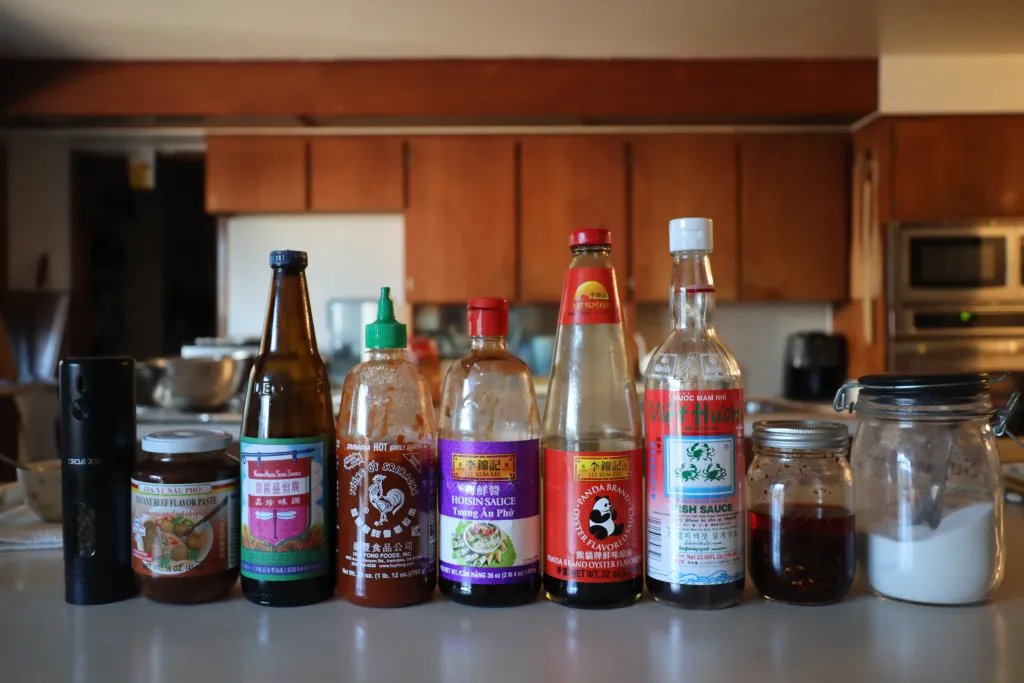
- Nuoc mam (fish sauce): the marinade and dipping-broth base for bun cha and most other savory Old Quarter dishes
- Peanuts (lac, the northern term): scattered over bun cha herbs, pho condiment plates, and many noodle dishes
- Soy sauce and hoisin: wheat-containing condiments served at pho stalls and used in Chinese-influenced Old Quarter dishes
A Hanoi street-food strategy
Start with the preparation, not the reputation of the neighborhood. A stall that can identify the broth, dipping sauce, marinade, garnish, and cooking surface is more useful to you than a famous stall that answers only with a smile or a quick “no.” In the Old Quarter, busy service and shared equipment can make a careful conversation difficult. A sit-down restaurant, hotel restaurant, or grocery backup may give you more time, but you still need to check the actual kitchen and dish.
Northern dishes worth screening include bún chả, phở, chả cá, bún đậu mắm tôm, bánh cuốn, and desserts or drinks with toppings. Ask whether fish sauce, shrimp paste, peanuts, soy, wheat, egg, sesame, or shared oil appears in the recipe. If the answer changes when you ask about the broth or utensils, treat that uncertainty as useful information and choose another meal rather than trying to negotiate away the risk.
Emergency care in Hanoi
Vietnam's ambulance number is 115, and current travel guidance says emergency numbers may be operated in Vietnamese. Save your accommodation address in Vietnamese, keep your medication and allergy card accessible, and ask a hotel desk or travel companion to help communicate while emergency services are being arranged. In a severe reaction, use your personal emergency plan and seek urgent care rather than waiting for a restaurant or hotel to decide which hospital is appropriate.
One current hospital option to research before travel is Hanoi French Hospital at No. 1 Phuong Mai Street, Hanoi. Its official English page lists an emergency number, (84-24) 3574 1111, and says emergency doctors and surgeons are available 24/7. Confirm the route, contact details, admission process, fees, and insurance arrangements before relying on them; a private international hospital is an option to plan for, not a guarantee of coverage or suitability for every emergency.
Related guides
These guides cover the country-wide allergen picture, street food navigation, celiac travel, and Vietnam's other central-coast city guide.
Fish sauce, shrimp paste, peanuts, soy, wheat, and sesame: the full ingredient-by-ingredient breakdown with Vietnamese names.
Street foodHow to eat at Vietnamese stalls and markets with a food allergy, including shared-equipment risk and what to ask vendors.
CeliacSoy sauce, banh mi, and some noodles create gluten risk even in a rice-first cuisine. Safe dishes and how to communicate celiac in Vietnamese.
Sibling cityCentral Vietnam's coastal cuisine and long-stay hotel corridor has its own allergen and neighborhood profile. The Da Nang-specific guide.
Sibling cityThe south leans on peanut sauce and shellfish more than fish sauce and shrimp paste. The Ho Chi Minh City-specific guide.
Your Hanoi allergy card
A written Vietnamese-language allergy card gives your request a consistent starting point at Hanoi's stalls and restaurants. Include derivatives such as mam tom, nuoc mam, hoisin, or peanut oil when they matter to your allergy, then ask staff to confirm the actual dish and equipment.
Where to stay in Hanoi
Tay Ho, Ba Dinh, and the Old Quarter offer different tradeoffs in transport, restaurant types, food backups, and hotel options. Choose the base that makes your daily routes, medication storage, and access to current emergency care easiest; do not treat a neighborhood label as a guarantee of staff knowledge or kitchen controls.
The Old Quarter can be convenient for sightseeing and street food, but busy stalls and small kitchens may leave less time for questions. Tay Ho or Ba Dinh may offer different restaurant formats and quieter planning conditions, but you still need to screen the actual venue.
Before arrival, save the nearest emergency department and its current direct number using a reliable map or hospital directory. For an ambulance in Vietnam, current travel guidance lists 115; follow your personal emergency plan and seek emergency care rather than relying on a restaurant or hotel to choose a hospital.
Frequently asked questions
Is Hanoi safe for food allergy travelers?
There is no destination-wide safety guarantee for food allergies in Hanoi. Fish sauce, shrimp paste, peanuts, soy, wheat, egg, and shared equipment vary by recipe and venue. Use a written Vietnamese card, ask about the exact dish and preparation, keep prescribed medication accessible, and leave when staff cannot answer clearly.
What is the biggest hidden allergen risk in Hanoi specifically?
Mam tom is fermented shrimp paste and is a direct question for shellfish-allergic travelers, especially with bun dau mam tom and some dipping sauces. Fish sauce, peanuts, soy, wheat, and egg also appear in different Hanoi dishes. Confirm the actual broth, marinade, sauce, garnish, oil, and shared utensils.
Which hospital serves Hanoi's tourist areas?
No single hospital serves every neighborhood or visitor. Before arrival, save the nearest emergency department and its current direct number using a reliable map or hospital directory. For an ambulance in Vietnam, current travel guidance lists 115; in a serious reaction, follow your personal emergency plan and seek emergency care rather than relying on a restaurant or hotel to choose a hospital.
This article is for informational and travel preparation purposes only and does not constitute medical advice. Always consult a qualified healthcare professional before traveling with a food allergy, and carry any prescribed emergency medication at all times. See our full medical disclaimer.