 AllergyPass
Pune Food Experiences
with Food Allergies
A bowl of misal arrives under a layer of farsan, chutney, and toppings. Asking for no peanut garnish may leave the base and spice mix unchecked. Before booking a Pune food walk or cooking class, find out who can explain each layer and what happens if a tasting has to be skipped.
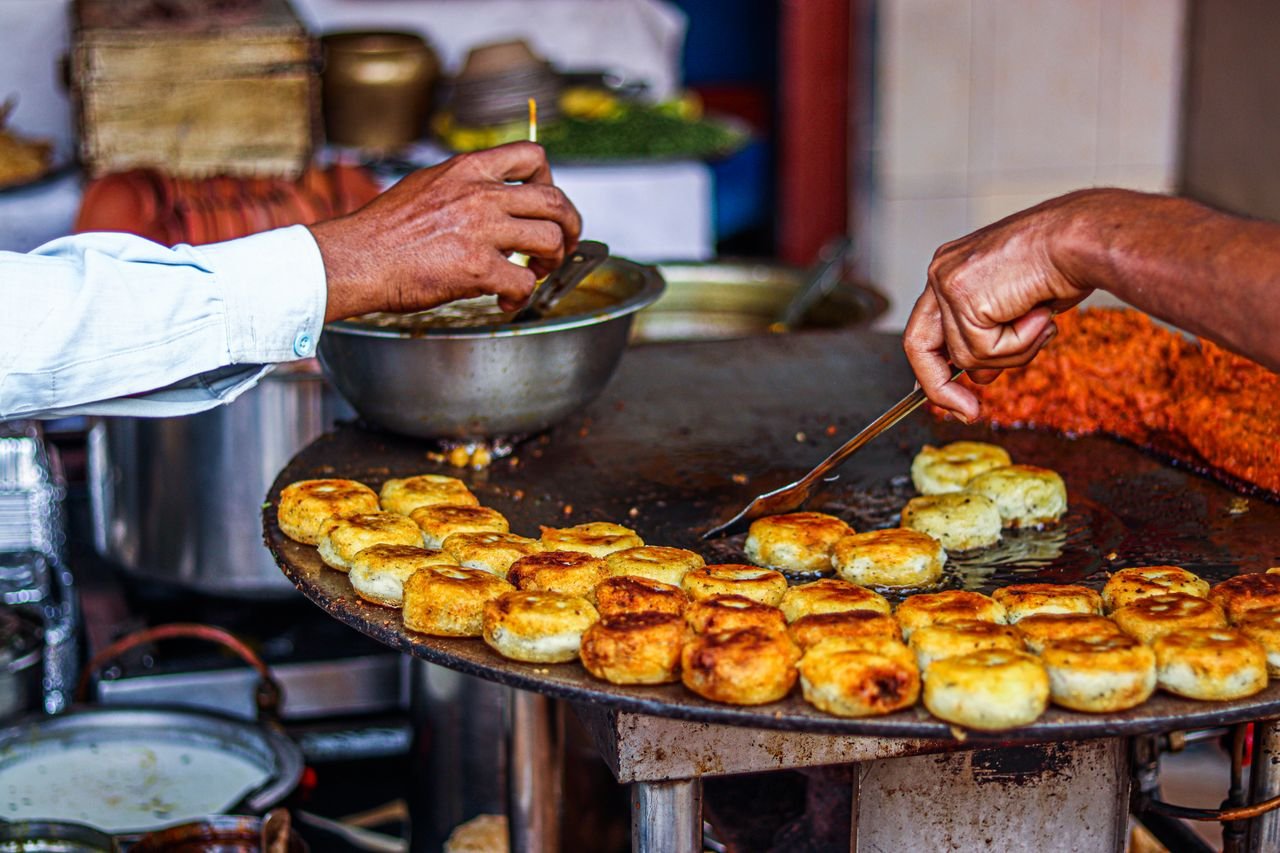 Pune, India
Pune street food: what actually happens
Puneri misal layers a spiced lentil curry called usal with farsan, chutneys, and other toppings. Ask whether peanuts are in the usal, farsan, spice mix, or chutney rather than assuming they are only a garnish. Thecha may contain peanuts, and bakarwadi is a besan-based fried snack. Recipes and handling vary, so ask the person preparing the food.
You can decide venue by venue, but set a clear threshold for the answers you need. Carry your prescribed emergency medication and treat an unclear answer as a reason to skip rather than improvise.
Guided food tours vs. going independently
A guided tour may simplify navigation and give you another person to help ask questions, but you still need to check what the operator actually promises. Email before booking with the exact allergy and ask for the route, the stalls included, how ingredient questions are handled, and what happens when a vendor cannot answer clearly. Treat a guide’s interpretation as context, not proof that a dish is free from cross-contact.
If you explore independently, use a written Hindi-English allergy card, ask before ordering, and leave when the answer is vague or the preparation cannot be separated from shared equipment. A card communicates the concern; it does not verify ingredients or force a vendor to accept a request. India’s official emergency system uses 112.
Build a Hindi-English allergy card before your Pune food tour
Make your Hindi allergy cardA Pune tasting plan, one component at a time
For a misal stop, request the ingredient checks in this order: usal, the spiced gravy or tarri, farsan, chutneys, toppings, and pav. Ask whether the bread and accompaniments can be checked separately. A vendor removing the visible topping has not answered for the curry underneath.
If the route includes thecha, ask whether that batch contains peanuts. At a bakarwadi or bakery stop, ask about the flour, filling, frying oil, and shared display or serving tools. A tour name such as “vegetarian food walk” does not resolve wheat, dairy, egg, or peanut questions.
Before paying, ask the operator to name each stop and explain which components can be checked ahead of time. Request a non-tasting way to participate when a vendor cannot answer. If several stops depend on spontaneous substitutions, a demonstration-only class or an activity without food may fit your trip better.
Cooking classes: what to check
A Pune cooking class may make the menu easier to inspect because ingredients are gathered for planned recipes. Ask whether peanuts, besan, wheat, dairy, or ghee are used, whether substitutions are possible, and whether your portion can be kept away from shared bowls, pans, knives, and serving utensils. Do not assume that a class has an allergen-control process unless the operator explains it.
Contact the operator before booking, not on arrival, and name the allergen specifically. Ask the operator to repeat back what will be excluded and what shared equipment will still be used. If the response is generic, choose a different activity or skip the class.
Questions to ask before booking any Pune food experience
- Can you share the route or menu in advance? Ask which dishes, stalls, or recipes are included.
- Are peanuts, besan, wheat, dairy, or ghee used? Ask about usal, farsan, chutneys, spice mixes, toppings, and frying oil.
- What shared equipment is involved? Include grinders, counters, fryers, pans, knives, bowls, and serving spoons.
- What happens if a stop cannot answer clearly? Confirm that you can skip it without pressure.
Before you book
Confirm that your chosen policy covers emergency treatment for an allergic reaction before you commit to a food-focused day in Pune. Keep your prescribed emergency medication accessible and save 112. Coverage for anaphylaxis, pre-existing conditions, evacuation, and other benefits depends on the current policy wording and your eligibility. Read the guide to comparing travel insurance for food allergies →
Frequently asked questions
What should I check before a misal pav food tour with a peanut allergy?
Ask for the route, the stalls included, whether peanuts are in the usal, farsan, chutney, spice mix, or toppings, and what happens if a stall cannot answer. Bring a written Hindi-English allergy card, carry your prescribed emergency medication, and skip a stop when the answers are unclear.
What should I ask a Pune cooking class about food allergies?
Ask for the planned menu and ingredient list, whether peanuts, besan, wheat, dairy, or ghee are used, and what shared equipment is involved. A class may make the menu easier to discuss, but it is not automatically suitable for every allergy. Keep the booking only if the operator gives specific answers you can understand and accept.
What food-allergy risks should I expect on Pune food experiences?
Ask about peanuts, besan, wheat, dairy, ghee, chutneys, farsan, toppings, shared oil, grinders, counters, and utensils. Misal, thecha, sabudana, bakarwadi, puran poli, and bakery foods involve different recipes and equipment. A different format can reduce some uncertainty, but no tour, restaurant, or class can remove cross-contact risk.
This article is for informational and travel preparation purposes only and does not constitute medical advice. Always consult a qualified healthcare professional before traveling with a food allergy, and carry any prescribed emergency medication at all times. See our full medical disclaimer.